Hanoi (VNA) – Vietnam’s power sector and relevant authorities are preparing multiple scenarios to respond to possible electricity shortages during the 2026 dry season, amid rising electricity demand and uncertainties in the global energy market.
From operating the power system and supplementing supply sources to promoting electricity conservation and developing battery energy storage systems (BESS), a wide range of measures are being deployed to ensure stable power supply during periods of extreme demand.
According to Nguyen Manh Quang, deputy head of the Business and Power Purchase Department under the Vietnam Electricity (EVN), the national power system has faced “dual pressure” since the beginning of 2026 due to surging electricity demand and geopolitical uncertainties affecting imported fuel supplies. In addition, the El Nino phenomenon is forecast to reduce water inflows to hydropower reservoirs, further challenging power supply.
In response, EVN has implemented various measures in line with Resolution No. 70-NQ/TW of the Politburo and Directive No. 10/CT-TTg of the Prime Minister. The group has established a steering committee for electricity supply management in 2026 and coordinated with the National System and Market Operator (NSMO) to develop flexible operating scenarios aimed at ensuring energy security.
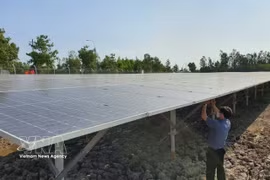
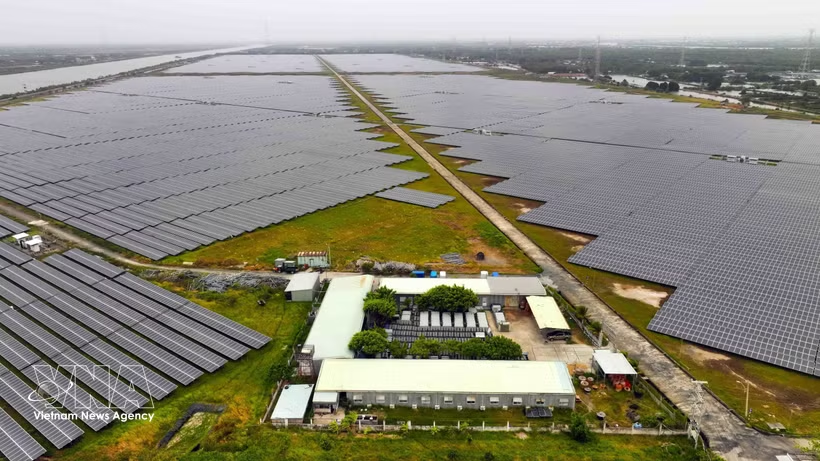
One of EVN’s key priorities is the development of self-produced and self-consumed rooftop solar power. Power corporations have introduced transparent registration procedures that allow customers to complete applications online via websites and customer service applications. EVN has also proposed simplifying investment procedures under a “one-stop-shop” mechanism and introducing green credit policies and preferential loans.
Alongside distributed power development, EVN is promoting electricity-saving programmes and demand response (DR) measures. The group targets saving 3% of total electricity consumption in 2026, with a goal of reducing power usage by around 10% during the peak dry-season months from April to July. Businesses and industrial parks are also being encouraged to shift production schedules to ease pressure during peak hours.
Notably, EVN is expected to propose adjustments to peak-hour pricing, extending the peak period from 6:30 p.m. to 10:30 p.m. to better match current demand patterns, while studying additional incentive mechanisms for customers participating in demand response programmes.
As renewable energy accounts for an increasing share of the power mix, battery energy storage systems are viewed as a key solution to improve grid stability. EVN has assigned the Northern Power Corporation (EVNNPC) to develop 530 MW of BESS capacity, the Hanoi Power Corporation (EVNHANOI) 275 MW, and the National Power Transmission Corporation (EVNNPT) around 300 MW. These projects are expected to reduce pressure on the grid during peak periods and enhance transmission flexibility.
Nguyen The Huu, Deputy Director of the Electricity Authority under the Ministry of Industry and Trade, said the ministry had approved the national power system operation plan for 2026 in late 2025. Under the base scenario, electricity demand growth is projected at around 8.5%, while in an extreme dry-season scenario it could rise to as high as 14.1%.
To proactively address the situation, the ministry is implementing a range of measures, prioritising the efficient use of power sources, especially hydropower. Major hydropower reservoirs, particularly in northern Vietnam, are currently maintaining high water levels in preparation for the dry season peak.
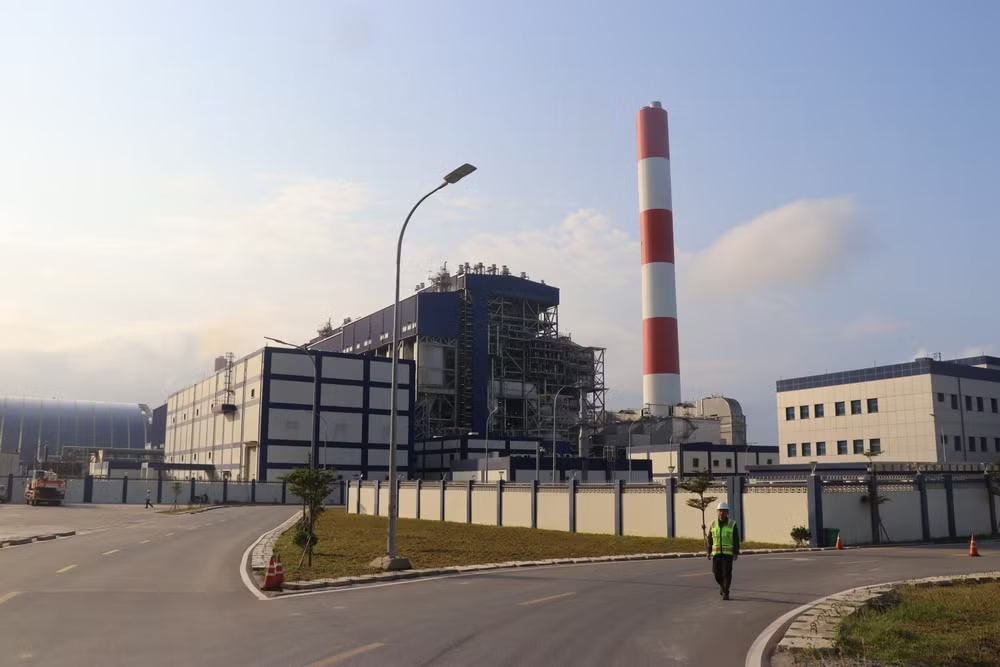
At the same time, efforts are being made to strengthen fuel supply capacity for gas-fired thermal power plants and accelerate the commissioning of key power generation and transmission projects. The Vung Ang II thermal power plant has officially entered commercial operation, adding around 1,300 MW to the national grid. Several 500kV substations, including Pho Noi, Lai Chau and Hoa Binh, have also been upgraded to improve electricity transmission to northern localities.
The ministry has also instructed power producers to ensure strict maintenance schedules to maximise the availability of generating units, while promoting the deployment of BESS in distribution networks, self-produced and self-consumed rooftop solar systems and demand-side management programmes.
According to the ministry, tensions in the Middle East have directly affected global LNG supply and prices, while indirectly impacting coal markets due to rising transportation costs. However, the impact on Vietnam remains limited as imported LNG still accounts for a relatively small share of the country’s electricity generation fuel mix.
Regarding coal supply, authorities have directed relevant units to diversify suppliers, increase fuel reserves and enhance domestic mining capacity to ensure uninterrupted fuel supply for power production.
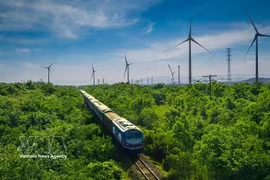
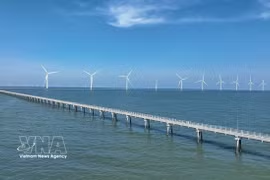
By the end of the first quarter of 2026, renewable energy sources, including wind, solar and biomass power, accounted for around 26% of Vietnam’s total installed power capacity. However, these energy sources remain highly dependent on weather conditions.
Therefore, pumped-storage hydropower and energy storage systems are being considered crucial solutions to improve power regulation and optimise renewable energy utilisation.
EVN noted that pressure on electricity supply is expected to intensify in the second quarter of 2026 due to rising demand driven by hot weather, industrial recovery, the expansion of artificial intelligence and digital transformation, and the growing popularity of electric vehicles.
Under the circumstances, EVN has instructed power generation units to ensure adequate fuel supply, maintain generating unit availability in accordance with NSMO requirements, and operate hydropower reservoirs flexibly to balance agricultural water supply and electricity generation.
For the transmission network, EVNNPT is focusing on addressing equipment defects, accelerating BESS installation and ensuring safe grid operations, particularly in northern Vietnam.
EVN is also speeding up major power generation and transmission projects. The Quang Trach I thermal power plant is expected to connect its first unit to the national grid in April 2026 and begin commercial operation in May 2026. Other projects, including Quang Trach II and III LNG power plants, the expanded Tri An hydropower plant and the Bac Ai pumped-storage hydropower project, are also being accelerated.
In the transmission sector, several urgent projects are scheduled for completion in the second quarter of 2026, including the 500/220kV Nho Quan – Phu Ly – Thuong Tin transmission line, the 220kV Nhon Trach 3 power plant – Long Thanh line, the 220kV West Hanoi – Thanh Xuan line, the 220kV Dai Mo substation, and 110kV transmission lines supplying power to Phu Quoc in preparation for APEC-related activities.
With coordinated measures covering power generation, transmission, energy storage, electricity conservation and demand management, the power sector expects to maintain national energy security and meet socio-economic development needs despite continued volatility in the global energy market./.