Jakarta (VNA) - The Association of Southeast Asian Nations (ASEAN) is set to sign the Digital Economy Framework Agreement (DEFA) next year, which is expected to double the bloc’s digital economy.
During the 14th round of DEFA negotiations in Jakarta, Indonesia, the discussion progress is expected to reach 70%.
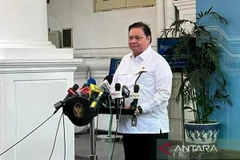
Addressing a press conference in Jakarta on October 7, Indonesian Coordinating Minister for Economic Affairs Airlangga Hartarto revealed that the group had been drafting some key provisions.
According to Airlangga, the digital economy of ASEAN member states valued at 263 billion USD in 2024 and is projected to grow to around 1 trillion USD by 2030. However, with the implementation of DEFA, this figure could potentially double to 2 trillion USD.
Indonesia is expected to remain the leading digital economy in ASEAN. Airlangga said the country’s digital economy is forecast to reach 360 billion USD by 2030, up sharply from 90 billion USD in 2024. E-commerce will serve as the main pillar, contributing about 150 billion USD by 2030.
He added that the negotiating committee has agreed on five priority provisions to be finalised - digital financial services, electronic transmissions based on WTO rules on import tax exemptions for digital transactions, non-discrimination of digital products, submarine cable management, and flexibility in electronic payment systems.
Le Quang Lan, Director of the Market Integration Directorate at the ASEAN Secretariat, said that for Vietnam, DEFA holds great significance as it marks the first time the country has participated in a comprehensive digital economy agreement. This requires government agencies and businesses to speed up digital transformation and enhance readiness in both legal frameworks and infrastructure.
With a population of 680 million, ASEAN’s digital technology market is seen to be among the most dynamic in the world. The bloc began negotiating DEFA in 2023, during which Jakarta was at the group’s helm. ASEAN claimed that this will become the world’s first major regionwide digital economy agreement./.
See more
Thailand changes its approach to dealing with fuel crisis
After scrapping the fuel price cap, state assistance will be directed to the poor, as well as drivers, farmers, fishermen, contractors, and operators in sectors directly affected by the energy crisis.
S&P upbeat on Philippines’ growth outlook, warns of energy risks
The updated forecast places the Philippines below the government’s growth targets of 5-6% for 2026.
Vietnamese PM’s Russia visit reinforces confidence in bilateral cooperation prospects
Prime Minister Pham Minh Chinh’s visit is seen as a catalyst for developing new and effective cooperation mechanisms to realise the comprehensive strategic partnership between Vietnam and Russia.
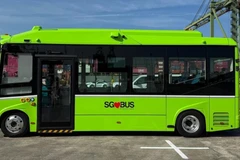
Singapore begins trial of driverless public buses
The autonomous buses will undergo rigorous testing to ensure that they meet all safety and operating requirements before hitting the roads in Singapore.
Thailand extracts bio-calcium from fish waste
Researchers at Rajamangala University of Technology, Thanyaburi (Thailand) developed a method to extract calcium from discarded parts of blackchin tilapia, including heads, bones, scales and tails - materials typically treated as waste and a source of pollution.
Singapore delays aviation green fuel surcharge amid Middle East conflict impact
Passengers flying out of Singapore from January 1, 2027, will pay a levy of between 1 and 41.6 SGD that will go towards the purchase of sustainable aviation fuel, which is mostly made from waste materials such as used cooking oil.
Singapore deepens ties with Germany to boost regional trade
Beyond strengthening bilateral ties, Singapore and Germany can also cooperate on promoting multilateral relations between the European Union and ASEAN regions.
Philippines receives first Russian oil shipment in five years
On March 24, Philippine President Ferdinand Marcos Jr. declared a national energy emergency through an executive order, allowing the government to fast-track fuel procurement, make advance payments for fuel contracts, and ensure the availability of fuel and other essential goods amid rising prices.
Philippines declares energy emergency
The Philippine Government on March 24 announced an "imminent danger of a critically low energy supply" as tensions in the Middle East threaten fuel supplies and the stability of the country’s power system.
Cambodia accelerates access to climate-resilient water services
Funded by the UN Joint Sustainable Development Goals (SDG) Fund, the Water Infrastructure & Smart Energy Joint Programme (WISE JP) introduces a pioneering financial model that combines commercial and low-interest capital - a revolving blended‑finance facility - dedicated to ensuring climate‑smart water systems.
Thailand seizes 20,000 litres of diesel bound for Myanmar
Authorities of Thailand's Tak province have ordered intensified patrols and stricter inspections to prevent fuel stockpiling and illegal cross-border exports. They also called on local residents to report any suspicious signs related to fuel hoarding or smuggling.
Cambodia discovers new animal species in karst caves
Exploring over 60 caves across ten hills in western Cambodia’s Battambang province, the survey uncovered a treasure trove of extraordinary creatures, many of which are found nowhere else on Earth.
Laos sets major goals in five-year socio-economic development plan
Laos targets average annual gross domestic product (GDP) growth of at least 6%. By 2030, GDP per capita is projected to reach 3,104 USD, while gross national income (GNI) per capita is expected to rise to 2,914 USD.
Wildfires surge to 96 hotspots in Thailand
According to the provincial forest fire and haze prevention centre, satellite data from the Suomi NPP VIIRS system recorded the hotspots at 02:13. The fires were spread across multiple districts though firefighting teams have been working around the clock to contain the blazes.
Norwegian ambassador highlights transparency, public participation in effective decentralisation
Vietnam has recently transitioned to a two-tier local administration system, similar to models in many countries. Regardless of the number of administrative tiers, maintaining public trust in the State and public agencies is essential, said Hilde Solbakken, Norway’s Ambassador to Vietnam.
Vietnamese pet market attractive to RoK businesses
RoK pet food companies are increasingly targeting Vietnam as a key growth market, leveraging the country’s rapidly developing pet economy and rising demand for premium pet care products in Southeast Asia.
Philippines pushes for ASEAN fuel-sharing mechanism
Oil-producing ASEAN members such as Brunei, Indonesia, and Malaysia would play a key role in ensuring that emergency fuel supplies are available and delivered when needed.
Cambodia introduces energy-saving measures amid Middle East conflict
Despite these challenges, the government noted that Cambodia’s fuel and electricity supply remains stable, supporting economic activities and public service delivery, based on assessments conducted with the Ministry of Mines and Energy, Electricité du Cambodge (EDC), and fuel import companies.
Philippines allows temporary sale of lower-grade fuel
The authority is narrowly targeted and strictly regulated, and does not replace the country’s Euro IV fuel standards, which remain in force under existing laws and regulations.
Indonesia pushes sustainable energy transition
Diesel plants remain widely used but should gradually be replaced by renewable energy sources, particularly solar power, due to their economic and environmental advantages, said an Indonesian minister.