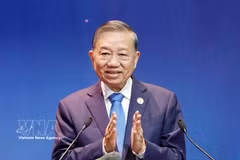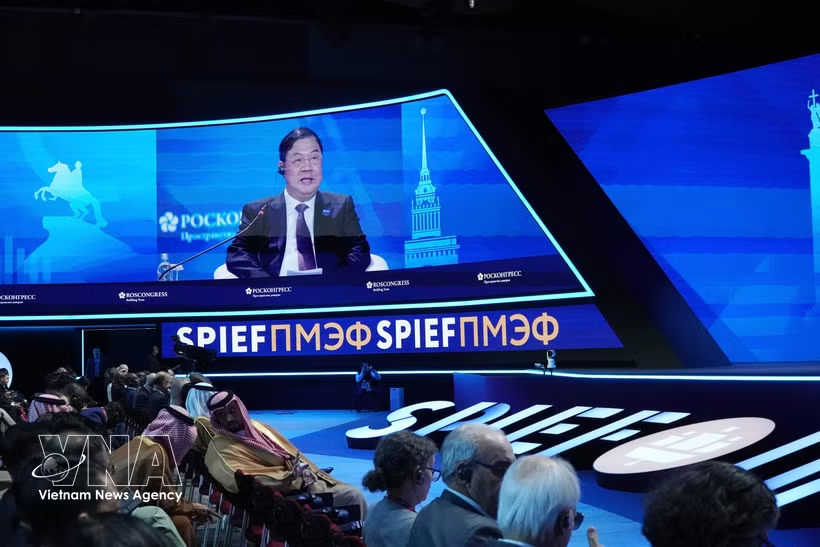
Moscow (VNA) – Vietnamese Permanent Deputy Prime Minister Pham Gia Tuc has proposed three key areas of cooperation aimed at ensuring a stable future for the region and the wider world, while addressing the opening session of the 29th St Petersburg International Economic Forum (SPIEF) in Russia on June 4.
This year’s forum, featuring 150 thematic discussion sessions, has brought together senior leaders from several countries across Asia, the Middle East, Africa and Latin America, as well as more than 20,000 delegates representing governments, businesses, international organisations and academic institutions from over 130 countries and territories.
In his address, Tuc identified the first priority as strengthening the stability and effectiveness of existing cooperation frameworks. He stressed that countries should enhance connectivity rather than fragmentation; maintain a free, open, transparent, inclusive and rules-based trade and investment environment; reinforce critical supply chains; and facilitate more equitable access for developing nations to markets, technology and development resources.
The Deputy PM affirmed Vietnam’s readiness and commitment to contributing actively to efforts aimed at strengthening connectivity between ASEAN and Eurasian partners for peace, stability and shared prosperity.
Secondly, he called for enhanced adaptability in response to the rapid pace of scientific and technological change. This, he said, requires greater cooperation in science, technology and innovation; harmonisation of technological standards; expanded knowledge-sharing and high-quality workforce training; and stronger support for developing countries to participate more effectively in the digital economy.
Thirdly, Tuc underscored the need to bolster resilience and preparedness in the face of global challenges such as climate change, natural disasters, pandemics and other non-traditional security risks. He noted that this would require closer coordination among nations, particularly in forecasting, emergency response, the sharing of experience, technology transfer and financial support. Human beings, he added, should remain at the centre of all development strategies.
The Deputy PM’s assessments and proposals were warmly welcomed by participants at the forum.
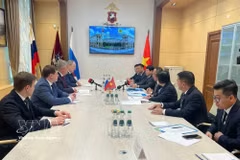
On the same day, Tuc held separate meetings with Russian Deputy PM Alexander Novak and Governor of St Petersburg Alexander Beglov.
During their meeting, Novak reaffirmed the Russian Government’s commitment to further deepening its comprehensive strategic partnership with Vietnam and praised the positive results achieved in bilateral economic and trade cooperation, particularly in the energy and oil and gas sectors.
The Russian Deputy PM proposed that both sides work closely to ensure the effective implementation of the Ninh Thuan 1 nuclear power plant project, thereby contributing to Vietnam’s long-term energy security.
For his part, Tuc reiterated that Vietnam highly values its traditional friendship and comprehensive strategic partnership with Russia and expressed a desire to continue implementing existing commitments and agreements while translating bilateral cooperation priorities into concrete outcomes across various sectors.
He encouraged businesses from both countries to engage proactively in discussions on specific cooperation projects in gas-fired power generation, wind energy and other energy sectors, ensuring mutual benefits and alignment with the development strategies of both nations. He also stressed that the Vietnamese Government remains committed to creating favourable conditions for foreign investors, including Russian corporations and companies seeking to expand their presence in Vietnam and broaden cooperation opportunities in Russia.
Both sides agreed to support joint ventures in identifying new opportunities and further expanding cooperation, while promoting new energy projects in line with current development needs and potential.
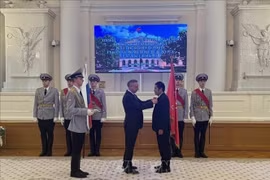
Meanwhile, Beglov affirmed his commitment to fostering bilateral relations and strengthening cooperation between localities in both countries. He also expressed support for organising more activities honouring late Vietnamese President Ho Chi Minh, as well as cultural exchanges and people-to-people diplomacy initiatives. In addition, he pledged continued support for the Vietnamese community living, working and studying in St Petersburg, enabling them to contribute to the city’s development and serve as a bridge of friendship between the two nations.
Tuc welcomed efforts to further strengthen and expand practical and effective cooperation between St Petersburg and its five Vietnamese sister provinces and cities in the areas of trade, education and training, tourism and culture. He also encouraged Vietnamese and Russian airlines to explore additional commercial air routes linking Vietnamese localities with St Petersburg.
The two sides agreed to intensify cooperation in trade, investment, tourism, science and technology, and education and training, particularly in the training of Vietnamese students, engineers and skilled workers at St Petersburg’s leading educational institutions. They also underscored the importance of educating younger generations about their respective national traditions and the longstanding bilateral friendship and cooperation.
Earlier on June 4, the Deputy PM and his delegation, accompanied by Vietnamese students and members of the Vietnamese community in St Petersburg, laid flowers at the Ho Chi Minh monument located in the square bearing the late leader’s name./.
VNA