Indonesia requires natural resources to be exported directly to final destinations

The policy would cover not only mineral exports but also LNG shipments to markets such as Japan and the Republic of Korea. Bahlil said these cargoes should also be transported directly to their final destinations wherever feasible.

Jarkata (VNA) – Indonesia has ordered that exports of natural resources, including minerals and liquefied natural gas (LNG), be shipped directly to their final destination markets rather than routed through third countries as previously practised.

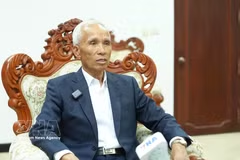
Indonesian Coordinating Minister for Downstreaming and Energy Transition Bahlil Lahadalia, who also serves as Minister of Energy and Mineral Resources said on November 2 that he had instructed relevant units under the Ministry of Energy and Mineral Resources to review and revise existing resource export procedures.

Speaking at the 2026 Mineral and Coal Convention and Exhibition in Jakarta, Bahlil stressed that goods destined for China, for instance, should be shipped directly from Indonesia to China, without passing through a third country merely to complete customs procedures and have the shipments recorded as that country's exports.

He argued that such practices allowed transit countries to benefit from tax revenues and improve their trade balances, despite the resources originating in Indonesia.

The policy would cover not only mineral exports but also LNG shipments to markets such as Japan and the Republic of Korea. Bahlil said these cargoes should also be transported directly to their final destinations wherever feasible./.


VNA

See more

Thailand forms task forces against illegal e-waste imports

Thailand forms task forces against illegal e-waste imports

The inspections will focus on high-risk areas, areas with complaints received, and cases where corrective orders were previously issued but not acted upon — as past practice has frequently involved requests for extensions of time to comply.

Visibility is severely reduced around the air traffic control tower at Kuala Lumpur International Airport due to haze pollution. (Photo: VNA)

Haze causes heavy economic losses for Malaysia

Regarding public health, the report estimated that prolonged exposure to haze contributed to around 1,700 premature deaths, approximately 1,600 of which were associated with smoke from fires outside Malaysia. It stressed that this was a population-level statistical estimate rather than a count of individually confirmed deaths.

Mount Semeru, the highest mountain on Java Island (Photo: VNA)

Indonesia warns of dangers posed by three active volcanoes

Data from the Centre for Volcanology and Geological Hazard Mitigation (PVMBG) showed that as of 6am on October 30 (local time), all three volcanoes remained at alert level 3, indicating significant potential hazards and the need for heightened vigilance.

Singapore steps up emergency response to protect child abuse victims

Singapore steps up emergency response to protect child abuse victims

Singapore has expanded the operations of its Domestic Violence Emergency Response Team (DVERT) nationwide. The team handled 1,439 cases in 2025, more than double the 675 recorded in 2024. Authorities issued 1,151 emergency orders during the year, including measures requiring perpetrators to leave the home or prohibiting them from contacting victims.

Philippines aims to become Southeast Asia’s offshore wind hub

Philippines aims to become Southeast Asia’s offshore wind hub

The Philippines aims not only to develop its first offshore wind projects but also to become a regional centre for research, technology development and services for the industry, she said, adding the government is planning to auction 3,300 megawatts (MW) of fixed-bottom offshore wind capacity, with projects targeted to come online between 2028 and 2030.

Japanese Minister of National Defence Koizumi Shinjiro (Photo: Xinhua/VNA)

Japan shores up defence ties with ASEAN

Japanese Minister of National Defence Koizumi Shinjiro said members must bridge differences to tackle shared challenges and proposed expanding Japan–ASEAN cooperation with outside partners into AI, unmanned systems and the protection of undersea critical infrastructure.