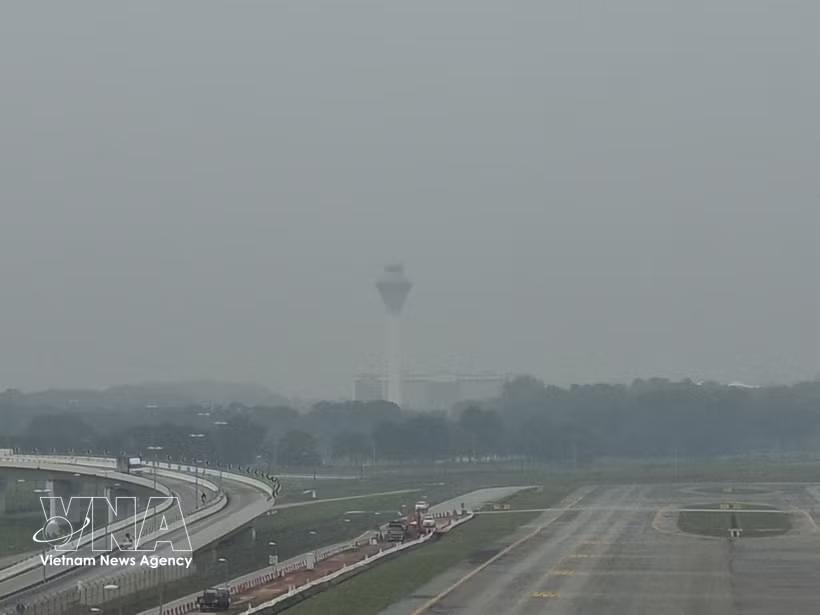
Kuala Lumpur (VNA) – Transboundary haze from Indonesia, which lasted from July 1 to October 22, caused an estimated 8 billion MYR (1.97 billion USD) in welfare losses in Malaysia and contributed to approximately 1,700 premature deaths in the country.
The figures were released in a report entitled “The 2026 Fire Season and Transboundary Haze in Malaysia”, commissioned by the Federation of Malaysian Manufacturers (FMM) to comprehensively assess the impact of the haze crisis on business and manufacturing activities, the Malay Mail reported.
The study combined satellite data, air quality monitoring systems, atmospheric modelling and surveys of FMM member companies. The report cautioned that the findings were not representative of the entire manufacturing sector, as most responses came from Selangor and Penang, with only two from Sarawak. Among 86 manufacturing facilities surveyed, more than two-thirds reported being affected in various ways, while 26% experienced moderate or severe disruptions.
Among the 59 facilities reporting operational impacts, workforce-related problems were the most common. Some 81% reported increased sick leave or health-related absenteeism, while 63% faced staffing difficulties due to school closures. Another 14% experienced labour shortages that disrupted shifts, production or delivery schedules.
These challenges affected productivity, with 37% of facilities reporting lower output and 27% having to suspend at least one operation.
Regarding public health, the report estimated that prolonged exposure to haze contributed to around 1,700 premature deaths, approximately 1,600 of which were associated with smoke from fires outside Malaysia. It stressed that this was a population-level statistical estimate rather than a count of individually confirmed deaths.
FMM President Jacob Lee Chor Kok said haze should be recognised as a direct threat to public health, labour productivity, economic sustainability and regional competitiveness.
As manufacturing industries become increasingly interconnected through global supply chains, he stressed that preventing haze is not only an environmental responsibility but also an essential investment in economic resilience and sustainable development for future generations./.

Singapore maintains investment commitment to Indonesia amid haze-related challenges
BKPM data showed that Singapore remained Indonesia's largest foreign investor in January-September, with investment totalling approximately 14 billion USD, accounting for 29.6% of the country's total foreign direct investment.