Mao Dien Temple promotes Vietnam’s tradition of learning, respect for teachers

The special national relic, located in Mao Dien commune, embodies the historical and cultural values of the former region of Hai Duong.

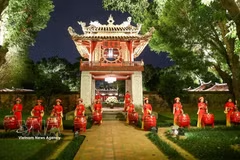
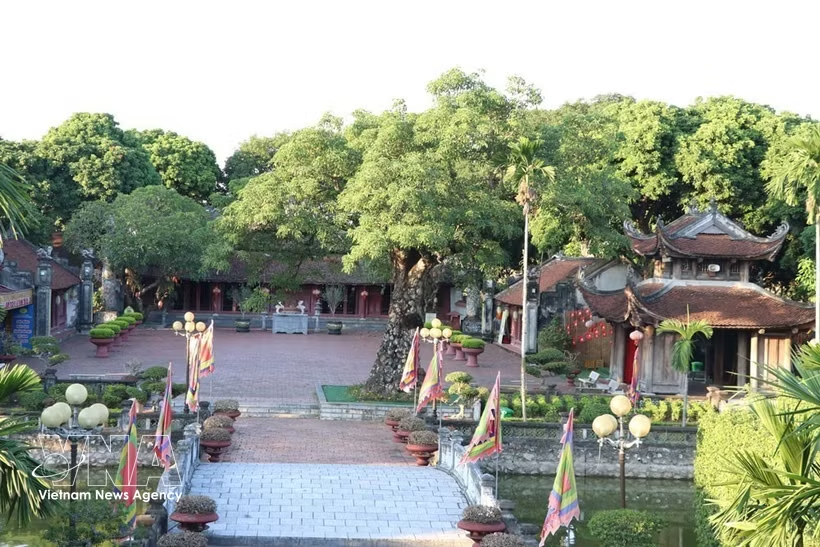
Mao Dien Temple in Hai Phong city is an important symbol of Vietnam’s long-standing tradition of learning and academic excellence. (Photo: VNA)

Hai Phong (VNA) – As Vietnam’s second-largest Temple of Literature after the one in Hanoi, Mao Dien Temple in Hai Phong city is an important symbol of Vietnam’s long-standing tradition of learning and academic excellence.

The special national relic, located in Mao Dien commune, embodies the historical and cultural values of the former region of Hai Duong. Hai Phong authorities are working to promote these values, turning the heritage site into an important resource for the nothern city’s development.

A symbol of academic tradition

Mao Dien Temple represents the tradition of valuing education and Confucian scholarship in the former Hai Duong region and Vietnam as a whole.

The temple was first built in the 15th century under the Early Le Dynasty in Vinh Lai commune, Duong An district. Around the same period, the Hai Duong regional examination centre was established in Mao Dien. Its former grounds are now known as Trang Field.

Historical records show that the examination centre initially served the region before becoming a national examination venue under the Mac Dynasty. During this period, it hosted four metropolitan examinations. Under the Tay Son Dynasty (1788–1802), the temple was relocated from Vinh Lai to Mao Dien and combined with the examination centre, forming an important centre of education and culture.

Over the centuries, the site has undergone several restoration and renovation projects. It was recognised as a national historical and cultural relic in 1992, followed by further restoration between 2002 and 2016. In 2017, it was designated a special national relic and, in December 2024, recognised as a provincial-level tourist area.

The temple worships Confucius and eight distinguished Vietnamese scholars and historical figures, namely renowned teacher Chu Van An; Mac Dinh Chi, who earned the highest academic title in both Vietnam and China; doctoral laureate Pham Su Menh; physician and Zen master Tue Tinh; national hero and great man of culture Nguyen Trai; scholar Nguyen Binh Khiem; mathematician Vu Huu; and Nguyen Thi Due, a female doctoral laureate.

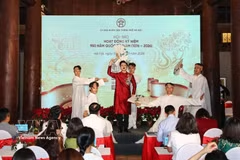
Today, the temple serves as a destination for educational activities and the promotion of academic excellence, attracting tens of thousands of visitors who come to explore its history and pay tribute to national scholars.

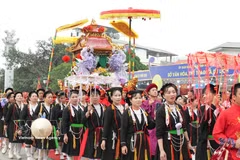
Its annual festival is held twice a year, with the main spring celebration taking place on the 18th day of the second lunar month. The event honours distinguished predecessors and promotes the traditions of learning and respect for teachers.
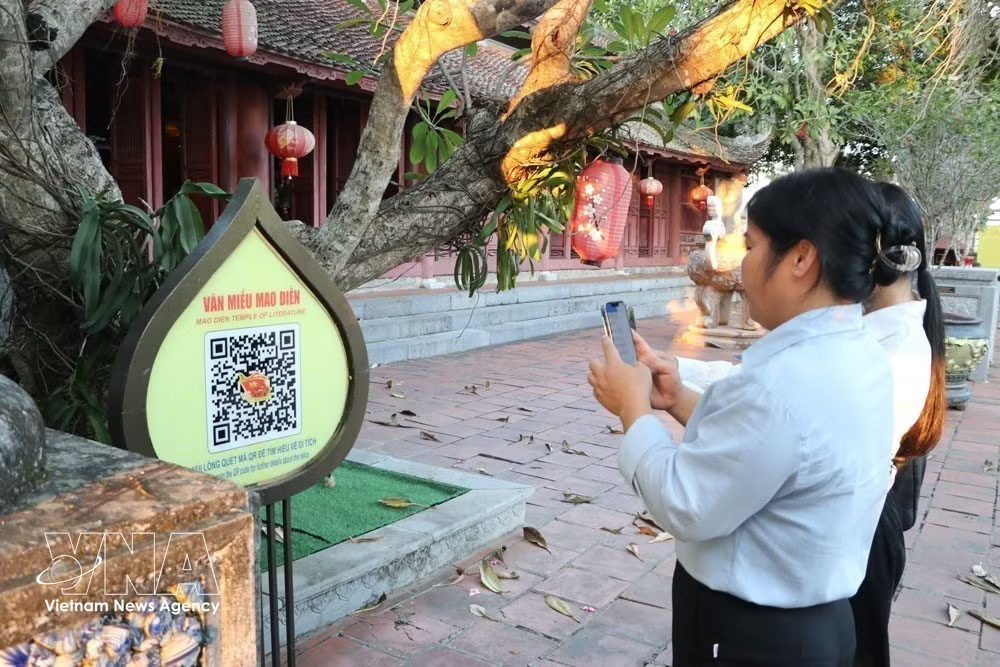
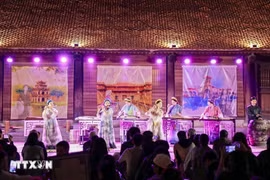
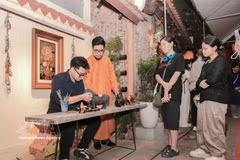
Digitising information about the special national relic of Mao Dien Temple makes it easier for visitors to explore and learn about the site through digital platforms. (Photo: VNA)

Digitising information about the special national relic of Mao Dien Temple makes it easier for visitors to explore and learn about the site through digital platforms. (Photo: VNA)

Turning heritage into an educational resource

Hai Duong province, now part of Hai Phong city, has made efforts to preserve and promote the temple's values through activities that educate younger generations about national history and the importance of education.

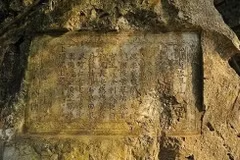
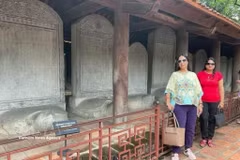
Le Thi Thoa, deputy head of the Cam Giang relic management division under the Con Son–Kiep Bac Relic Management Board of Hai Phong's Department of Culture, Sports and Tourism, said preservation work covers the temple's architectural structures, cultural spaces, stone steles, Han-Nom script documents and artefacts related to the history of Confucian education and examinations.

The work also includes making surveys, preparing scientific records, conducting research and digitising historical materials to ensure their long-term preservation.

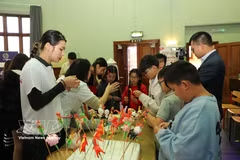
The management board has organised various activities, including the temple festival, incense-offering ceremonies, spring calligraphy activities and ceremonies honouring outstanding students and academic achievers.

To make the heritage more accessible, local authorities and cultural agencies are also applying digital technology and working with schools to develop educational programmes, Thoa added./.
VNA

See more

Visitors experience the lacquer-making process firsthand. (Illustrative photo: VNA)

Craft villages need mentors to keep traditions alive

Trinh Quoc Dat, Chairman of the Vietnam Craft Village Association, said craft hubs with strong production, market access and decent incomes tend to attract young workers. Bat Trang commune draws labour from nearby areas, and some families send children to study ceramics before they return to develop the craft and study new designs and glaze lines.

The opening ceremony of the Hue International Sculpture Camp 2026 on November 5 (Photo: VNA)

Hue International Sculpture Camp opens

Running until November 15, the event is a meaningful cultural and artistic activity celebrating Vietnam Culture Day (November 24), contributing to the promotion of national cultural values and inspiring creativity in contemporary art.

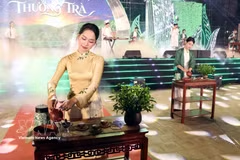
Tea-making performance at the tea appreciation night in Thai Nguyen province on November 4, 2026.(Photo: VNA)

Vietnamese, international tea cultures shine at cultural night

The programme was elaborately staged, combining music, dance, traditional art performances and modern stage technology to offer participants an insight into the cultural values of Vietnamese tea and the tea appreciation traditions of several East Asian countries.

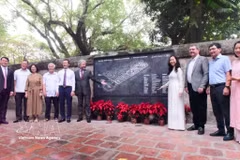
Delegates at the launch of the new visitor map and guide leaflet at the Van Mieu – Quoc Tu Giam Special National Relic Site (Photo: VNA)

950th anniversary of Quoc Tu Giam marked with new visitor guides

The new overall map presents the Van Mieu-Quoc Tu Giam Special National Relic Site's spatial layout, the locations of its structures and key attractions, enabling visitors to plan their own routes. The leaflet provides an overview of the site's history, architecture, historical figures and outstanding cultural and educational values.

Pianist Bich Tra performs at a concert in Hong Kong, China. (Photo published by VNA)

Pianist Bich Tra brings Vietnamese music to the world

Ahead of Great National Unity Day (November 18) and Vietnam Cultural Day (November 24), pianist Bich Tra, who is now living in Hong Kong (China), shared her artistic journey and aspirations for Vietnam's cultural development.

Children are taught how to make traditional to he figurines at the charity cultural event. (Photo: VNA)

Vietnamese culture and power of solidarity: A story from the UK

Dao Kim Thu, the foundation's founder and initiator of the programme, told the Vietnam News Agency’s correspondents in London that its mission is not only to support disadvantaged women, children and communities in Vietnam, but also to connect overseas Vietnamese, promote Vietnamese culture internationally and nurture younger generations' attachment to their roots.

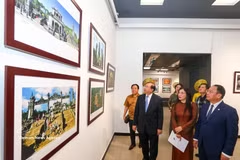
The photo exhibition “Vietnam’s World Heritage Sites” features 100 photos showcasing 30 heritage sites recognised by UNESCO. (Photo: VNA)

Localities work to enrich vitality of Vietnamese culture

Guided by the Politburo's Resolution No. 80-NQ/TW on Vietnamese cultural development, a range of cultural activities held nationwide over the past week have highlighted efforts to preserve and promote national identity while encouraging creativity and expanding public access to culture.

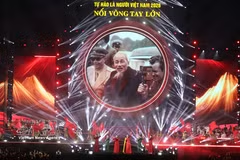
A performance at the “Proud to Be Vietnamese 2026” concert. (Photo: VNA)

“Proud to Be Vietnamese 2026” concert celebrates national unity

Concluding with a spectacular fireworks display, the the “Proud to Be Vietnamese 2026” concert in Thai Nguyen province brought together tens of thousands of people at the stadium and millions of viewers watching through screens. It also served as a reminder of the tradition of gratitude to previous generations and helped reinforce national pride and solidarity.

The digital art programme “Tinh hoa dao hoc” (Essence of Education) at the Van Mieu – Quoc Tu Giam (Temple of Literature - National University) special national relic site in Hanoi on November 1 (Photo: VNA)

Vietnamese cultural digital map platform promotes love for nation: Minister

Beyond serving as a location-search tool, the CMAP is designed as a comprehensive digital information channel covering cultural, sports and tourism infrastructure. It enables real-time updates on arts and cultural events, traditional festivals, mass sports competitions and heritage tourism itineraries, bringing diverse cultural data together in an integrated ecosystem.

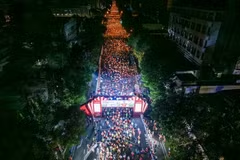
The Techcombank Ho Chi Minh City International Marathon 2026 will be held on December 4-6 and is expecting a record 24,000 runners. (Photos courtesy of SEV)

Techcombank Ho Chi Minh City International Marathon to be held in December

As an iconic marathon bearing the city's name, the event has established itself as one of Vietnam's largest and most influential community sporting events, contributing to the growth of sports tourism, stimulating the local service economy and attracting an increasing number of international visitors to Ho Chi Minh City.