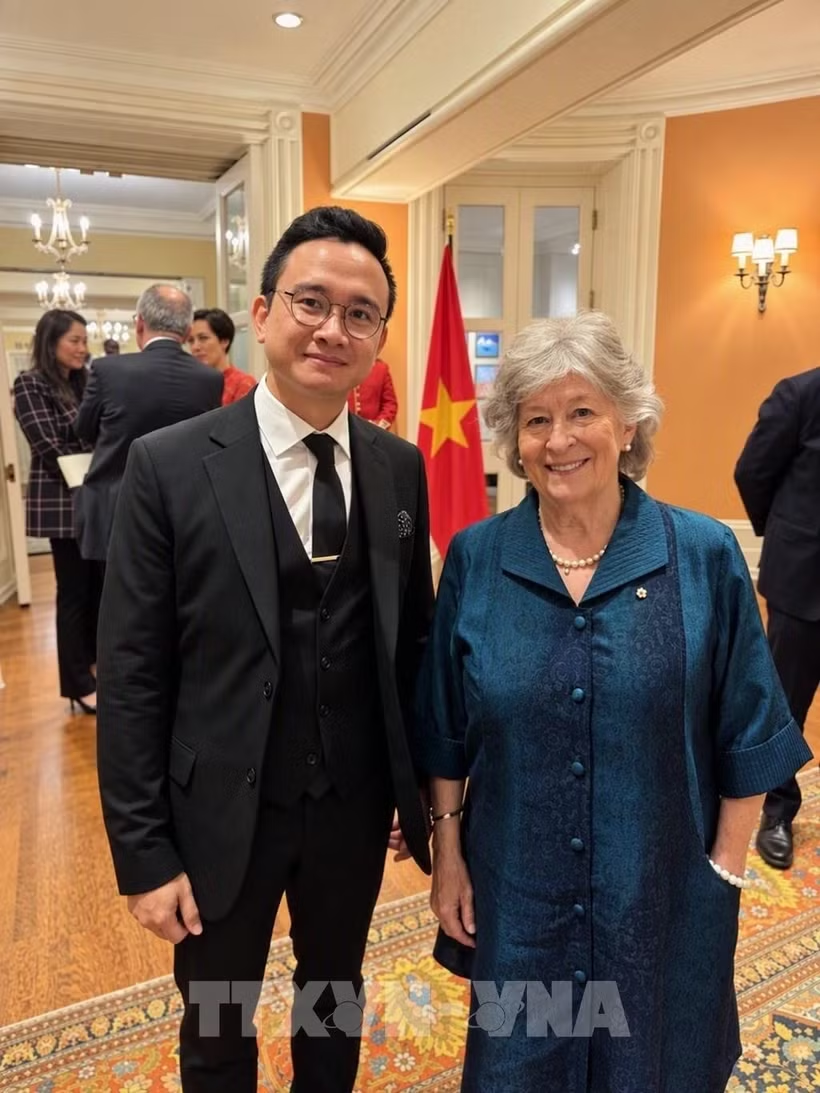
Ottawa (VNA) – The expertise of Vietnamese people living abroad is vital to the nation’s progress in science, technology, and innovation, said Associate Professor Vu Viet Hung, President of the Canadian Vietnamese Scientists and Experts Association (CVSEA).
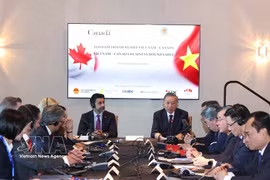
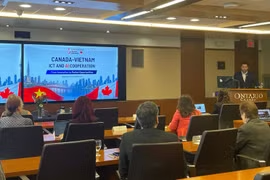
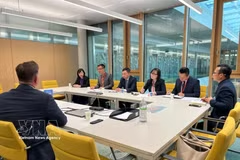
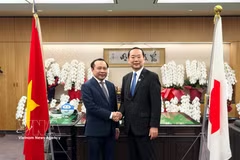
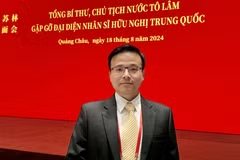
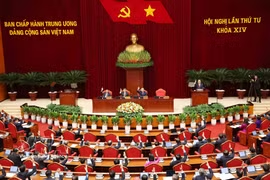
His remarks came after the General Secretary of the Communist Party of Vietnam Central Committee and President To Lam's recent meeting with distinguished experts and intellectuals from CVSEA.
Hung said the meeting underscored the guiding view that Vietnamese experts and scientists living overseas are an important resource for the development of science and technology and the country’s socio-economic innovation process.
CVSEA is expected to develop into a stronger network connecting Vietnamese intellectuals, serving as science and technology ambassadors in Canada while supporting and mentoring younger generations of Vietnamese to help build a sustainable pool of talent for the future.
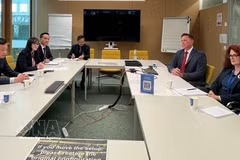
The meeting also highlighted a three-party cooperation model involving scientists, experts and businesses to address major challenges regarding strategic technologies facing Vietnam. Such cooperation should not stop at long-term strategic orientations but should be translated into specific projects that deliver tangible results and benefits to all participating sides, he said.
The opportunity is further strengthened within the framework of the Vietnam-Canada strategic partnership, where science and technology serve as a key pillar, both driving breakthroughs in their own right and acting as a catalyst for the development of the energy, transport, trade, investment and education sectors, he added.
Associate Professor Dang Duc Huy of Canada's Trent University emphasised orientations for developing Vietnam’s rare-earth value chain, highlighting the strategic role of Vietnamese intellectuals overseas in line with the spirit of Politburo Resolution No. 23-NQ/TW.
He said overseas Vietnamese scientists do not have to return to Vietnam for long-term work to make an impact. They can contribute by joining collaborative research teams, sharing analytical techniques, facilitating access to modern equipment, and linking Vietnam with international labs and universities.
Setting specific technological challenges in separation technologies, environmental monitoring, waste treatment and recycling for teams comprising domestic scientists, overseas Vietnamese experts and international specialists to tackle together will be the shortest path for Vietnam to secure sustainable and self-reliant development over the long term./.