Domestic paper businesses have been urged to improve their products'quality and competitiveness when the country enters into Free TradeAgreements (FTAs), experts said.
Statistics from the GeneralDepartment of Customs showed that in the first five months of the year,the country's total turnover of paper and paper products was 49 millionUSD, while its import turnover reached 174.5 million USD, or 3.5 timeshigher than that of its exports.
Another report from the VietnamPaper and Pulp Association revealed that last year, Vietnam importedmore than 1.5 million tonnes of paper and paper products, its exportswere only 133,000 tonnes. This shows that the local paper industry isheavily dependent on imported materials.
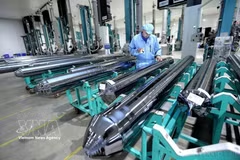
Hoang Minh Thang,director of Tien Thanh Investment and Import-Export Company, told HaiQuan (Customs) Newspaper that Vietnamese paper businesses are small andhave inefficient production lines, thus their product quality is not asgood as that of other countries.
Nguyen Van Hai from Hai TienPaper Company said they used to export paper products to Malaysia andSingapore. However, they have focused on the local market now as theproducts do not meet the standards required by the importing countries.
The upcoming FTAs would have an impact on our businesses, even though the domestic market has been stable, Hai said.
HaNgoc Hoa, Vice Director of the Bac Giang Import-Export Joint StockCompany, told the newspaper that the most important thing for the paperindustry would be the establishment of the ASEAN Economic Community bythe end of this year. The import tax on paper and paper products amongthe Community would be zero by 2018. This could create fiercecompetition for the local paper industry as half of the paper in Vietnamwas imported from the ASEAN.
Hoa said the tariff cut wouldcreate opportunities but would also challenge domestic businesses.However, local firms have not clearly understood the opportunities andchallenges presented by FTAs as they have only focused on the domesticmarket so far.
For this reason Vietnamese paper enterprises should have a plan to improve their competitiveness.
Thangfrom Tien Thanh Investment and Import-Export Company said they plannedto import cheap materials with good quality for production anddistribution when the tariff drops to zero. In addition, they wouldupgrade their machines to increase productivity and improve quality.
The businesses will need support from the Government in terms of capital, infrastructure and equipment.-VNA