Singapore calls for stronger cooperation between EU, ASEAN

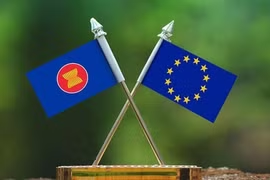
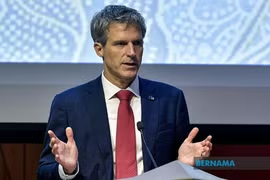
Singaporean Minister of Foreign Affairs Vivian Balakrishnan on October 14 emphasised the importance of advancing ASEAN–EU cooperation at the inaugural Europe Conference in Singapore.

The Europe Conference opens from 13-15 October in Singapore (Photo: techsingadv.com)

Singapore (VNA) - Singaporean Minister of Foreign Affairs Vivian Balakrishnan on October 14 emphasised the importance of advancing ASEAN–EU cooperation at the inaugural Europe Conference in Singapore.

The event was jointly organised by the Singapore Business Federation (SBF) and the European Chamber of Commerce Singapore (EuroCham).

With the theme “Sustainability and Innovation,” the forum drew the attendance of senior officials from Singapore and Europe, diplomatic representatives, and more than 300 delegates from various countries.

In his opening remarks, SBF Chairman Teo Siong Seng urged the development of a roadmap for inclusive and sustainable economic growth. He affirmed Singapore’s strategic role as a bridge between Asia and Europe and pledged to facilitate opportunities for businesses to engage more deeply.

Teo also highlighted Singapore’s deep understanding of ASEAN’s cultural diversity and reiterated its commitment to serve as a reliable gateway for European firms entering ASEAN and Asia.

In his address, Balakrishnan stressed that Europe and Southeast Asia can and must work together to build a better future. He focused on three main themes: trade and business, upholding a rules-based order, and opportunities in green economy and digital economy, especially in the context of Europe–Southeast Asia interaction.

He noted that the EU is already ASEAN’s third-largest trading partner and the two sides boast potential to deepen that partnership.

Balakrishnan projected that the ASEAN economy is likely to double over the next two decades. With a young population and a growing middle class, Southeast Asia represents a critical market for the EU.

He cited increasing connectivity through the ASEAN–EU Comprehensive Air Transport Agreement, signed in October 2022 when Singapore held the ASEAN Transport Work Group Chairmanship. Calling for trade liberalisation and deeper economic integration, Balakrishnan urged EU and ASEAN to intensify joint actions. He also proposed members of the CPTPP, including the UK, play a more active role in partnership and cooperation with the EU.

He added that the first ASEAN–EU Ministerial Dialogue on Environment and Climate Change was held last month in Malaysia, through which both blocs reaffirmed their commitments to the Paris Agreement and to stepping up cooperation to realise its goals.

On green and digital economy, the minister lauded the signing of the EU–Singapore Digital Trade Agreement in May 2025. This landmark bilateral agreement, the EU’s first such pact with an ASEAN country, will facilitate digital trade and cross-border innovation growth.

At the conference, Singaporean and international experts discussed Singapore’s role as a springboard for scaling innovation and forging transnational partnerships. They also emphasised the increasing importance of family businesses in cementing EU–Asia economic linkages.

Amid global uncertainties, participants underlined the urgency of cross-border cooperation and intersectoral partnerships to guide structural transformation in the global economy and strengthen long-term business resilience./.
VNA

See more

An overview of the dialogue between ASEAN leaders and the ASEAN Business Advisory Council (ASEAN-BAC) in Manila on November 15 (Photo: VNA)

Vietnam puts forward priorities to advance ASEAN cooperation

Appreciating ASEAN-BAC’s report and recommendations, Deputy Minister of Foreign Affairs Dang Hoang Giang, head of Vietnam’s ASEAN Senior Officials’ Meeting (SOM) delegation, called for simplifying procedures, reducing costs, accelerating digitalisation, upgrading the ASEAN Single Window (ASW) and effectively implementing the ASEAN Digital Economy Framework Agreement (DEFA) to make the regional market more accessible.

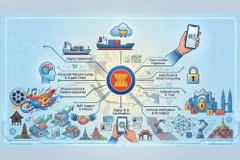
ASEAN signs Digital Economy Framework Agreement

ASEAN signs Digital Economy Framework Agreement

The Digital Economy Framework Agreement (DEFA), the bloc’s first standalone and legally binding digital economy agreement, establishes common rules covering digital trade, cross-border data flows, electronic payments, cyber security and artificial intelligence (AI).

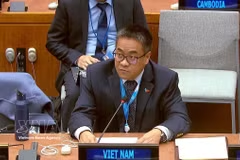
Minister Counsellor Nguyen Hai Luu, Deputy Permanent Representative of Vietnam to the UN, speaks at the discussion on November 12, 2026. (Photo: VNA)

Vietnam supports peace, reconstruction efforts in Gaza: diplomat

Minister Counsellor Nguyen Hai Luu, Deputy Permanent Representative of Vietnam to the UN, expressed deep concern over the dire humanitarian situation in Gaza, particularly as recent heavy rains and flooding have worsened living conditions for residents.

Thailand diversifies oil sources to ensure energy security

Thailand diversifies oil sources to ensure energy security

Although the diversification of oil import sources has helped reduce the risk of domestic oil shortage, it has not immediately reduced energy costs because import prices depend on market mechanisms, transportation costs, foreign exchange rates and the terms of oil contracts.

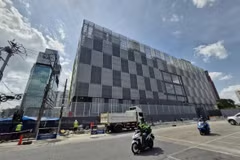
ST Telemedia Global Data Centres (Thailand), an affiliate of Singapore Telecom, is developing three data cehtres in Thailand including this facility on Rama IX Road in Bangkok. (Photo: bangkokpost)

Thailand tightens regulations on data centres

The new rules focus on controlling investment scale, electricity and water consumption, environmental impacts, and preventing investors from reserving resource quotas beyond their actual needs.

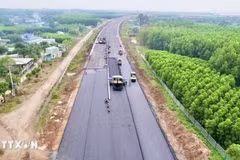
A road is under construction in Dong Nai city, Vietnam. (Photo: VNA)

ADB: Southeast Asia needs 7.1 trillion USD in infrastructure investment by 2040

ADB estimates that the region will need an average of 476 billion USD in infrastructure investment annually during 2026–2040, equivalent to 8.7% of GDP. However, at current investment levels, government budget resources would cover only around 45% of this demand, leaving an annual financing gap of 264 billion USD.

Kyodo News publishes an article titled “Sculptures by Japanese, Vietnamese artists on display in Yokohama,” (Screenshot photo)

Japanese media widely cover top Vietnamese leader ’s visit

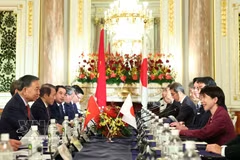
Japanese media have continued extensive coverage of General Secretary of the Communist Party of Vietnam (CPV) Central Committee and President To Lam’s activities in Japan, highlighting his meetings with representatives of leading financial institutions at the Tokyo Stock Exchange, witnessing of cooperation agreement signing and participation in cultural exchanges.

Thailand pushes for establishment of ASEAN emergency public health centre

Thailand pushes for establishment of ASEAN emergency public health centre

The draft agreement stipulates that ACPHEED will comprise three specialised centres based in three ASEAN member states. Vietnam will oversee the centre for prevention and preparedness; Indonesia will host the centre for detection and risk assessment; and Thailand will be responsible for the centre for response and risk communication.

Indonesia designates 31 mln ha of waters as conservation areas

Indonesia designates 31 mln ha of waters as conservation areas

Head of the Convention and Marine Resource Balance working team at the ministry’s Directorate of Ecosystem Conservation Ahmad Sofiullah said this week that it is a strategic effort to ensure the sustainability of Indonesia’s marine ecosystems.