Tay Ninh (VNA) – The southern province of Tay Ninh will assess the performance of 111 agencies and units under its Department and Commune Competitiveness Index 2026 (DCCI), aiming to establish an additional channel for measuring governance quality, administrative reform and public service quality.
Director of the provincial Department of Finance Truong Van Liep said the assessment will cover 11 provincial departments and agencies, four central agencies operating in the locality, and 96 commune-level People's Committees.
A list of around 12,000 active enterprises, cooperatives and business households operating, conducting production and business activities, or implementing investment projects in the province will serve as the basis for selecting the survey sample. About 3,500 responses are to be collected.
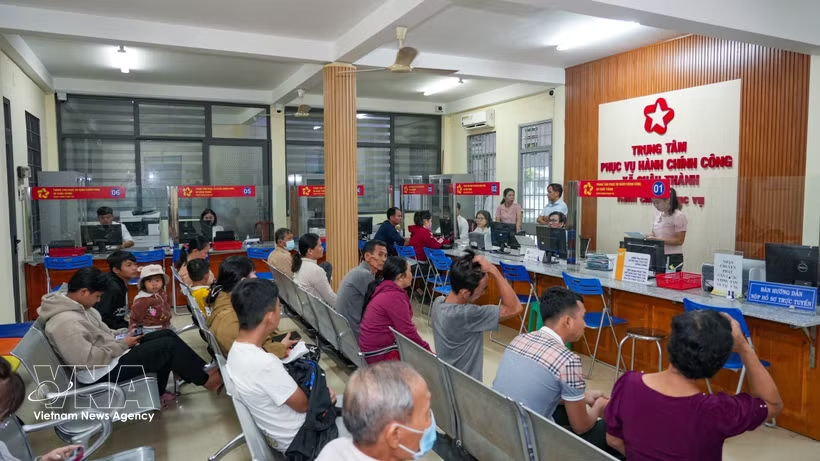
The DCCI is designed to assess the leadership and management capacity of the provincial departments and agencies and commune-level People's Committees, while gathering feedback from people and businesses on the attitude and quality of guidance and services provided by public officials and civil servants.
The survey will focus on governance quality, implementation of policies, administrative procedures and provision of public services. Its results will serve as a reference for evaluating governance quality, administrative reform and the accountability of relevant agencies and units.
The index will also provide a transparent channel for investors and businesses to contribute to the development of the local administration. Based on the annual results, Tay Ninh will identify shortcomings for timely rectification and develop measures to improve its investment and business environment, thereby enhancing its score and ranking in the Provincial Competitiveness Index 2.0 (PCI 2.0).
Of the estimated 3,500 responses, around 1,000 will assess the provincial departments, agencies and central agencies operating in the province, while about 2,500 will evaluate commune-level People's Committees. Sample selection and allocation by locality, respondent group and assessed agency will be specified in the survey plan to ensure representativeness, objectivity and reliability.
The survey will be built around three pillars – a favourable business environment, a fair and competitive environment, and sustainable growth and the role of the administrations – with 10 component indicators.
Data will be collected through direct and online surveys, with an estimated 2,000 and 1,500 responses, respectively. The process must ensure objectivity, independence and confidentiality, while quality control and post-survey verification mechanisms will be established. An email address and hotline will also be maintained to support participants.
According to the Department of Finance, in October, relevant units focused on developing and approving the assessment plan, selecting a consulting agency, and developing and finalising Tay Ninh's 2026 DCCI indicator set.
Following approval, the department will coordinate with the provincial Statistics Office and the consulting agency to survey from October to December, with results expected to be announced in January next year.
The statistics agency will conduct the survey and collect data, while the consulting agency will provide professional guidance, develop survey tools, support implementation and oversee quality. Afterwards, the agency will compile and process the data, analyse the results, calculate scores and rankings, and prepare a draft report for the Department of Finance to review before submission to the provincial People's Committee.
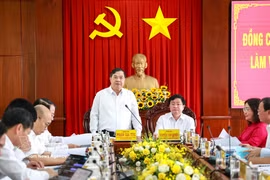
Vice Chairman of the provincial People's Committee Huynh Van Son requested that the DCCI indicators and assessment criteria should draw on the PCI 2.0 methodology and professional recommendations from the Vietnam Chamber of Commerce and Industry (VCCI), while being flexibly adapted to local conditions.
He stressed that the exercise must produce results that genuinely reflect governance quality, with practical survey content and criteria, confidentiality and transparency, and comprehensive, objective and verifiable analysis.
The DCCI results will help provincial departments, agencies and commune-level People's Committees take on board feedback from investors and businesses, identify strengths and address shortcomings, contributing to improved governance quality and more effective administrative reform at all levels./.