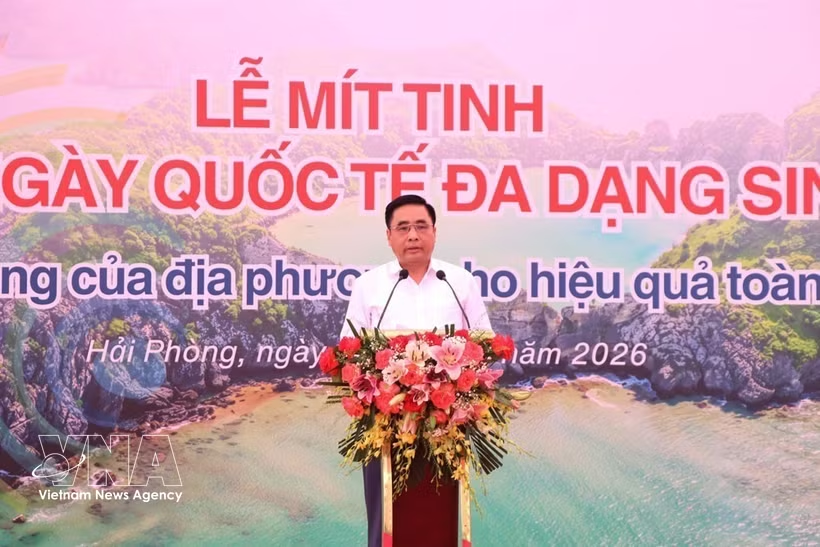
Hai Phong (VNA) – Vietnam is gradually diversifying financial mechanisms for nature conservation, with trillions of Vietnamese dong mobilised each year for forest protection and development, as well as livelihood support for local communities, Deputy Minister of Agriculture and Environment Nguyen Quoc Tri said at a rally marking the 2026 International Day for Biological Diversity (May 22).
The event was held on May 22 at the UNESCO world heritage site of Con Son – Kiep Bac in the northern port city of Hai Phong by the Ministry of Agriculture and Environment, the municipal People's Committee, and the United Nations Development Programme (UNDP) in Vietnam.
Speaking at the ceremony, Tri said Vietnam continues to demonstrate its role as an active and responsible member in implementing the Convention on Biological Diversity and the Kunming – Montreal Global Biodiversity Framework. The country is progressively integrating global biodiversity targets into its national strategies, planning frameworks, development plans and programmes, based on the consistent principle that nature conservation must serve as a foundation for sustainable development, green growth and improved quality of life.
Initiatives on biodiversity finance, carbon credits, public – private partnerships, nature-based tourism, and private sector investment are creating more opportunities to increase resources for ecosystem conservation and restoration, he went on, adding that Vietnam is also promoting a whole-of-society approach to biodiversity conservation, encouraging greater participation from local communities, businesses and civil society organisations.
Outlining future priorities, the deputy minister said Vietnam will continue to focus on improving implementation at the local level while accelerating the application of science, technology and digital transformation to natural resources management.
Recognising the country’s significant contributions to biodiversity conservation, Francesca Nardini, UNDP Deputy Resident Representative in Vietnam, pointed out mounting pressure on biodiversity as a result of land use conversion, pollution, resource overexploitation, and climate change. To address these challenges, it is necessary to enhance environmental governance, step up law enforcement, improve data and monitoring systems, boost science-based planning, and maintain investment in both ecosystems and related communities.
She said her organisation is proud to support the Vietnamese Government and its partners in strengthening institutional frameworks, mobilising biodiversity finance and scaling up nature-based solutions.
These efforts include support for the preparation of Vietnam’s seventh national report to the Convention on Biological Diversity, the restoration and sustainable management of forests, mangroves, wetlands and coastal ecosystems, and the promotion of local community participation in conservation activities.
From a local perspective, Permanent Vice Chairman of the Hai Phong People’s Committee Le Anh Quan highlighted the city's rich and diverse ecosystems, noting it will intensify efforts to manage and protect natural ecosystems, raise public awareness of the value of nature, strictly control activities that may lead to biodiversity degradation, expand mangrove planting and strengthen the protection of special-use forests.
Hai Phong will also strictly punish illegal hunting and wildlife trafficking while promoting green economic models and sustainable livelihoods, he added.
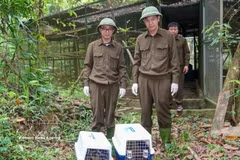
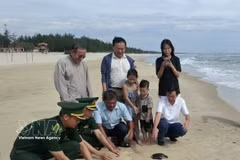
Following the launch ceremony, officials and residents released more than 20,000 juvenile fish into local waters to help restore aquatic resources and planted trees around Con Son Lake.
Vietnam currently has 180 terrestrial and marine protected areas covering more than 2.67 million hectares. The country’s forest cover has been maintained at over 42%./.
Local initiatives drive Vietnam’s push to protect biodiversity for sustainable future
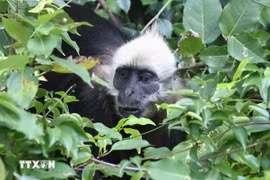
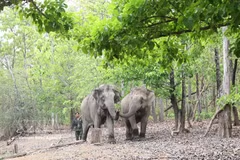
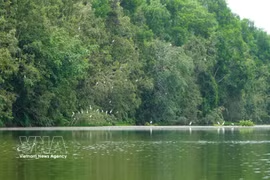
Vietnam has established a network of 180 terrestrial and marine nature reserve covering more than 2.67 million hectares. These sites are being further strengthened to improve ecological connectivity, restore habitats and conserve endangered species. Forest cover remains stable at over 42%, contributing to water protection, climate adaptation and carbon absorption.