Vietnam International Financial Centre faces urgent talent gap

The centre must staff up for launch and close Vietnam’s gap in expertise, skills and global professional standards to secure a long-term competitiveness base.

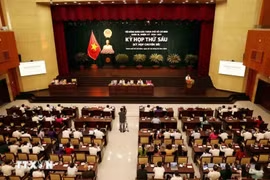
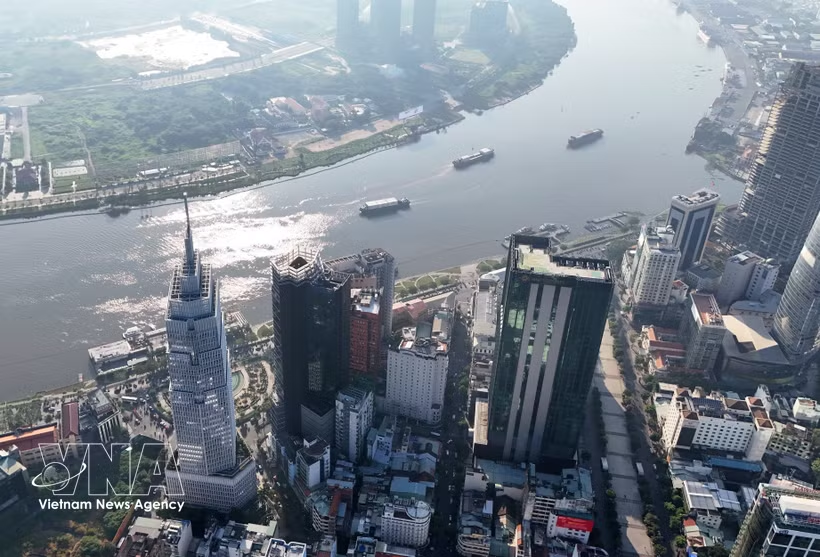
The VIFC-HCMC is positioned as a multi-functional international financial hub focusing on banking services, capital markets and international investment connectivity. (Photo: VNA)

Ho Chi Minh City (VNA) – As the Vietnam International Financial Centre (VIFC) is building its machinery, recruiting members and preparing to trade, the binding constraint is talent.

The centre must staff up for launch and close Vietnam’s gap in expertise, skills and global professional standards to secure a long-term competitiveness base.

The talent crunch

Assoc. Prof. Dr Nguyen Huu Huan, Vice Chairman of the Executive Authority of the VIFC-Ho Chi Minh City (VIFC-HCMC), said the model is new to Vietnam and know-how on running an international financial centre is thin in the training system. Some universities have added relevant content, but specialised knowledge remains scarce.

International certificates are also in short supply. Recruitment work with major corporations and financial institutions shows few Vietnamese candidates fully meet professional and global standard requirements. The fix requires deeper ties with international professional bodies and more ACCA, CFA, CPA and ICAEW courses.

Fintech, AI and quantum technology raise the bar further as finance staff must also apply technology. That skill mix needs to be built into training, Huan said.

While quality labour supply is limited, demand is set to surge as the VIFC-HCMC pulls in financial institutions, global capability centres (GCCs) and innovation hubs.

Each GCC needs about 2,000–3,000 staff. With about 50 GCCs targeted, that alone implies demand for 100,000–150,000 workers. VIFC-HCMC membership is expected to jump over the next 5–10 years, adding more demand for specialised talent.

Alexandra Smith, British Consul General in Ho Chi Minh City, said quality manpower demand will track VIFC’s growth. The first corporate wave may cluster in infrastructure financing, asset management and fintech. Vietnamese workers need the right expertise, skills and certificates for those areas.

According to her, international standards are central to competitiveness. The pressure is not only on new graduates; existing workers need retraining and upskilling as the financial market shifts.

VIFC Academy and building workforce ecosystem

VIFC-HCMC last weekend launched VIFC Academy to link training establishments, professional organisations and businesses in building the talent pipeline.

Huan said the VIFC Academy is part of the centre’s 2026–2030 strategy. It is not an independent university, but a matchmaker between VIFC members’ hiring needs and the training and research capacity of universities, research institutes, businesses and international professional bodies.

Under the model, businesses and financial institutions define hiring needs by position, help build courses and send experts to mentor. Universities design modules, train and run practice. International professional bodies will develop professional courses and issue global standard certifications. Actual business demand sets training content and output standards.

Prof. Dr Nguyen Khac Quoc Bao, Deputy Director of the University of Economics Ho Chi Minh City (UEH), said the priority is a standard competency framework for the VIFC-HCMC, benchmarked against international financial centres. It must specify knowledge, skills and professional expertise for each job, then drive curriculum design.

In his view, courses should have flexible duration and track the professional requirements of each job group. That keeps training deep while letting workers keep updating skills on the job.

He also suggested a competency and orientation council with the participation of the VIFC’s executive agency, universities and authorities. It will set competency requirements, coordinate training courses and keep manpower supply aligned with actual demand.

Bao also said he wants the three-party model to be pushed harder, under which authorities, schools and businesses jointly build courses, run training and create practical experience. Financial institutions should work with universities during training so students get real-work exposure early.

UEH joined Ho Chi Minh City’s international financial workforce development scheme about four years ago and has trained three cohorts of full-time undergraduates. That gives the VIFC Academy an initial base to scale cooperation with financial institutions.

Dang Thi Mai Trang, Head of Vietnam for the Institute of Chartered Accountants in England and Wales (ICAEW), said training courses should focus on capital markets, risk management, sustainable finance and International Financial Reporting Standards (IFRS). International professional bodies will help learners meet global standards and the demands of financial institutions./.

VNA

See more

The daily reference exchange rate is set at 25,652 VND/USD on November 17. (Photo: VNA)

Reference exchange rate edges higher

With the current trading band of +/- 5%, the ceiling rate applicable for commercial banks during the day is 26,935 VND/USD, and the floor rate 24,369 VND/USD.

Manufacturing materials for solar cell production at JA Solar Vietnam Co., Ltd., a Hong Kong (China)-invested enterprise in the Quang Chau Industrial Park, Bac Ninh city (Photo: VNA)

Vietnam, China widen economic, trade cooperation space

General Secretary of the Communist Party of Vietnam Central Committee and President To Lam’s trip to China for the 33rd APEC Economic Leaders’ Week and bilateral engagements is expected to add new momentum, including deeper economic connectivity, broader trade, investment and supply chain links, and a more balanced, substantive economic relationship that matches both sides’ potential.

The sidewalks on Hung Vuong street in Quang Tri province are under renovation. (Photo: VNA)

Quang Tri approves 103 priority projects for investment during 2026–2030

The 103 projects are categorised into seven fields, comprising energy; logistics; tourism, services, and trade; green and high-tech agriculture; industry, industrial zones, and production infrastructure; urban development and commercial housing; and healthcare, wellness, and resort services.

Workers make clothes for export to the Japanese market at Hung Viet Garment Company in Hung Yen province (Photo: VNA)

Vietnam’s textile-garment firms striving to achieve export targets, sustain employment

To achieve the annual target, textile and garment businesses are jointly implementing several core tasks, including diversifying export markets and partners, developing the supporting industries for raw materials and accessories to establish integrated supply chains, investing in technological innovation linked to AI, stepping up high-quality workforce training, promoting green transformation based on circular economy models, and building brands in both domestic and international markets.

Minister of Public Security General Luong Tam Quang (R) receives Choo Hyeong Wook, President and CEO of the Republic of Korea’s SK Innovation in Hanoi on November 16. (Photo: VNA)

Vietnam promotes international cooperation in energy, high technology

Minister of Public Security General Luong Tam Quang called on the RoK's SK Innovation to share experience and work with Vietnamese partners in developing clean and renewable energy, hydrogen, liquefied natural gas, energy storage technologies and carbon emission reduction solutions.

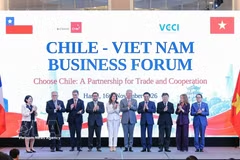
Delegates pose for a photo at the Chile-Vietnam Business Forum in Hanoi on November 16 (Photo: VNA)

Vietnam, Chile seek to expand trade ties

Chilean President José Antonio Kast pointed to potential for cooperation in agriculture and food, and called for stronger technical cooperation, better market access and closer links in innovation, technology, services and sustainable development.

Production of footwear for export at Lefaso Tra Vinh Industrial Investment and Production Joint Stock Company, Tra Cu commune, Vinh Long province (Illustrative image. Source: VNA)

VEFTA implementation requires exporters to restructure supply chains: Experts

Under VEFTA, tariff reductions to zero will be meaningless for Vietnam’s key export sectors, including textiles and garments, footwear, and agricultural and aquatic products, if goods are found to contain banned chemicals, violate rules of origin or lack transparency regarding their carbon footprints.

Deputy Prime Minister Nguyen Van Thang meets with Martin Sommer, head of the IMF’s Article IV consultation mission team to Vietnam, in Hanoi on November 13, 2026. (Photo: VNA)

IMF sees positive growth prospects for Vietnam, urges cautious monetary policy

Martin Sommer, head of the IMF’s Article IV consultation mission team to Vietnam, noted that inflation risks in Vietnam remain under control, but several factors could add to price pressures. He therefore called for cautious monetary policy management and readiness to respond promptly if inflationary pressures increased.