Vietnam’s digital economy gains momentum with AI adoption

Vietnam’s digital economy maintained positive growth, increasingly driven by the widespread adoption of artificial intelligence (AI) applications in everyday life and business operations.

Experiencing virtual reality technology at the Nha Trang Centre shopping mall in Khanh Hoa (Photo: VNA)

Hanoi (VNA) - Vietnam’s digital economy is expanding beyond high-tech manufacturing into banking, other economic sectors and the public sector.

Vietnam’s digital economy maintained positive growth, increasingly driven by the widespread adoption of artificial intelligence (AI) applications in everyday life and business operations.

According to the 2026 e-Conomy SEA report by Google, Temasek and Bain & Company, Vietnam’s digital economy is projected to reach 49 billion USD in gross merchandise value (GMV) in 2026, up 20% year on year, placing the country among Southeast Asia’s fastest-growing digital economies, alongside Malaysia.

All four core sectors recorded double-digit growth, with e-commerce as the primary growth driver, along with online travel, online media, ride-hailing, and food delivery.

Josh Abbott, Vice President for Asia-Pacific and Japan at US-based technology giant Teradata, expressed his impression of the rapid development of Vietnam’s digital economy.

Abbott told VnEconomy that Vietnam has a highly skilled workforce, while businesses’ understanding of and approach to data, AI and business operations has advanced rapidly. These factors are laying the groundwork for the development of the data and AI market.
vnanet_potal-vietnam-post-day-manh-ung-dung-cong-nghe-hien-dai-theo-nghi-quyet-57-nang-tam-logistics-va-thuc-day-kinh-te-so-8650941.jpg
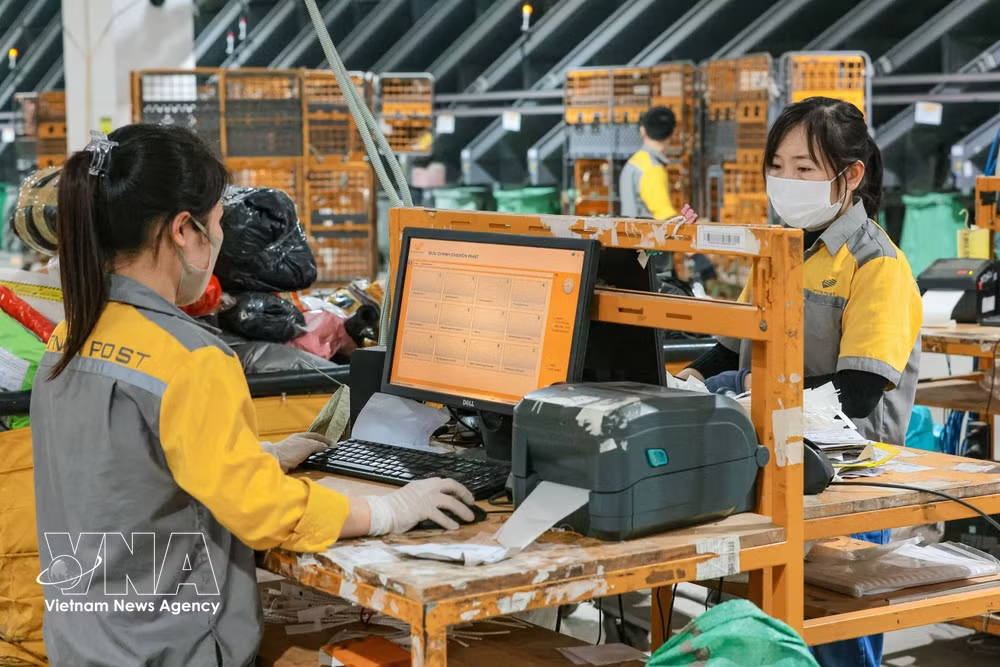
ietnam Post is accelerating digital transformation within the postal sector, proactively integrating science and technology into its production and business operations (Photo: VNA)

However, to turn this potential into tangible economic value, businesses need to overcome challenges related to data quality, governance and technology implementation costs. One key issue is that business data is not yet ready for AI applications, particularly as they move towards agentic AI, in which systems can independently carry out multiple steps and handle more complex tasks.

According to Abbott, one notable shift in business technology infrastructure strategies is the growing trend towards combining public cloud computing with on-premises systems, rather than moving all data and processing workloads to cloud service providers such as AWS or Google Cloud. This approach is attracting greater attention amid increasingly stringent data sovereignty requirements.

This is not a complete retreat from cloud computing, but rather an adjustment in how businesses allocate workloads and manage data, the expert stressed.

Based on his experience in different markets, he noted that businesses are increasingly expected to comply with specific data sovereignty requirements, concerning where information is stored and processed. While not all data needs to be transferred back to on-premises systems, certain types may be mandated to stay within national borders.

In addition to data protection requirements, organisations operating critical infrastructure may also face specific conditions concerning their ability to maintain operations if cloud service providers experience disruptions. For example, some organisations are required to ensure that they can continue operating for around 90 days even if cloud services are interrupted. This requires businesses to operate systems at capacity and independently, with on-premises infrastructure potentially playing an important role.

Meanwhile, costs and demand for graphics processing units (GPUs) are also prompting businesses to consider investing in their own infrastructure. Abbott said that even financially strong companies were choosing to deploy some of their GPU processing capacity on-premises to support AI applications./.


VNA

See more

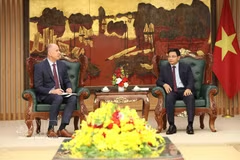
Deputy Prime Minister Nguyen Van Thang meets with Martin Sommer, head of the IMF’s Article IV consultation mission team to Vietnam, in Hanoi on November 13, 2026. (Photo: VNA)

IMF sees positive growth prospects for Vietnam, urges cautious monetary policy

Martin Sommer, head of the IMF’s Article IV consultation mission team to Vietnam, noted that inflation risks in Vietnam remain under control, but several factors could add to price pressures. He therefore called for cautious monetary policy management and readiness to respond promptly if inflationary pressures increased.

Representatives of the three first-prize-winning startups receive their awards at the event. (Photo: SGGP)

Seven green-tech startups secure 770,000 USD at Net Zero Challenge 2026

In its fourth year, the competition attracted more than 1,100 applications from 80 countries and territories, making it the most competitive edition since its launch in 2023. Nine finalists presented solutions in three categories, namely renewable energy and carbon removal; food systems and sustainable agriculture; and circular economy and waste management.

Vietnamese and Malaysian businesses connect at the event (Photo: VNA)

Vietnam, Malaysia connect businesses to boost bilateral trade cooperation

It centred on a business-to-business (B2B) matchmaking session, bringing Vietnamese and Malaysian companies together to discuss import-export needs, seek partners and explore cooperation. Vietnamese businesses aimed to connect with Malaysian importers, distributors and retailers, while expanding access for their products to Malaysia and other markets.

Visitors browse traditional Southern Vietnamese checked scarves on display at the Vietnam-Cambodia Trade Fair. (Photo: VNA)

Vietnam-Cambodia trade fair opens in An Giang

The fair features 150 booths representing 200 businesses, cooperatives, household businesses and production and trading establishments from both countries. The exhibition space is arranged into 10 zones showcasing products from Vietnamese localities and three zones featuring Cambodian products, creating opportunities for businesses from the two countries to promote their products, seek partners and expand markets.

An overview of the press conference to announce the organisation of the second Vietnam International Rice Festival - Can Tho 2026. (Photo: VNA)

Festival to chart new course for rice industry

The second Vietnam International Rice Festival - Can Tho 2026 will take place from November 22 to 25, showcasing the achievements and potential of Vietnam’s rice industry while promoting Can Tho’s image, cultural identity and people, as well as the distinctive river culture of the Mekong Delta.

Japanese business representatives review Ho Chi Minh City’s investment project portfolio at the conference. (Photo: VNA)

Vietnam remains attractive destination for Japanese businesses

Fukai Akihiko, President and Representative Director at Gunma Bank and head of a business delegation from Japan’s Gunma prefecture, said cooperation between Gunma and Vietnam has continued to expand in recent years. Around 15,000 Vietnamese people currently live in Gunma, forming the largest foreign community in the prefecture.

A panoramic view of the site designated for the Ninh Thuan 1 nuclear power plant in Phuoc Dinh commune, Khanh Hoa province. (Photo published by VNA)

Vietnam to access MBIR reactor research capabilities, gradually master nuclear technology

As Vietnam develops its nuclear science and technology and prepares the necessary conditions in terms of human resources, research capacity, safety systems and technical infrastructure, participation in international research programmes and access to MBIR will enable the country to conduct experiments supporting its programme for the peaceful use of atomic energy.

Illustrative image (Photo: chinhphu.vn)

State secret list for financial sector issued

Top secret items include detailed submissions, reports, proposals, explanatory documents, and data concerning state financial and budgetary policies presented to the Party Central Committee, the Politburo, the National Assembly, the National Assembly Standing Committee, or the Government in the event of an emergency related to national defence, national security, social order and safety, or a war for the defence of the Fatherland.