Government considers cutting travel time between central Hanoi, Gia Binh Airport

Noi Bai is planned for 50 million passengers a year by 2030 and 100 million by 2050. Under that trajectory, it will keep domestic and some international flights through 2029–2030. Hanoi’s second airport will be invested in the next phase, consistent with long-term planning.

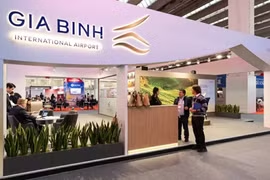
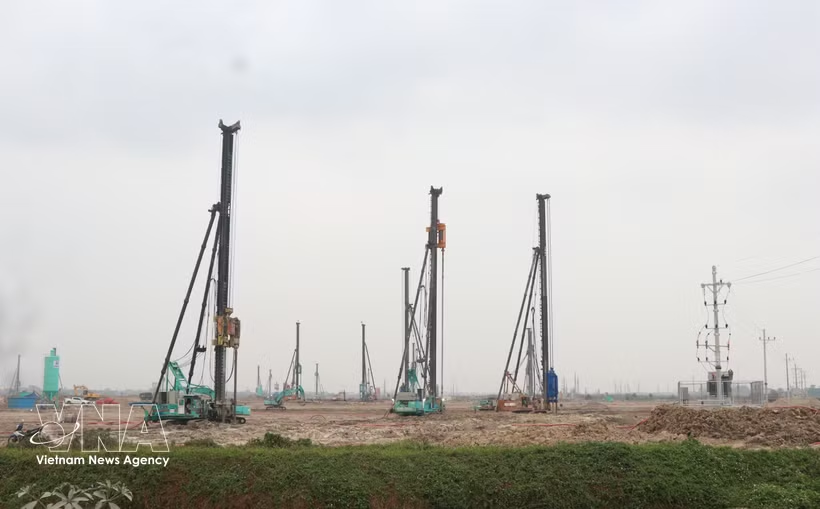
Construction site of the Gia Binh International Airport (Photo: VNA)

Hanoi (VNA) - The Government has ordered agencies to study a Gia Binh Airport operating plan that includes shifting all international operations from Noi Bai, said Deputy Minister of Construction Bui Xuan Dung.

Noi Bai is planned for 50 million passengers a year by 2030 and 100 million by 2050. Under that trajectory, it will keep domestic and some international flights through 2029–2030. Hanoi’s second airport will be invested in the next phase, consistent with long-term planning.

On connections, Dung said roads and urban rail both matter. Railway law requires urban rail lines serving airports to place stations inside airport areas so passengers can switch modes easily.

To link Noi Bai and Gia Binh directly by urban rail, Dung proposed a Gia Binh – Gia Lam – central Hanoi alignment and said the city’s central urban rail station and station sites must be fixed in the plan.

Agencies must define Gia Lam’s role as a national rail station and a hub linking national, local, dedicated and urban rail. The target is the shortest distance and travel time, about 30–45 minutes from central Hanoi to either airport. Direct airport trains with limited intermediate stops are also on the table, modeled on practices in some countries.

Dung also backed a shortest-route link from Gia Binh to central Hanoi via Gia Lam, possible branch lines to central stations, and a south-to-north link from the centre to Noi Bai to connect national, urban and dedicated rail hubs.

He assigned the Vietnam Railway Authority to lead an urgent review with relevant units and departments, specifying alignments and station sites, fixing the central station and choosing the shortest, fastest routes from central Hanoi to both international airports. The lines must plug seamlessly into Hanoi’s urban rail network.

“This is a technical problem. Specialised agencies need to work together, settle on one overall plan and make sure transport links between central Hanoi and the airports actually work”, Dung said.

On Gia Binh, Deputy Director of the Civil Aviation Authority of Vietnam (CAAV) Do Hong Cam said the CAAV is drafting an operation plan. It is expected to go out for comment from relevant ministries and agencies in one to two months before being finalised.

Technical flights are due by end-2026, a key check on technical conditions and readiness.

Commercial operations are still undefined as routes, airlines and any transfer of flights from other airports cannot yet be fixed. Those decisions will depend on real conditions, market shifts and airlines’ capacity.

Under the investment policy approved by the National Assembly, Gia Binh International Airport carries more than 196 trillion VND (8.1 billion USD) and spans about 1,884 ha. It is meant to become a modern aviation economic hub tied to logistics, international trade, high-tech industry and urban development, a new growth driver for the Capital Region.

By 2030, capacity is targeted at 30 million passengers and 1.6 million tonnes of cargo; by 2050, 50 million passengers and 2.5 million tonnes. Some key works are being accelerated to serve APEC Economic Leaders’ Week 2027./.

VNA

See more

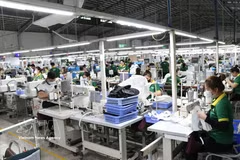
Production of footwear for export at Lefaso Tra Vinh Industrial Investment and Production Joint Stock Company, Tra Cu commune, Vinh Long province (Illustrative image. Source: VNA)

VEFTA implementation requires exporters to restructure supply chains: Experts

Under VEFTA, tariff reductions to zero will be meaningless for Vietnam’s key export sectors, including textiles and garments, footwear, and agricultural and aquatic products, if goods are found to contain banned chemicals, violate rules of origin or lack transparency regarding their carbon footprints.

Deputy Prime Minister Nguyen Van Thang meets with Martin Sommer, head of the IMF’s Article IV consultation mission team to Vietnam, in Hanoi on November 13, 2026. (Photo: VNA)

IMF sees positive growth prospects for Vietnam, urges cautious monetary policy

Martin Sommer, head of the IMF’s Article IV consultation mission team to Vietnam, noted that inflation risks in Vietnam remain under control, but several factors could add to price pressures. He therefore called for cautious monetary policy management and readiness to respond promptly if inflationary pressures increased.

Representatives of the three first-prize-winning startups receive their awards at the event. (Photo: SGGP)

Seven green-tech startups secure 770,000 USD at Net Zero Challenge 2026

In its fourth year, the competition attracted more than 1,100 applications from 80 countries and territories, making it the most competitive edition since its launch in 2023. Nine finalists presented solutions in three categories, namely renewable energy and carbon removal; food systems and sustainable agriculture; and circular economy and waste management.

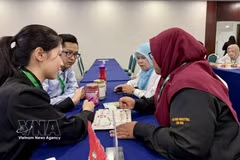
Vietnamese and Malaysian businesses connect at the event (Photo: VNA)

Vietnam, Malaysia connect businesses to boost bilateral trade cooperation

It centred on a business-to-business (B2B) matchmaking session, bringing Vietnamese and Malaysian companies together to discuss import-export needs, seek partners and explore cooperation. Vietnamese businesses aimed to connect with Malaysian importers, distributors and retailers, while expanding access for their products to Malaysia and other markets.

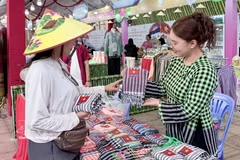
Visitors browse traditional Southern Vietnamese checked scarves on display at the Vietnam-Cambodia Trade Fair. (Photo: VNA)

Vietnam-Cambodia trade fair opens in An Giang

The fair features 150 booths representing 200 businesses, cooperatives, household businesses and production and trading establishments from both countries. The exhibition space is arranged into 10 zones showcasing products from Vietnamese localities and three zones featuring Cambodian products, creating opportunities for businesses from the two countries to promote their products, seek partners and expand markets.