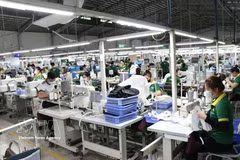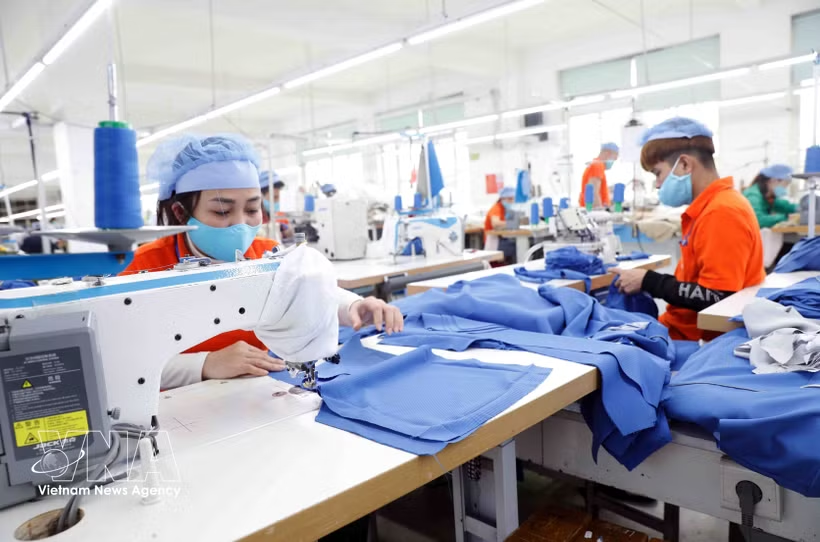
Hanoi (VNA) – Amid mounting global economic volatility and challenges, Vietnam’s textile and garment industry is rolling out a range of coordinated measures to maintain production momentum, with safeguarding workers’ livelihoods and incomes a top priority.
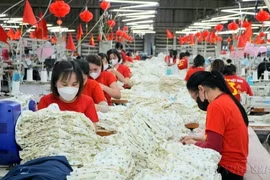
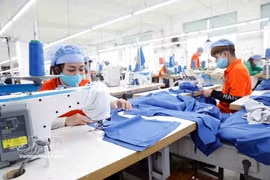
Commenting on the issue, Pham Xuan Hong, Chairman of the Ho Chi Minh City Association of Garment Textile Embroidery Knitting (AGTEX), said that despite facing widespread difficulties in the global economy since the beginning of the year, businesses have firmly embraced a pragmatic business philosophy, under which the top priority is not maximising profit margins but maintaining jobs and ensuring stable incomes for workers who remain committed to their factories.
He noted that stable employment has been maintained for more than 1.86 million workers at industrial enterprises.
Alongside pressure to maintain employment, increasingly demanding requirements from partners regarding quality and designs are forcing businesses to respond flexibly, even to small orders.
According to import-export balance report data, textile and garment exports reached 39.84 billion USD in the first ten months of 2026, up 3.9% year on year. In October alone, export turnover stood at 4.08 billion USD, up 0.9% from September and 9.8% from October 2025. Domestic businesses have maintained robust production, with many having full order books for the final months of the year, providing a basis for the sector to target export earnings of 48–49 billion USD in 2026.
To achieve the annual target, textile and garment businesses are jointly implementing several core tasks, including diversifying export markets and partners, developing the supporting industries for raw materials and accessories to establish integrated supply chains, investing in technological innovation linked to AI, stepping up high-quality workforce training, promoting green transformation based on circular economy models, and building brands in both domestic and international markets.
Vietnamese textile and garment products are currently available in 137 countries and territories. The US remains the key market, accounting for around 40% of exports, alongside traditional markets such as the European Union, the Republic of Korea, Japan, China and ASEAN member states, as well as potential markets in Africa and the Middle East.
Market expansion enables businesses to spread risks, proactively seek customers and adapt to changing demand across global supply chains. At the same time, closer links among businesses along the supply chain are being prioritised to improve coordination, share resources and better meet stringent requirements from international partners.
However, behind the growth figures lies pressure to improve the quality of growth, as tariff fluctuations, geopolitical conflicts and risks of supply chain disruptions can directly affect costs, delivery schedules and the ability to retain orders. Customers are paying increasing attention to the origins of raw materials, production conditions and resource consumption. The sector therefore faces the need to strengthen its self-reliance in materials, technology and design.
Under its supporting industry development programme for 2026–2035, the sector aims to raise the localisation rate in textiles and garments to 60% by 2030, helping businesses meet rules of origin and increase value added across production chains.
To achieve this target, support initiatives are focused on improving suppliers’ capabilities in quality, management, technology and delivery, while tightening links across the spinning, weaving, dyeing, finishing and garment-making stages. Throughout this process, workers remain central to the sector’s development and need continuous training to master new technologies, with productivity gains going hand in hand with higher incomes and sustainable, quality employment./.
See more
Vietnam promotes international cooperation in energy, high technology
Minister of Public Security General Luong Tam Quang called on the RoK's SK Innovation to share experience and work with Vietnamese partners in developing clean and renewable energy, hydrogen, liquefied natural gas, energy storage technologies and carbon emission reduction solutions.
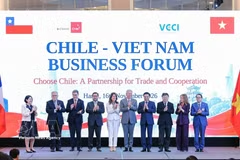
Vietnam, Chile seek to expand trade ties
Chilean President José Antonio Kast pointed to potential for cooperation in agriculture and food, and called for stronger technical cooperation, better market access and closer links in innovation, technology, services and sustainable development.
Government considers cutting travel time between central Hanoi, Gia Binh Airport
Noi Bai is planned for 50 million passengers a year by 2030 and 100 million by 2050. Under that trajectory, it will keep domestic and some international flights through 2029–2030. Hanoi’s second airport will be invested in the next phase, consistent with long-term planning.
Long Thanh airport runs first full passenger trials ahead of commercial launch
Under its ORAT trial, the airport ran scenario 1TO-11 - Phase 1 passenger service for domestic and international flights, using three simulated cases: domestic departure, international departure and international arrival.
Ministry of Finance strengthens policy dialogue with IMF
The IMF stands ready to continue supporting Vietnam through policy dialogue and technical assistance, particularly in public investment management, public financial management and improving resource efficiency.
VEFTA implementation requires exporters to restructure supply chains: Experts
Under VEFTA, tariff reductions to zero will be meaningless for Vietnam’s key export sectors, including textiles and garments, footwear, and agricultural and aquatic products, if goods are found to contain banned chemicals, violate rules of origin or lack transparency regarding their carbon footprints.
Reference exchange rate goes up at week’s beginning
With the current trading band of +/- 5%, the ceiling rate applicable for commercial banks during the day is 26,921 VND/USD, and the floor rate 24,357 VND/USD.
Vietnamese seafood exports close in on 12 bln USD record
Vietnam remains well placed, with seafood sold in most countries and accepted in premium markets on the back of deep-processing capacity and a broad product mix.
Ho Chi Minh City approves 147 land plots for pilot commercial housing projects
Under Resolution No 125/NQ-HDND, these plots cover a combined area of more than 855ha, including over 457ha of existing residential land or land proposed for conversion to residential use. The list includes approximately 342ha of rice-growing land earmarked for conversion.
Vietnam’s digital economy gains momentum with AI adoption
Vietnam’s digital economy maintained positive growth, increasingly driven by the widespread adoption of artificial intelligence (AI) applications in everyday life and business operations.
Lao Cai farmers take OCOP products from orchards to digital markets
By 2030, Lao Cai aims to recognise more than 300 additional OCOP products, averaging 60–70 annually, including at least two five-star products.
New direct air link strengthens Vietnam-Russia connectivity
This is SPA’s first route directly connecting Phu Quoc with Europe, opening up a new gateway for long-haul international visitors as the number of Russian tourists to Vietnam continues to grow strongly.
Vietnam plays pivotal role in Mekong subregional cooperation: Malaysian analyst
According to the expert, Vietnam’s strategic contribution lies in helping ASEAN recognise that Mekong-related issues are not merely development challenges for one subregion but are directly linked to the bloc’s overall economic resilience and security.
Vietravel Airlines launches direct Hanoi–Shenzhen route
This marks another step in the carrier’s expansion into the Chinese market, just three months after launching its Ho Chi Minh City–Shenzhen service.
IMF sees positive growth prospects for Vietnam, urges cautious monetary policy
Martin Sommer, head of the IMF’s Article IV consultation mission team to Vietnam, noted that inflation risks in Vietnam remain under control, but several factors could add to price pressures. He therefore called for cautious monetary policy management and readiness to respond promptly if inflationary pressures increased.
An Giang steps up trade cooperation with three Cambodian provinces
Total import-export turnover through border gates connecting An Giang with Kandal, Takeo and Kampot reached approximately 1.127 billion USD in the first nine months of 2026.
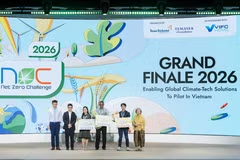
Seven green-tech startups secure 770,000 USD at Net Zero Challenge 2026
In its fourth year, the competition attracted more than 1,100 applications from 80 countries and territories, making it the most competitive edition since its launch in 2023. Nine finalists presented solutions in three categories, namely renewable energy and carbon removal; food systems and sustainable agriculture; and circular economy and waste management.
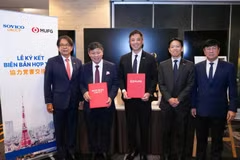
Sovico Group, MUFG forge strategic partnership to mobilise resources for Vietnam–Japan development
The MOU aims to expand financial cooperation, facilitate investment connectivity and mobilise international resources for strategic development sectors, contributing to the realisation of the Vietnam–Japan Comprehensive Strategic Partnership through tangible business opportunities between the two countries.
BOT contract signed for 1,200-MW Nam Dinh I thermal power plant
The 1,200-MW Nam Dinh I Thermal Power Plant project is expected to provide an important addition to the national power system, helping ensure electricity supply, particularly in northern Vietnam, in the coming years.
Vietnam, Malaysia connect businesses to boost bilateral trade cooperation
It centred on a business-to-business (B2B) matchmaking session, bringing Vietnamese and Malaysian companies together to discuss import-export needs, seek partners and explore cooperation. Vietnamese businesses aimed to connect with Malaysian importers, distributors and retailers, while expanding access for their products to Malaysia and other markets.