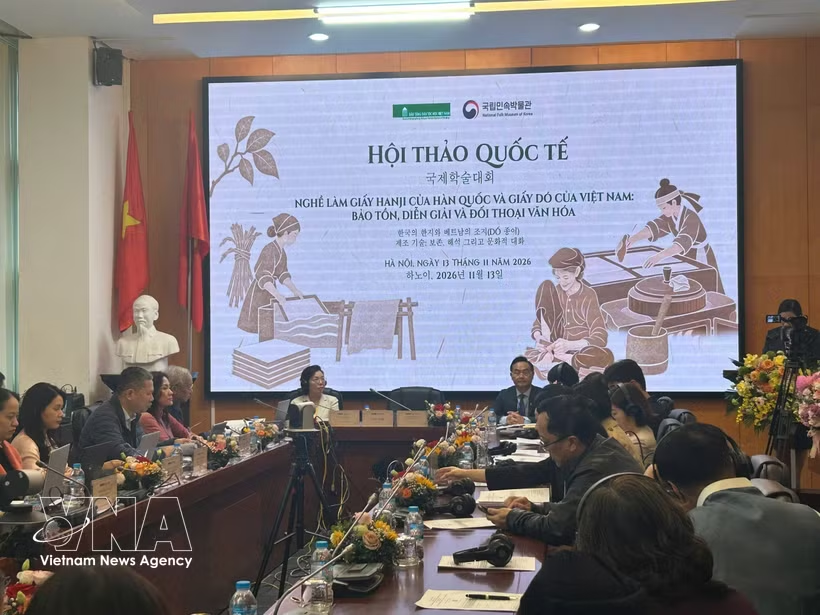
Hanoi (VNA) – Vietnam and the Republic of Korea (RoK) put traditional paper-making under the museum and policy lens on November 13, using a Hanoi conference timed to Vietnam Culture Day (November 24) and the Vietnam Academy of Social Sciences (VASS)’ 73rd anniversary to push preservation from documentation toward living practice.
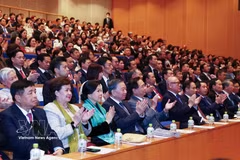
The Vietnam Museum of Ethnology (VME) and the National Folk Museum of Korea ran the event in person and online, drawing diplomats, cultural officials, researchers, museum staff and artisans from both countries.
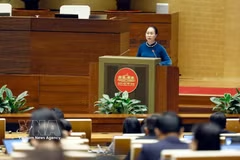
VASS Vice President Dr Dinh Thi Mai framed the conference as proof that cultural cooperation is moving from statements to concrete work, tying research to heritage preservation and people-to-people diplomacy.
Mai said VASS has a role in spreading Vietnamese cultural values globally and protecting knowledge, honouring artisans and keeping communities at the centre of preservation.
VME Director Assoc. Prof. Le Hai Dang said the RoK's Hanji and Vietnam's “do” paper carry embedded knowledge in terms of materials, technique, labour and cultural use. The event examined craft viability, artisan and community roles, and applications in art, education and archives. Documentation alone, he said, is not enough without artisans, communities and the next generation.
The first session focused on local knowledge, technique and transmission, using Vietnamese “do” paper in Bac Ninh and Korean Hanji as cases for tradition, adaptation and viability.
The second, looking at display, education and contemporary cultural practice, underscored artisan participation, craft-ecosystem resilience and community sustainability, and the link between museums and living heritage spaces.
The third widened the debate to museum cooperation and intercultural education. Across the three sessions, the goal was practical guidance for research, documentation, preservation and interpretation, and ways to recognise heritage holders’ voices and interests.
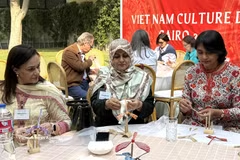
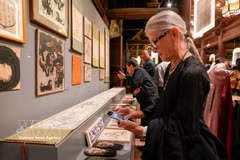
It also ran live demonstrations of Korean Hanji, Bac Ninh’s “do” and Cao Bang’s Nung “do” paper making./.