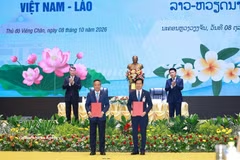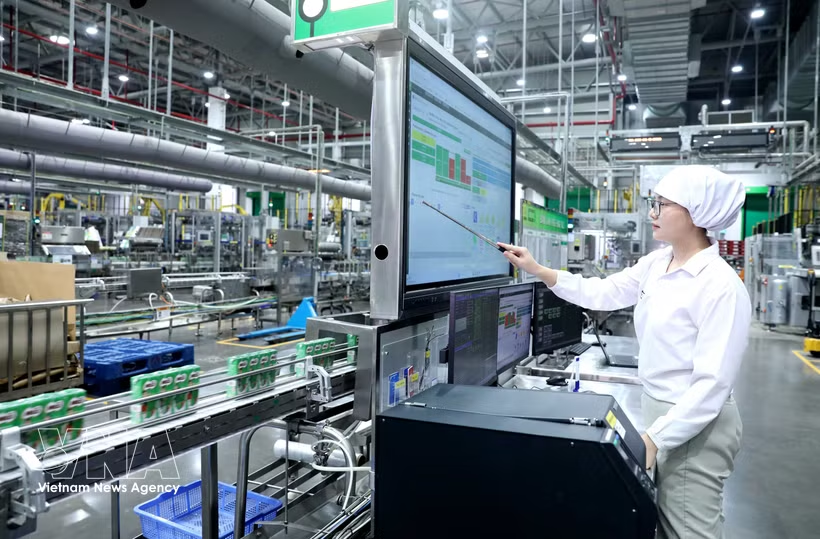
Hanoi (VNA) – As the competition for FDI is entering a new phase, Resolution No. 10-NQ/TW, issued by the Politburo on June 8, 2026, on developing the foreign-invested sector marks a shift in approach and mindset.
Vietnamese enterprises at the centre
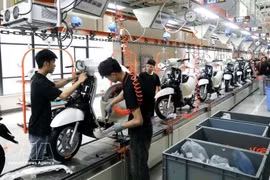
The resolution calls the foreign-invested sector an important part of the national economy and demands a decisive shift from attracting capital to creating development value. It stops treating foreign-invested companies as a separate economic sector and places them within a broader national development ecosystem that encompasses domestic private enterprises, research and development entities, universities and innovation hubs.
Dr. Phan Huu Thang, Chairman of the Vietnam Industrial Park Finance Association, said the resolution is the first to name domestic enterprise development a central task of the foreign investment policy, rather than an expected by-product of attracting capital.
To hit the targets, Thang proposed a selective FDI model tied to technology transfer and domestic spillover effects, which will replace incentives with conditional requirements.
Large-scale, high-tech FDI projects should have to meet three conditions: a substantive technology-transfer roadmap with specific verification mechanisms, joint ventures or co-investment with Vietnamese firms, and close integration with the domestic innovation ecosystem. Such requirements are increasingly urgent given the wide gap between FDI and domestic enterprises.
Foreign-invested companies account for 80.7% of Vietnam’s total export turnover. Newly registered and other FDI capital commitments have exceeded 50 billion USD, up 76.4% from a year earlier. Disbursed FDI topped 21 billion USD, up 12.1% and the highest for the first nine months of a year in five years, statistics show.
Refining FDI policies
Prof. Dr. Nguyen Trong Hoai, a senior lecturer at the University of Economics Ho Chi Minh City, said narrowing the gap requires shifting the policy focus from attracting FDI alone to fostering linkages between foreign-invested and domestic companies through a legal framework set by the Government. FDI attraction should also be tied to opportunities for domestic small- and medium-sized enterprises to join supply chains and gain access to technology transfers.
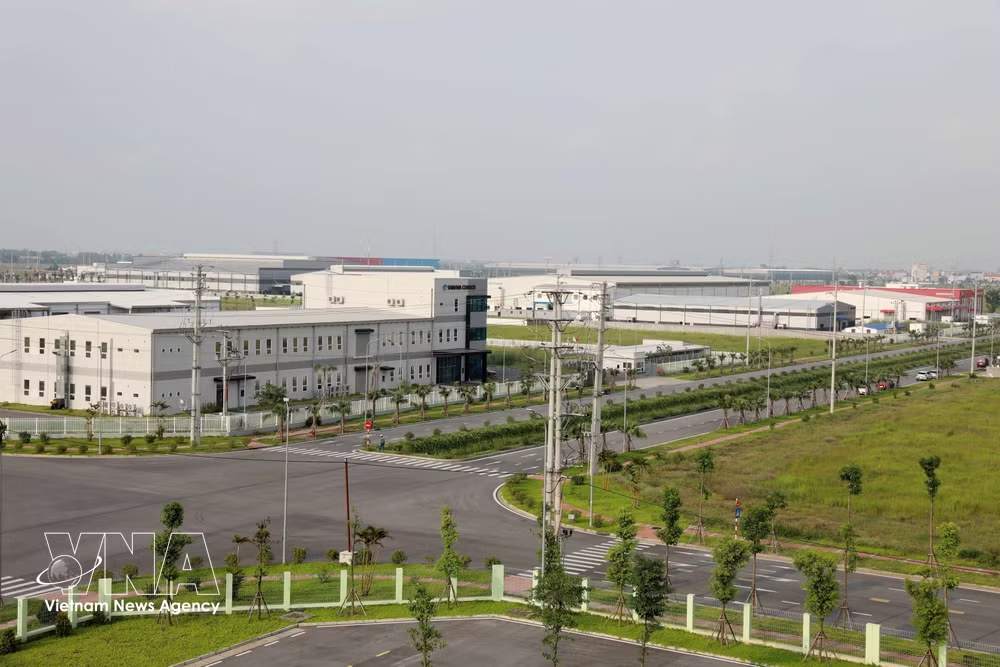
Hoai noted that the World Bank has stressed the need to connect global companies with domestic suppliers, improve the business climate and develop supply-chain finance solutions. Those steps will let domestic firms gradually meet requirements on quality, technology, costs and delivery times, and position them to become suppliers to multinational corporations.
Workforce training, meanwhile, needs closer alignment with business needs and global value chains to address a shortage of highly skilled workers, he added.
Together, these measures will lay the foundation to raise productivity, increase domestic value added in exports and sharpen long-term economic competitiveness.
Resolution No. 10-NQ/TW also calls for further institutional reforms and a better business climate to deliver a breakthrough in the foreign-invested sector.
On turning the resolution into law through the Law on Investment, Deputy Director General of the Ministry of Finance’s Foreign Investment Agency Bui Thu Thuy said future FDI policies will move away from blanket, across-the-board incentives and an excessive focus on the scale and number of projects.
Incentives will instead be linked to investors’ fulfillment of commitments on technology transfer, domestic supplier development, workforce training and environment protection. Projects delivering strong socio-economic benefits will earn commensurate support, while unmet commitments will be reviewed and may lead to adjustment or withdrawal of incentives. The policy focus will also shift from investment management to creating an enabling environment, with a unified national coordination mechanism replacing competition among localities for capital, the official added./.