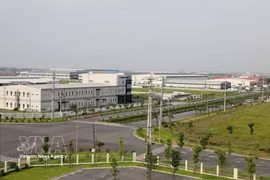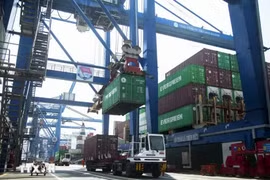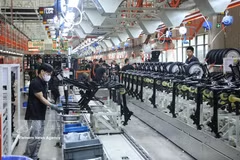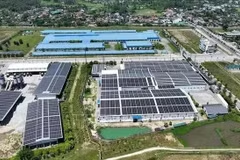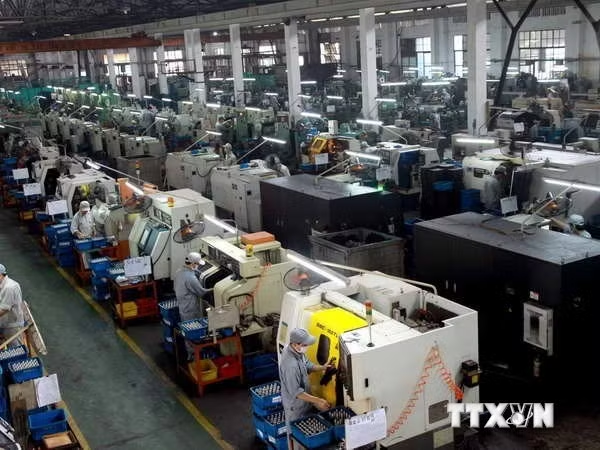
Hanoi (VNA) – Vietnam is continuing to strengthen its position in global supply chains, with manufacturing activity and sourcing operations recording growth rates of 12% and 11%, respectively.
According to Standard Chartered’s 2026 Future of Trade report, titled “Navigating an Age of Structural Uncertainty”, Vietnam is making positive progress in manufacturing and sourcing activities.
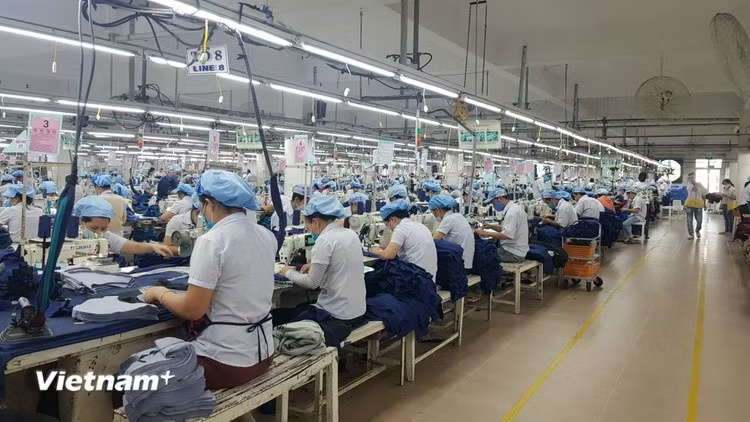
The survey’s indicators show that Vietnam recorded 12% growth in manufacturing activity and 11% in sourcing operations. Competitive labour costs, strong foreign direct investment (FDI) inflows and targeted policy reforms are helping the country become an increasingly important link in global supply chains.
Based on a survey of 2,100 senior executives and business decision-makers across 27 markets, the report finds that companies are shifting their focus from geographically restructuring supply chains to refining strategies and improving operational capabilities.
This trend is particularly relevant to Vietnam and the ASEAN region, where businesses are working to strengthen supplier strategies, inventory management, visibility and forecasting.
Across ASEAN, 86% of businesses reported measurable benefits from at least one digital capability. The same proportion said digitalisation has improved decision-making through better visibility and forecasting, the highest rate globally.
Roberto Hoornweg, CEO of Corporate and Investment Banking at Standard Chartered, said that as businesses shift their focus from reshaping supply chains to enhancing resilience, visibility and flexibility, investment in digital capabilities is becoming a key source of competitive advantage.
Combining digital tools, AI-powered insights and closer integration between treasury and supply chain functions can help businesses make faster decisions, respond more effectively to disruptions and improve operational readiness and continuity, he said.
The report shows that four out of five businesses have benefited from investment in digital capabilities, while 83% said digital tools enable them to respond more quickly to supply chain disruptions.
Digitally delivered services, including computing, cloud services, cybersecurity, professional services and other services supplied remotely across borders, are expanding rapidly.
Exports of these services rose 136% between 2016 and 2025, significantly outpacing the 70% growth in total exports of goods and services. They accounted for 14.7% of global exports in 2025, up from 10.6% in 2016.
Under an “Accelerated Digitalisation” scenario developed by Standard Chartered and Oxford Economics, international trade could increase by an additional 2.8 trillion USD annually by 2031, equivalent to about 7.6 billion USD a day. This would be 6.9% higher than under the baseline scenario.
Trade in services is expected to benefit particularly strongly, potentially reaching 11.4% above the baseline level by 2031, almost double the projected 5.9% increase for goods.
Improved data flows, digital payments, interoperable systems and streamlined compliance procedures are expected to help reduce barriers to cross-border trade.
Artificial intelligence (AI) is also emerging as a major driver of digitalisation. Some 56% of surveyed businesses said AI is highly relevant or transformative in advancing trade digitalisation.
The highest expectations were recorded in the technology, media and telecommunications, and energy sectors, where 62% of businesses viewed AI as highly relevant or transformative.
Against a backdrop of continued uncertainty, companies are using these capabilities to refine existing supply chains rather than focusing solely on relocating manufacturing and sourcing operations.
Supply chains shift towards greater resilience
More than 90% of businesses plan to adjust their supply chain operations over the next three to five years. However, around 60% have no plans to enter or exit markets in their sourcing, manufacturing and export activities. Instead, they are focusing on making existing supply chains more resilient.
Supplier-focused strategies increased by 4.3 points, with rises of 8.7 points in the Americas and 6.8 points in mainland China and North Asia.
Inventory management is also receiving greater attention, increasing by 2.9 points overall. The strongest growth was recorded in ASEAN, at 8.4 points, followed by the Middle East and Africa, at 6.7 points.
As businesses hold larger inventories, expand supplier networks and increase cross-border transactions, demand is growing for digital tools, data visibility and AI-supported decision-making. Treasury functions are consequently taking on a more strategic role in strengthening resilience and supporting growth.
Over the next three to five years, 37% of businesses plan to integrate treasury functions more closely with supply chains, while a similar proportion intend to adjust their treasury strategies. Foreign exchange risk management is a priority for 57% of businesses, while more than one-third expect their exposure to currency fluctuations to increase.
Digital capabilities are helping companies manage these risks. Some 82% said digital tools have improved visibility and forecasting across supply chains and financial operations, while 74% said digital treasury tools have strengthened resilience in cash, liquidity and foreign exchange risk management.
As global supply chains continue to evolve, the focus is shifting from geographical changes towards better operational performance, visibility and flexibility. For Vietnam, growth in manufacturing and sourcing, alongside accelerating digitalisation, offers further opportunities to strengthen its role in global supply chains./.