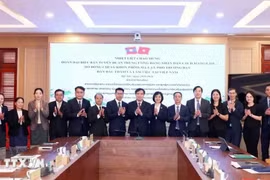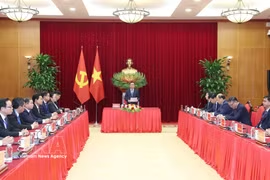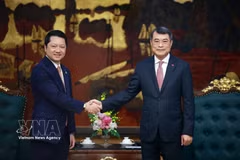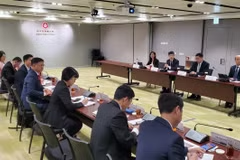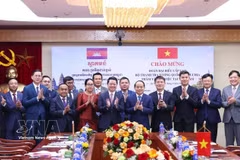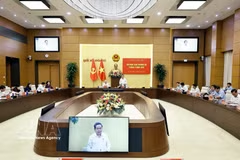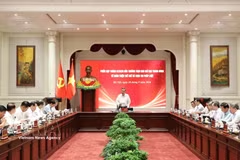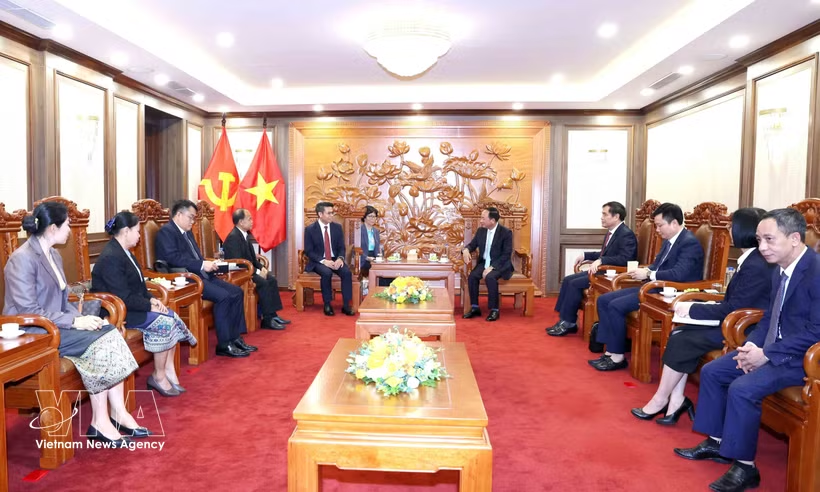
Hanoi (VNA) – Head of the Party Central Committee’s Commission for Publicity Trinh Van Quyet hosted a reception in Hanoi on September 29 for Deputy Head of the Lao People’s Revolutionary Party (LPRP) Central Committee’s Commission for Propaganda and Training Sakhone Phommalath, with both sides pledging closer cooperation in communications, ideological and press work.
Quyet said both countries are carrying out ideological, communications and press work, as well as efforts to protect the Party’s ideological foundation, amid growing challenges, particularly the rapid development of artificial intelligence (AI) and digital platforms.
He described an increasingly volatile online environment in which public sentiment can shift by the day and even the hour. Hostile forces, he said, are using AI to produce fake news, clone voices and distort information in an effort to undermine the two Parties, States and bilateral ties. Young people, the heaviest social media users, pose a particular challenge for both sides, he added.
Quyet called for ideological work to be carried out in physical and digital spaces at the same time, alongside faster digital transformation across the ideological and cultural sectors.
He also briefed the Lao delegation on Resolution 25-NQ/TW, the Politburo's new strategy for Party ideological work. The resolution calls for accurate assessements and forecasting of the situation, and quick handling of ideological issues to avoid being caught off guard. It also seeks to rally the entire political system and society, young people in particular, and to build a Vietnamese culture able to resist harmful content online.
The host also cited plans to strengthen technical systems from the central to the grassroots level, along with local cultural mechanisms to deliver official information to the public.
He said 2027 will be a milestone year, marking 65 years of diplomatic ties and 50 years since the Treaty of Amity and Cooperation was signed, and proposed deeper ties between the two commissions.
Accordingly, he urged them to keep close coordination and finalise a draft 2027-2031 cooperation agreement, which will go to the relevant authorities for approval so it can be signed in 2027.
He also called for more sharing of experience on political and ideological work, communications, press guidance and external information, with more attention to newer areas such as digital communications and the monitoring and steering of public opinion.
At the same time, the two sides should maintain and improve training courses in Vietnam for Lao propaganda officials, expand personnel exchanges, especially among young officials and specialists, and step up communications on bilateral relations in 2027. This, he said, will reinforce cooperation between the commissions and the two countries' friendship, special solidarity and comprehensive partnership.
Sakhone, for his part, said Laos has been streamlining its organisational apparatus, including folding the mass communications sector, previously under the Ministry of Information, Culture and Tourism, into the commission. The change is meant to make the commission's advice to the Party Central Committee on communications work more effective.
Summarising an earlier working session between the two commissions, Sakhone said they reviewed cooperation over 2022-2026 and agreed on priorities for the next period. These include stepping up communications alongside digital transformation, improving mass communications and efforts to counter false and misleading information, and continuing to streamline the organisational apparatus.
Noting that Vietnam's experience fits Laos's conditions and communications priorities, he hoped that the Commission for Publicity will share more experience and guidance to help turn Party resolutions into practice and make information work more effective./.