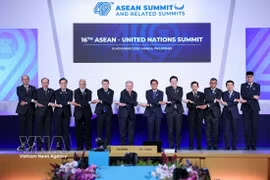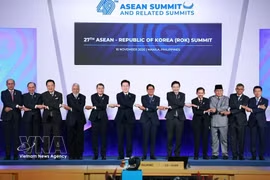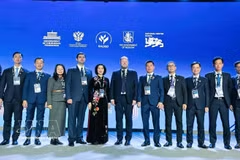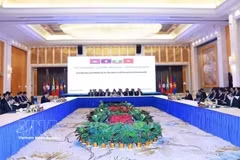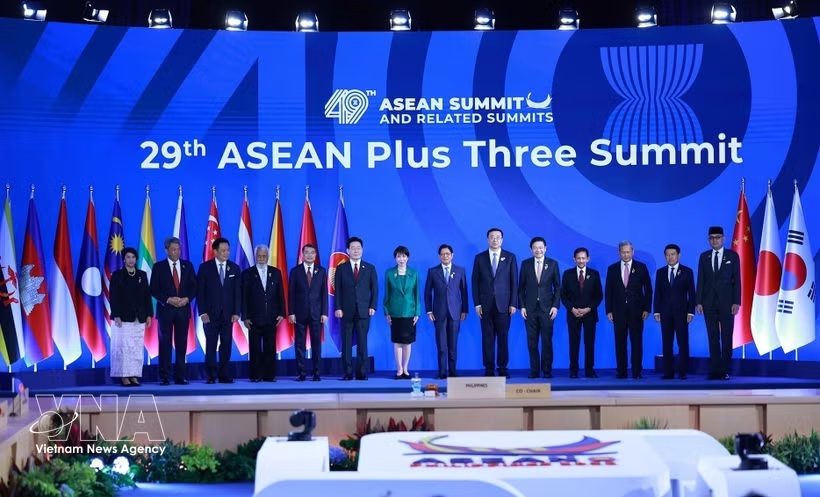
Manila (VNA) - Prime Minister Le Minh Hung attended the 29th ASEAN Plus Three Summit in Manila, the Philippines, on November 17, during which he proposed three priorities for further strengthening ASEAN+3 cooperation.
PM Hung affirmed that nearly three decades after its establishment, ASEAN+3, which comprises ASEAN member states and China, Japan and the Republic of Korea (RoK), has become one of the main driving forces of East Asian cooperation.
Against the backdrop of profound changes in the regional and global situation, he stressed the need for ASEAN+3 to improve forecasting and cooperation capacity to proactively prevent and respond to emerging challenges.
Regarding the three priorities, PM Hung said that first, the region should enhance its resilience and capacity to proactively prevent risks. He called for stronger economic and trade connectivity and more effective utilisation of existing economic partnership and free trade agreements. He also proposed closer cross-sectoral coordination in finance, energy, food security and logistics to ensure and facilitate supplies when necessary.
Alongside the effective implementation of the emergency rice reserve mechanism, he suggested considering expanding cooperation to other essential commodities, including agricultural inputs, and strengthening coordination to ensure energy security.
Second, a new vision should be developed for ASEAN+3 cooperation in the coming period. As the mechanism approaches its 30th anniversary in 2027, the Vietnamese leader proposed conducting research and formulating a new cooperation vision aligned with the ASEAN Community Vision 2045 and better suited to the region's development needs.
Third, the combined strengths of regional cooperation frameworks should be brought into fuller play. He called for reviewing and linking ASEAN+3 initiatives with ASEAN+1 cooperation, trilateral cooperation among China, Japan and the RoK, and bilateral frameworks, so as to help maximise the strengths and resources of each mechanism towards building a common development space in East Asia.
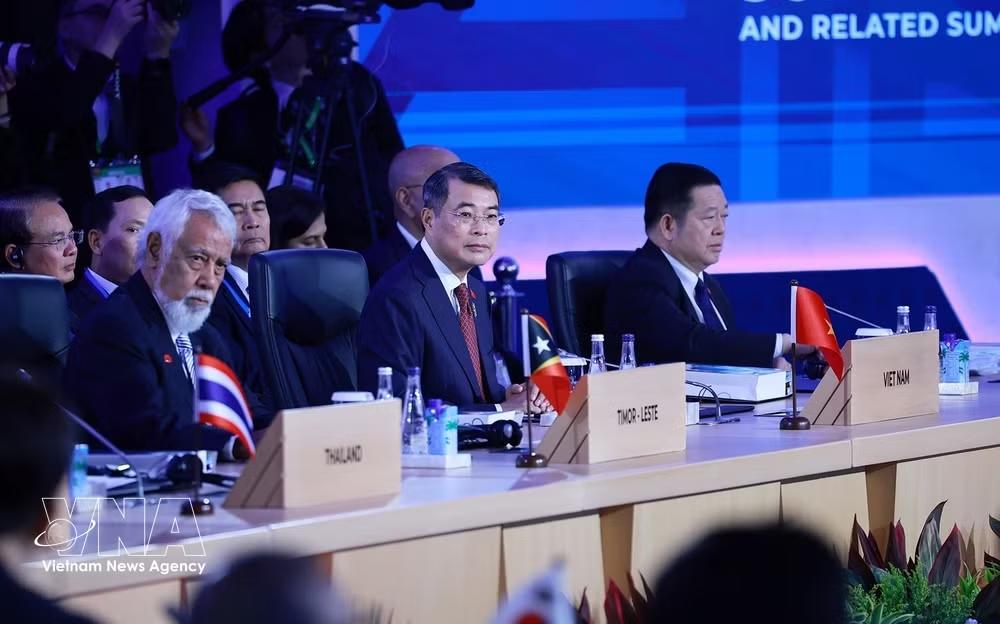
PM Hung also emphasised the need for countries to maintain dialogue, consolidate trust and settle differences peacefully on the basis of international law, including the United Nations Charter, the 1982 United Nations Convention on the Law of the Sea (UNCLOS) and the Treaty of Amity and Cooperation in Southeast Asia (TAC).
He called on all parties to honour their shared commitments to maintaining a peaceful and stable environment conducive to cooperation and development.
Leaders affirmed that ASEAN+3 cooperation remains central to community building and peace and prosperity in East Asia. They credited the framework with major gains, with trade, investment and finance as core pillars and main drivers. In 2025, two-way trade among ASEAN+3 countries hit 1.4 trillion USD, up 13.7% from 2024, and FDI from China, Japan and the RoK into ASEAN reached 44.8 billion USD. Finance, banking, energy and food security and SME support remained priorities, underpinning stable growth and regional resilience to external uncertainty. Countries also deepened dialogue on non-traditional challenges, including transnational crime, cybercrime and online fraud, and expanded work on education, youth, health and environment.
Looking ahead, they agreed to strengthen and deepen ASEAN+3 cooperation by effectively following the ASEAN+3 Cooperation Work Plan for 2023-2027 and sectoral cooperation plans, advancing economic integration, and improving implementation of the Regional Comprehensive Economic Partnership (RCEP) and ASEAN trade agreements with individual partners.
With the world in flux, countries stressed ASEAN+3’s strategic role in crisis and external shock response. They vowed to activate the emergency rice reserve mechanism, boost food security information sharing and step up financial-monetary cooperation, while widening cooperation in non-traditional security challenges, energy security, connectivity, digital transformation, maritime trade, logistics, supply chains and workforce development.
The leaders of China, Japan and the RoK all stressed ASEAN+3’s importance and pledged to work with ASEAN to deliver on the agreed plans and initiatives.
Closing the event, the ASEAN+3 leaders adopted the Declaration on Maritime Trade and Logistics Connectivity and the Declaration on strengthening energy and food security resilience against external shocks and supply chain disruptions./.