Vietnam plays strategic role in strengthening ASEAN connectivity: Malaysian scholar

Malaysia should view Vietnam’s growing diplomatic and economic influence as a strategic opportunity rather than a competitive challenge. A Vietnam confident and dynamic in economic development and responsible in its diplomacy, would strengthen ASEAN’s collective bargaining position and contribute to regional peace, said Professor Awang Azman Awang Pawi from the University of Malaya.

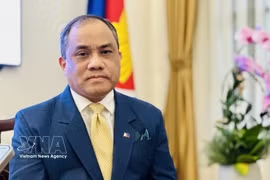
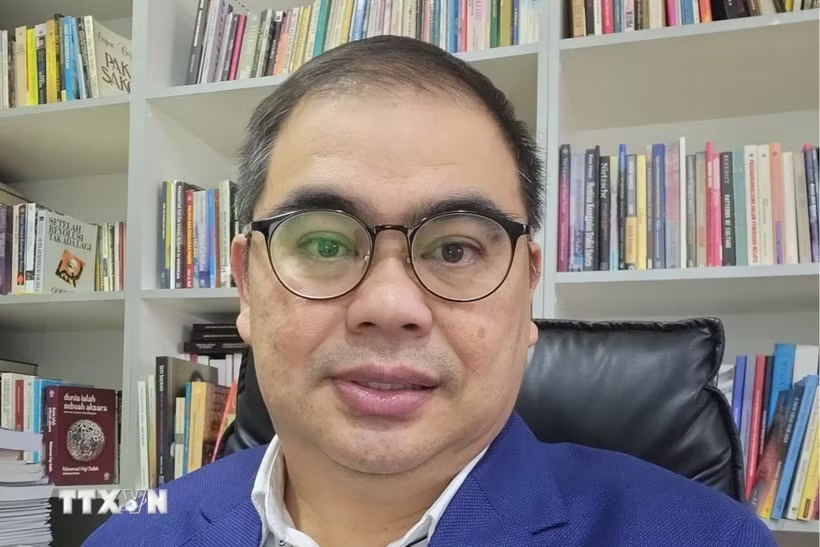
Professor Awang Azman Awang Pawi from the University of Malaya, who is also a senior research fellow at the National Academy of Malaysia (Photo: VNA)

Kuala Lumpur (VNA) – Situated at a strategic crossroads between mainland Southeast Asia and the wider ASEAN economy, Vietnam’s participation in the Greater Mekong Subregion (GMS) Economic Cooperation Programme, the Mekong River Commission (MRC) and other subregional mechanisms enables it to link local development challenges with ASEAN’s broader priorities of economic integration, environmental sustainability and regional resilience.

This assessment was made by Professor Awang Azman Awang Pawi from the University of Malaya, who is also a senior research fellow at the National Academy of Malaysia, in an interview with Vietnam News Agency (VNA) correspondents in Kuala Lumpur on the 49th ASEAN Summit, taking place in Manila, the Philippines, from November 14-17.

According to the Malaysian political analyst, Vietnam has made meaningful contributions to cross-border connectivity, agricultural development, trade integration and sustainable water resource management. However, the effectiveness of these initiatives remains uneven, as infrastructure gaps, environmental pressures and differences in national development priorities continue to constrain regional cooperation.

Developments in the Mekong Delta demonstrate that subregional development must be viewed as an ASEAN-wide issue, as climate change, drought, saltwater intrusion and upstream water management directly affect food production, livelihoods and economic security beyond Vietnam’s national borders. Vietnam should therefore continue promoting stronger transboundary water governance, transparent hydrological data sharing, climate adaptation and sustainable agriculture, he said.

Vietnam is well positioned to connect mainland production hubs with ASEAN’s broader maritime and manufacturing networks. Its expanding electronics, mechanical engineering, textile and agro-processing industries can complement Malaysia’s strengths in semiconductors, advanced manufacturing, finance and logistics.

To deepen this integration, Vietnam could help promote more efficient border procedures, electronic customs systems, modern transport corridors and industrial cooperation linking Cambodia, Laos, Thailand and Vietnam with other ASEAN economies.

However, Awang noted that the challenge lies in moving beyond infrastructure development towards integrated production networks that enable small businesses and local communities to participate in regional trade.

Vietnam’s strategic contribution should be measured by its ability to transform the Mekong from a collection of separately connected economies into an integrated and resilient economic region. For Malaysia, stronger Mekong connectivity would help diversify supply sources, reinforce supply chains, and mitigate disruptions arising from global trade tensions, he said.

ASEAN’s economic resilience depends not only on attracting foreign investment individually, but also on building production networks in which member states complement one another rather than compete, he stressed.

Building on their Comprehensive Strategic Partnership, upgraded in November 2024, Vietnam and Malaysia have complementary economic strengths that put them in a favourable position to lead ASEAN’s next phase of economic transformation.

Economic ties between the two countries have grown significantly. According to Vietnam’s Ministry of Industry and Trade, bilateral trade reached about 17.4 billion USD in the first nine months of 2026, exceeding the whole year of 2025 and reflecting growing economic interdependence.

Awang identified three particularly promising areas for cooperation between Vietnam and Malaysia.

First, the two countries could jointly advance ASEAN’s digital economic integration through the ASEAN Digital Economy Framework Agreement (DEFA), which is expected to be signed at the ASEAN Summit in Manila following negotiations in May 2026. Cooperation could focus on interoperable digital payments, cross-border data governance, cybersecurity, artificial intelligence (AI) research, university-business partnerships and support for small- and medium-sized enterprises.

Second, they could develop a regional high-tech manufacturing ecosystem by combining Malaysia’s semiconductor capabilities with Vietnam’s electronics manufacturing capacity. This would help attract high-value industries and strengthen ASEAN’s participation in advanced global value chains.

Third, the two countries could work together to promote green growth, regional energy security and the Vietnam-Malaysia-Singapore renewable energy transmission initiative under the ASEAN Power Grid.

The meeting between the two Prime Ministers in May this year provided strong political momentum for cooperation in AI, the digital economy, STEM education, food security and renewable energy. However, both sides need to establish measurable cooperation programmes backed by clear investment commitments and specific implementation roadmaps, ensuring tangible benefits for industries and people in both countries.

According to the scholar, Malaysia and Vietnam should move beyond being successful participants in ASEAN’s economic development to become co-architects of the bloc’s next phase of growth.

By combining Malaysia’s technological and institutional strengths with Vietnam’s manufacturing dynamism and economic connectivity, the two countries can help make ASEAN more innovative, sustainable, economically integrated and strategically autonomous.

The analyst suggested that Malaysia should view Vietnam’s growing diplomatic and economic influence as a strategic opportunity rather than a competitive challenge. A Vietnam confident and dynamic in economic development and responsible in its diplomacy, would strengthen ASEAN’s collective bargaining position and contribute to regional peace.

Vietnam’s regional leadership, he noted, should not be measured by the number of diplomatic initiatives it supports, but by its ability to translate those initiatives into lasting improvements in regional security, economic integration and people's livelihoods.

Ultimately, Awang concluded that ASEAN’s future cannot rest on the strength of any single member state. Rather, it will depend on whether countries such as Vietnam and Malaysia can turn their national strengths into the collective power of the entire region./.
VNA

See more

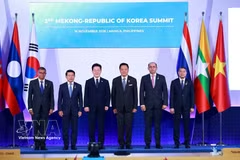
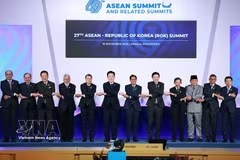
Prime Minister Le Minh Hung (far, right) and other delegation heads from countries of the Mekong-RoK cooperation mechanism. (Photo: VNA)

Vietnam ready to help strengthen Mekong-RoK partnership: PM

Vietnam stands ready to work with other member countries to build an increasingly strong Mekong-Republic of Korea (RoK) partnership that delivers tangible benefits to their people, Prime Minister Le Minh Hung affirmed on November 16.

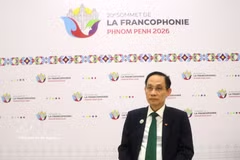
Minister of Foreign Affairs Le Hoai Trung speaks to the press about the key outcomes of General Secretary of the Communist Party of Vietnam Central Committee and President To Lam's working trip to Cambodia. (Photo: VNA)

Vietnam ready to make substantive contributions to Francophone cooperation: FM

The direct participation of the country's top leader in the 20th Francophonie Summit on November 14-16 demonstrated Vietnam's support for the activities of the International Organisation of La Francophonie (OIF), an important international organisation representing a population of 1.4 billion, with members across five continents.

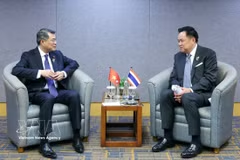
Prime Minister Le Minh Hung (L) meets with his Thai counterpart Anutin Charnvirakul in Manila, the Philippines, on November 16, 2026. (Photo: VNA)

Vietnamese, Thai PMs pledge to strengthen ties for united, resilient ASEAN

The two sides agreed to maintain close consultations, enhance mutual understanding and trust, and strengthen coordination at ASEAN, the United Nations and other multilateral forums, helping to consolidate ASEAN solidarity and unity, uphold its central role and enhance the region's capacity to respond to common challenges.

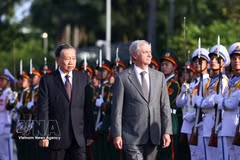
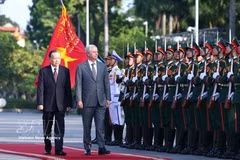
General Secretary of the Communist Party of Vietnam Central Committee and President To Lam and Chilean President José Antonio Kast review the Guard of Honour of the Vietnam People's Army. Photo: VNA

Vietnam, Chile issue Joint Statement on Strategic Partnership

The leaders of Vietnam and Chile agreed to upgrade Vietnam-Chile relations to a Strategic Partnership based on six pillars of cooperation: politics and diplomacy; economy and trade; agriculture; science and technology; education and culture; and national defence and security.

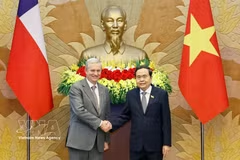
NA President Tran Thanh Man (right) and Chilean President Jose Antonio Kast at their meeting in Hanoi on November 16, 2026 (Photo: VNA)

Vietnam's top legislator meets with Chilean President

NA President Tran Thanh Man affirmed the Vietnamese NA's strong support for the establishment and implementation of the Strategic Partnership between the two countries, expressing his hope that the two legislatures will make parliamentary cooperation an important pillar of bilateral ties.

Prime Minister Le Minh Hung (R) meets IMF Managing Director Kristalina Georgieva in Manila, the Philippines, on November 16. (Photo: VNA)

IMF ready to continue supporting Vietnam in new development era

IMF Managing Director Kristalina Georgieva praised Vietnam’s efforts to participate more deeply in global AI value chains. She affirmed that the IMF is ready to share experience with and help the country capitalise on opportunities and deal with AI’s impacts on economic growth, employment and financial stability.

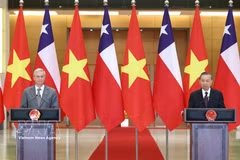
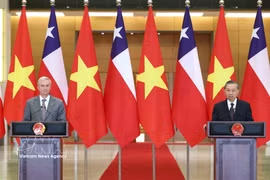
General Secretary of the Communist Party of Vietnam Central Committee and President To Lam (R) and Chilean President Jose Antonio Kast at the joint press briefing in Hanoi on November 16. (Photo: VNA)

Vietnam, Chile elevate ties to Strategic Partnership

General Secretary and President To Lam expressed his confidence that the upgrade of bilateral relations will provide fresh momentum and an important framework for both countries to better tap their respective potential and strengths, bringing the partnership to a new level of greater depth, substance and effectiveness.

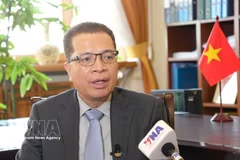
Vietnamese Ambassador to Russia and Azerbaijan Dang Minh Khoi speaks to the Vietnam News Agency. (Photo: VNA)

Vietnam, Azerbaijan look to expand economic ties, strategic cooperation

The Party, State, and people of Vietnam consistently attach great importance to their relationship with Azerbaijan - a partner that holds a significant geostrategic position in the Caucasus region and serves as a bridge between Europe and Asia, said Ambassador to Russia and Azerbaijan Dang Minh Khoi.

National Assembly President Tran Thanh Man (right) welcomes Chief Justice of the Supreme Court of Canada Richard Wagner in Hanoi on November 16. (Photo: VNA)

Vietnam looks to Canada for legislative, judicial experience

The Vietnamese legislature stands ready to promote parliamentary, legal and judicial cooperation, and improve the legal framework and effectively implement cooperation orientations agreed upon by the two countries’ senior leaders, contributing to further strengthening the Vietnam-Canada Strategic Partnership.

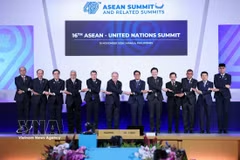
Prime Minister Le Minh Hung (fifth from left), other ASEAN leaders and UN Secretary-General Antonio Guterres (sixth from left) at the 16th ASEAN–UN Summit in Manila, the Philippines, on November 16, 2026 (Photo: VNA)

PM calls for stronger ASEAN–UN cooperation

PM Le Minh Hung called on the UN to continue supporting ASEAN centrality and work alongside ASEAN in developing mechanisms for proactive prevention, early warning and crisis management.

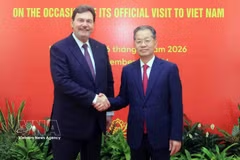
Chief Justice of the Supreme People's Court of Vietnam Nguyen Van Quang (right) hosts a reception in Hanoi on November 16 for visiting Chief Justice of Canada Richard Wagner (Photo: VNA)

Vietnam, Canada boost legal, judicial cooperation

Chief Justice of the Supreme People's Court of Vietnam Nguyen Van Quang proposed expanding exchanges of experience in applying international law, implementing international treaties and observing international judicial practices, particularly in handling civil and commercial cases involving foreign elements.