Century-old cultural space and traditional crafts in Cu Da Village

About 20km southwest of Hanoi, the Cu Da village in Thanh Oai district is renowned for its distinctive cultural space with many well-preserved ancient Vietnamese-style houses as well as traditional vermicelli and soy sauce making.
Century-old cultural space and traditional crafts in Cu Da Village ảnh 1Northern delta houses built from wood and red-tile in Cu Da village (Photo: VNA)

Hanoi (VNA) – About 20km southwest of Hanoi, the Cu Da village in Thanh Oai district is renowned for its distinctive cultural space with many well-preserved ancient Vietnamese-style houses as well as traditional vermicelli and soy sauce making.

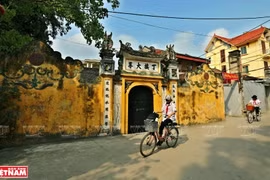
Lying on the banks of Nhue River, Cu Da has so many imprints of a typical Vietnamese village of the old time, like century-old trees, old village gates, water wharves, ancient temples and houses that get visitors on a time-travelling trip to go back at least one hundred years.

Unique cultural space

According to Vu Van Than, an 87-year-old elder of the village, genealogies and historical documents show that the village was founded four centuries ago by royal relatives of a Trinh Lord. Then three businessmen who were owners of large textile factories, shops, and transport firms in Hanoi in the 1920s through the 1940s period brought French architecture to the village.

The villagers have always been proud of their home. They used the village’s name as their surname when they lived and worked in Hanoi. “Some of the bourgeois in Hanoi at that time whose names began with the word “Cu” gave the name to Cu Da villagers,” Than said.

Flourishing the most in late 19th and early 20th centuries, Cu Da is now left with about 50 ancient houses designed in typical architecture of the Northern Delta region.

The village was originally planned in an orderly way, with a main road running along the riverbank with big trees planted on one side and houses erected on the other. From the main road, dozens of small alleys paved with slanted bricks run deep into the village like fish bones.

One of the village’s oldest houses is Trinh The Sung’s, built in 1874, where visitors can enjoy architecture dating to the Nguyen Dynasty in the 19th century. The five-room house has sophisticated carvings on its 35 wooden pillars, and its walls were also built with wood while the roof is covered with ancient tiles.

There is also an ancient horizontal lacquered board engraved with Chinese characters and parallel sentences at the ancestral worshiping area in the middle of the house. The house is always cool in summer and warm in winter.

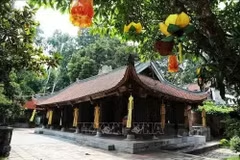
In addition to the ancient houses, the village is also known for many centuries-old temples and pagodas recognised as national heritage relics, one of which is Dan Xa Tac, or Xa Tac Altar, dating back to the early 1900s. Made of precious stones, it was a place of worship where villagers pray for favourable weather and bumper crops.

Traditional craft village

The Cu Da village is famous nationwide for its delicious “mien” (vermicelli) and soy sauce that are being made by nearly 400 local households. The vermicelli making was founded by a villager named Trinh Van Can and has started since around 1950s – 1960s, while the soy sauce making has also dated to the formation of the about-400-years-old village.

Cu Da vermicelli can be easily recognised by its feature of shiny yellow or fine white and thin form. Cu Da vermicelli is made 100 percent from arrowroot, which is ground into flour and mixed with water to make a paste. Then this paste is smeared into thin pancake on the large bamboo trays, steamed, sun-dried, and split into thin, long strings.

The village produces around 15 tonnes of vermicelli every day and the daily output can reach 20 – 25 tonnes during the wedding season or holidays, like Tet – the traditional New Year Festival of Vietnam.

The wholegrain sauce, meanwhile, is made from four main ingredients – glutinous rice, white salt, soybean and water. It must be through the hands of the Cu Da people, the sauce has the right and distinctively delicious taste.

In the past, every family had a jar of wholegrain sauce in their houses to serve the family’s daily meals. But since the precious product became well-known, many families have started to sell it to neighbouring provinces./.
VNA

See more

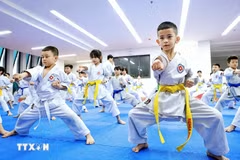
Young learners take part in a Vietnamese traditional martial arts class at the Permanent Mission of Vietnam to the United Nations, the World Trade Organisation and other international organisations in Geneva, Switzerland (Photo: VNA)

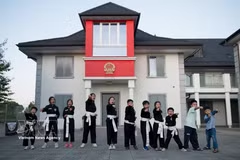
Vietnam’s traditional martial arts promoted in Switzerland

After more than three years, many participants have returned to Vietnam with their parents following the completion of their diplomatic assignments. However, the class has continued thanks to the mission's efforts. It now meets every Tuesday and attracts new participants.

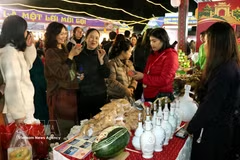
Visitors and locals explore, shop for and discover the culinary specialities of various provinces and cities at the festival. (Photo: VNA)

Festival celebrates culinary quintessence of northern region

The "Quintessence of Northern Cuisine" Festival 2026 is not only a culinary celebration but also a venue for cultural exchange, connectivity, the promotion of traditional values and the introduction of Vietnam’s land and people to domestic and international visitors, according to the organisers.

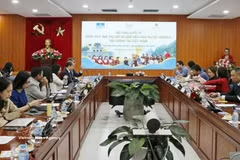
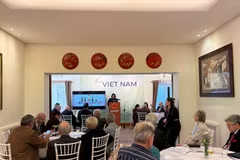
Vietnamese Ambassador to Greece Pham Thi Thu Huong speaks at the "MEET VIETNAM" programme on the occasion of Great National Unity Festival and Vietnam Culture Day (Photo: Vietnamese Embassy in Greece)

Vibrant “MEET VIETNAM” programme held in Greece

The Vietnamese Embassy in Greece has held a “MEET VIETNAM” programme in Athens to mark the Great National Unity Festival and Vietnam Culture Day part of a series of more than 400 activities and events organised on this occasion to honour national cultural identity, spread great national unity, promote the development of cultural industries, and create opportunities for people to directly participate in, contribute to and enjoy cultural activities.

Vietnam's first rally event, Petrolimex XCR Sprint Cup Vietnam 2026, will be held on December 2-6 in Quang Tri province. (Photo courtesy of organisers)

XCR Sprint Cup Vietnam 2026 to debut in December

This marks the first time a global rally sprint will be held in Vietnam. The event is part of the Cross Country Rally (XCR) competition system, a Japanese-founded off-road rally format established in 2022.

Aoki Kazunori, Head of Programming at the Asia-Pacific Broadcasting Union (ABU), speaks at the second ABU CARE 13 Documentary Exchange Conference. (Photo: VNA)

International cooperation promoted in documentary production on heritage, culture

Participation in ABU CARE 13 provides an opportunity for television professionals in the Central and Central Highlands region to exchange experience and learn modern storytelling approaches from international experts, while expanding co-production, copyright exchange and support for foreign film crews seeking access to filming locations in Vietnam

An art performance at Tam Thang Tower Square in Vung Tau ward draws large crowds of residents and visitors. (Photo: VNA)

Artistic events help connect heritage, culture, tourism

In Ho Chi Minh City, thousands of people attended a special programme entitled “Proud of Vietnamese Identity” to mark Vietnam Culture Day. Connecting three venues in Sai Gon, Thu Dau Mot and Vung Tau, the event combined traditional performances with 3D mapping technology to tell stories of southern Vietnam’s heritage and cultural traditions.

The special art programme brings together music, traditional and contemporary performances, spreading love for Vietnamese culture and national pride. (Photo: VNA)

Special art programme showcases flow of Vietnamese culture

The large-scale event, entitled "Colours of Vietnam: Culture Lights the Way – The Nation in Harmony," brought together music, traditional and contemporary performances, spreading love for Vietnamese culture and national pride.

Culture fosters Vietnam-Canada friendship

Culture fosters Vietnam-Canada friendship

Through stories shared in poetry, music and conversations over Vietnamese food, members of the Vietnamese community had an opportunity to introduce their homeland’s culture to Canadian friends and help younger generations of Vietnamese origin learn more about their roots.