China, Vietnam join hands on path to prosperous development: Chinese scholar

Associate Professor Dr Chen Jihua suggested that Vietnam could take the initiative in designing programmes to promote Vietnamese culture in particular and the cultures of APEC economies in general, for example, by organising an APEC cultural week.

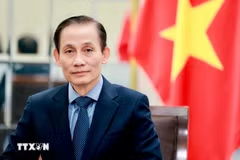
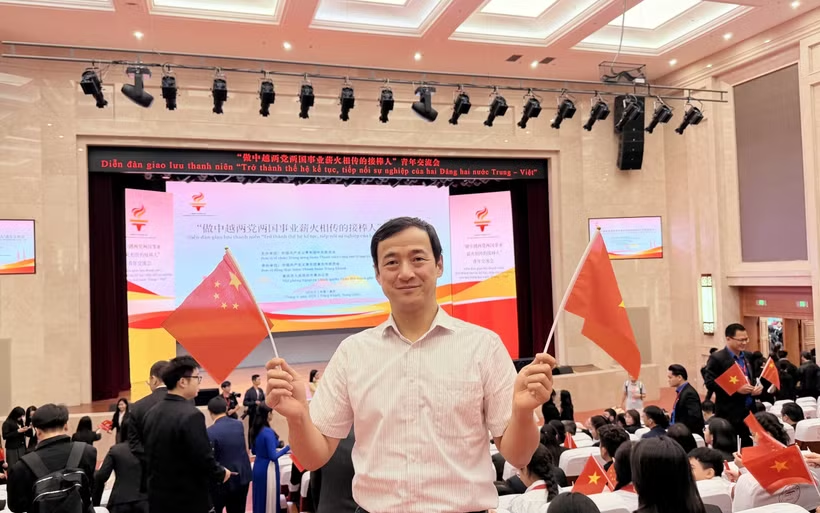
Associate Professor Dr Chen Jihua from Guangdong University of Foreign Studies (Photo: VNA)

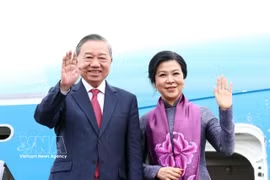
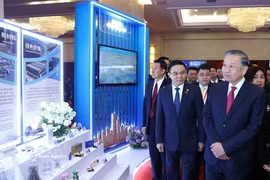
Beijing (VNA) – General Secretary of the Communist Party of Vietnam (CPV) Central Committee and President To Lam’s visit to China has contributed to building a Vietnam–China community with a shared future that carries strategic significance, according to a Chinese scholar.

Associate Professor Dr Chen Jihua from Guangdong University of Foreign Studies made the assessment during an interview granted to a Vietnam News Agency (VNA) correspondent in China.

Chen said that during the visit, General Secretary and President Lam travelled to Guangdong and Yunnan provinces. In particular, his visit to the relic site of President Ho Chi Minh’s former residence in Kunming, Yunnan province, helped rekindle pride among the peoples of both countries in the traditional friendship between the two Parties and the two countries, characterised by their close bonds as “both comrades and brothers”.

From an international perspective, Chen said Vietnam showcased its achievements and development orientations to a large number of international partners, thereby strengthening the international community’s confidence in the country’s business environment and future development prospects.

Commenting on General Secretary and President Lam’s speech at the handover ceremony for the role of host of the 2027 Asia-Pacific Economic Cooperation (APEC) Forum, the scholar highlighted that the Vietnamese leader reviewed the country’s 40-year Doi Moi (Renewal) process, analysed three strategic orientations that APEC should promote, outlined Vietnam’s new development model in the new era, and introduced the country as host of APEC 2027.

Chen said he is delighted to witness the remarkable strides in Vietnam’s economy. In his view, the “good neighbourliness” embodied in the spirit of the “four goods” in Vietnam–China relations carries two meanings: first, the two neighbouring countries maintain good relations, and second, both have good economies.

He expressed particular appreciation for the fact that General Secretary and President Lam opened his speech by speaking highly of China’s outstanding development achievements in general and those of Shenzhen in particular. He expressed confidence that China and Vietnam will stand side by side on the path towards prosperous development.

Regarding Vietnam’s expected contributions during its APEC Year 2027, Chen said that “promoting the soft power of culture” is a noteworthy point in the Vietnamese leader’s speech. In his view, this could also become one of the achievements of Vietnam’s hosting of APEC next year.

He suggested that Vietnam could take the initiative in designing programmes to promote Vietnamese culture in particular and the cultures of APEC economies in general, for example, by organising an APEC cultural week.

As a lecturer specialising in Vietnamese language and a scholar whose research focuses on the history of Vietnamese vocabulary, Chen expressed his hope that Vietnam will initiate several events to promote the soft power of culture within the APEC framework. These could include youth and student exchanges, exchanges on languages and literature, as well as bilateral and multilateral exchanges involving cinema and feature films among APEC economies.

The vision on soft power is itself an expression of Vietnam’s soft power, he noted./.
VNA

See more

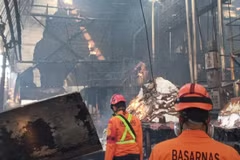
The scene of the fire at the Fonusa Agung Mulia factory in Indonesia’s Banten province on November 22 (Photo: Xinhua/VNA)

Fire leaves 40 missing in Indonesia

Indonesian rescue forces are searching for 40 people missing after a fire broke out at a confectionery and sugar products factory in western Jakarta.

Malaysia prioritises domestic rare earth processing industry

Malaysia prioritises domestic rare earth processing industry

The Malaysian government has established a mechanism to consider the limited and conditional export of REE for research, development and processing purposes, aiming to develop the entire mineral industry value chain, covering upstream mining, midstream processing and separation, and downstream production of high-value-added products.

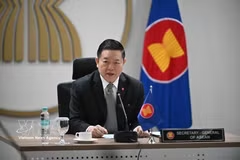
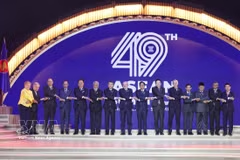
ASEAN Secretary-General Kao Kim Hourn announces the outcomes of the 49th ASEAN Summit and related meetings at the ASEAN headquarters in Jakarta, Indonesia, on November 18, 2026. (Photo: VNA)

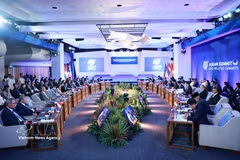
49th ASEAN Summit highlights action-oriented regional cooperation

As 2026 marks the first year of implementing the ASEAN Community Vision 2045, leaders underlined the bloc's solidarity and centrality as well as closer coordination among the three community pillars in response to global economic uncertainties and security challenges, with priorities including digital transformation, AI application, energy security and supply chain resilience.

ASEAN Secretary-General Kao Kim Hourn (Photo: VNA)

Growing together: 11 nations, one ASEAN home

The new emblem signals an ASEAN that is growing more inclusive while holding to its founding principles of building a peaceful, stable, dynamic region based on equality and cooperation. Its colours come from member states’ national emblems, reflecting diversity inside a single community.

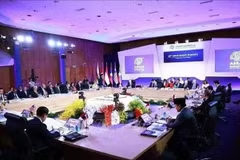
An overview of the dialogue between ASEAN leaders and the ASEAN Business Advisory Council (ASEAN-BAC) in Manila on November 15 (Photo: VNA)

Vietnam puts forward priorities to advance ASEAN cooperation

Appreciating ASEAN-BAC’s report and recommendations, Deputy Minister of Foreign Affairs Dang Hoang Giang, head of Vietnam’s ASEAN Senior Officials’ Meeting (SOM) delegation, called for simplifying procedures, reducing costs, accelerating digitalisation, upgrading the ASEAN Single Window (ASW) and effectively implementing the ASEAN Digital Economy Framework Agreement (DEFA) to make the regional market more accessible.

ASEAN signs Digital Economy Framework Agreement

ASEAN signs Digital Economy Framework Agreement

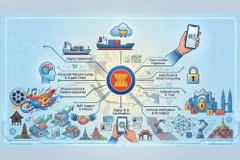
The Digital Economy Framework Agreement (DEFA), the bloc’s first standalone and legally binding digital economy agreement, establishes common rules covering digital trade, cross-border data flows, electronic payments, cyber security and artificial intelligence (AI).

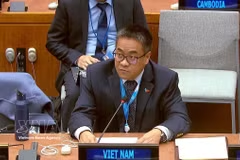
Minister Counsellor Nguyen Hai Luu, Deputy Permanent Representative of Vietnam to the UN, speaks at the discussion on November 12, 2026. (Photo: VNA)

Vietnam supports peace, reconstruction efforts in Gaza: diplomat

Minister Counsellor Nguyen Hai Luu, Deputy Permanent Representative of Vietnam to the UN, expressed deep concern over the dire humanitarian situation in Gaza, particularly as recent heavy rains and flooding have worsened living conditions for residents.

Thailand diversifies oil sources to ensure energy security

Thailand diversifies oil sources to ensure energy security

Although the diversification of oil import sources has helped reduce the risk of domestic oil shortage, it has not immediately reduced energy costs because import prices depend on market mechanisms, transportation costs, foreign exchange rates and the terms of oil contracts.