Bangkok (VNA) – Thailand has diversified its sources of oil imports, rather than relying heavily on the Middle East, to ensure energy security amidst geopolitical risks and uncertainty of navigation through the Strait of Hormuz, said Nantapong Chiralerspong, director-general of the Trade Policy and Strategy Office (TPSO) under the Thai Ministry of Commerce.
From March to September, 40.1% of crude oil was imported from the United Arab Emirates, 18.1% from Saudi Arabia and 16.2% from the US, he said as quoted by Thai PBS.
However, since tensions escalated, the total import share from these three countries has decreased to 54.7% by value. To compensate for the shortfall, Thailand has expanded its supply sources to markets in Africa and Latin America such as Angola, Brazil, and Argentina.
Although the diversification of oil import sources has helped reduce the risk of domestic oil shortage, Nantapong said that it has not immediately reduced energy costs because import prices depend on market mechanisms, transportation costs, foreign exchange rates and the terms of oil contracts.
Inflation for October was 3.90% because oil prices were up by 29.18%.
He said his office will continue to monitor oil imports and price movements on other products to assess the risks to supply and costs in tandem with preparations to cope with global economic volatility to reduce impacts on businesses and people’s living cost./.
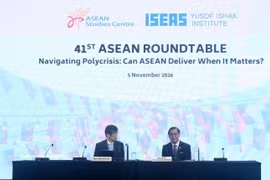
Thailand calls on ASEAN to proactively address polycrisis
Thai Deputy Prime Minister and Minister of Foreign Affairs Sihasak Phuangketkeow noted that no single member state could tackle challenges ranging from major-power competition and economic fragmentation to climate change and energy and food security on its own. Regional cooperation is therefore a strategic imperative, enabling ASEAN not only to overcome crises but also to sustain its development momentum.