Hanoi (VNA) – Vietnam’s museums are undergoing a digital transformation that is redefining how history and heritage are preserved, presented and experienced, helping cultural institutions connect more effectively with younger generations.
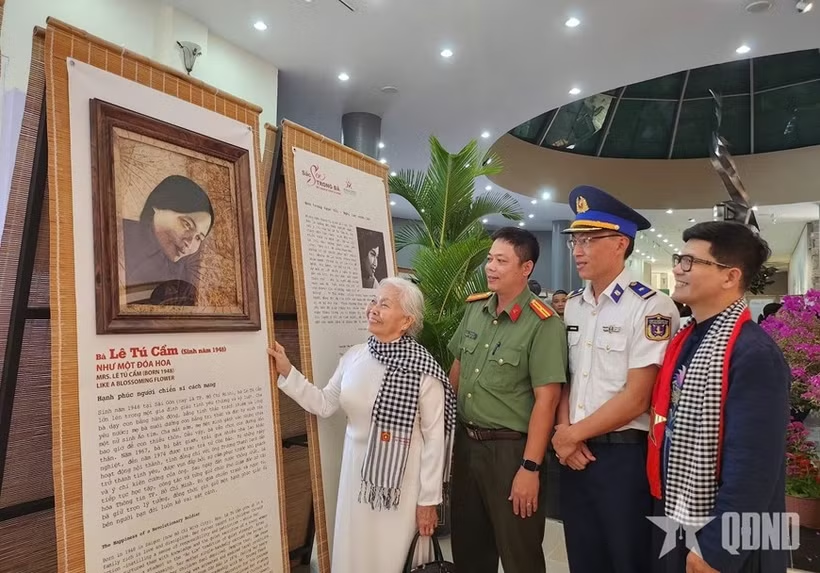
At the Con Dao Museum, visitors have been captivated by a portrait of former female political prisoner Le Tu Cam created from dried lotus leaves. The artwork began as a faded archival photograph that was digitally restored before being transformed by artisans from Dong Thap into a striking tribute to resilience and remembrance.
Featured in the Sen trong Da (Lotus in Stone) exhibition, running from May through July, the portrait brought Cam to tears as she revisited an image of her younger self. The piece has also become a symbol of contemporary appreciation for the sacrifices of previous generations.
Technology is similarly enriching exhibitions at the Vietnam Women’s Museum in Hanoi. Wartime letters, a typewriter and other artefacts linked to former Vice President Nguyen Thi Binh have been digitally integrated with collections held at the War Remnants Museum in Ho Chi Minh City. Through projection mapping, 3D displays and a virtual reality recreation of the Paris Peace Agreement, visitors can engage more deeply with the life and achievements of one of Vietnam’s most prominent diplomats.
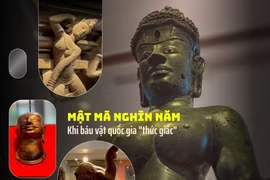
The shift towards smart museums is generating tangible results. The Vietnam National Museum of History, an early adopter of 3D virtual reality technology, has expanded access to its collections through virtual exhibitions and 360-degree presentations of national treasures. Website traffic more than doubled from 9 million visits in 2019 to over 21 million in 2024.
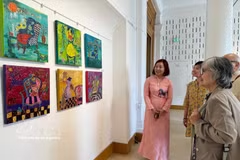
The Vietnam Fine Arts Museum has also benefited from digital innovation. Its iMuseum VFA multimedia guide and AI-powered online exhibitions have helped drive annual visitor growth of between 200% and 300%.
Other museums, including the War Remnants Museum and the Southern Women’s Museum, have introduced 3D visualisation technologies, smart information kiosks and interactive digital platforms that make historical content more immersive and accessible.
Nguyen Anh Minh, Director of the Vietnam Fine Arts Museum, described digital adoption as an inevitable trend for museums. By turning static exhibits into interactive experiences, technology enhances public engagement and encourages younger audiences to explore Vietnam’s cultural and historical heritage.
Despite the progress, challenges remain. Museums continue to face shortages of specialised technology personnel and funding, while copyright protection in the digital environment presents additional complications. Limited public-private cooperation mechanisms have also constrained the long-term sustainability and scalability of digital initiatives.
According to Pham Dinh Phong, Deputy Director of the Department of Cultural Heritage under the Ministry of Culture, Sports and Tourism, museums are increasingly embracing open, audience-centred models that prioritise participation, interaction and community engagement.
He said the Government’s recently approved programme on digital transformation in the cultural sector through 2030, with a vision to 2045, provides an important framework for modernising museums in line with international standards.
Phong stressed that digitalisation is not intended to replace physical museums. Original artefacts remain at the heart of the museum experience, offering an authenticity and emotional resonance that technology cannot replicate. Instead, digital tools serve as a bridge between heritage and contemporary audiences, ensuring that Vietnam’s cultural and historical legacy remains relevant and accessible for future generations./.