Prague (VNA) – Vietnam has called for broader international participation in the United Nations Convention against Cybercrime (Hanoi Convention), highlighting the need for stronger global cooperation to address increasingly sophisticated cross-border cyber threats.
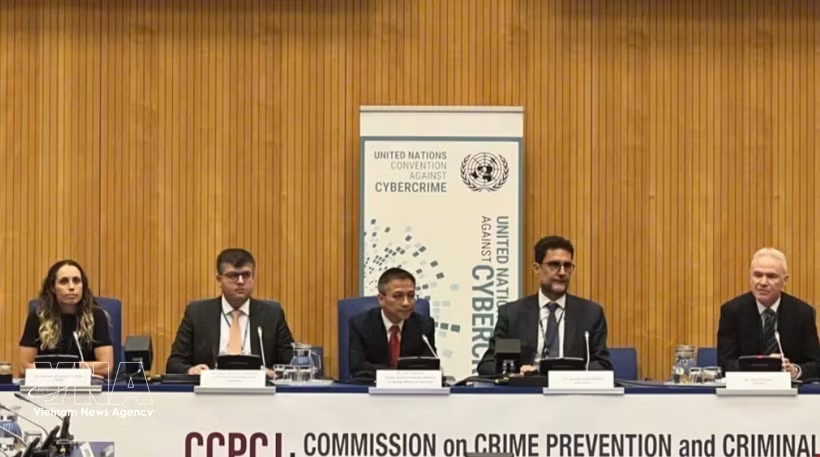
Vietnam, in coordination with the United Nations Office on Drugs and Crime (UNODC), organised a seminar on the sidelines of the 35th Session of the Commission on Crime Prevention and Criminal Justice (CCPCJ 35) in Vienna, Austria, on June 1.
The event brought together representatives from Vietnamese ministries and agencies, UNODC, UN member states and cybersecurity experts. Conducted in both in-person and virtual formats, the discussion served as a platform to promote signature, ratification and effective implementation of the convention.
Addressing the event, Chu Tuan Duc, Deputy Director of the Department of International Law and Treaties under Vietnam’s Ministry of Foreign Affairs and head of the Vietnamese delegation, described the opening for signature of the convention in Hanoi in October 2025 as a major milestone for international cooperation against cybercrime.
He noted that the signing ceremony marked the conclusion of years of multilateral negotiations and the beginning of a new phase focused on translating international commitments into concrete action. The convention demonstrates the importance of multilateralism and international cooperation in tackling global challenges, the official said.
As cybercrime becomes increasingly sophisticated and transcends geographical and legal boundaries, no country can effectively respond on its own without mechanisms for international cooperation, information sharing and mutual legal assistance, Duc stressed.
Duc highlighted that Vietnam deposited its instrument of ratification with the UN Secretary-General on April 17, 2026, becoming the first country in Southeast Asia and the third globally to complete the ratification process.
The early ratification reflects Vietnam’s strong commitment to international cooperation in combating cybercrime and enables the country to make full use of the convention’s cooperation, technical assistance and capacity-building mechanisms, he said.
Vietnam also called on other countries to complete their domestic procedures for signing and ratifying the convention, helping accelerate its entry into force and expand the global cooperation network against cybercrime.
Duc further underlined the importance of capacity building, particularly for developing countries, through legal reforms, institutional strengthening, workforce training, technical assistance and technology transfer.
Vietnam is currently developing a national implementation plan for the convention while advancing bilateral, regional and multilateral cooperation initiatives in this field. The country is also working with UNODC and international partners to establish a regional cybercrime centre in Hanoi, which is expected to serve as a hub for training, knowledge sharing, capacity building and practical cooperation among countries in the region.
UNODC representatives described the convention as the first global legal framework dedicated to strengthening international cooperation in preventing, investigating and prosecuting cybercrime. They commended Vietnam’s active contributions throughout the drafting process, its successful hosting of the signing ceremony in Hanoi in 2025 and its swift ratification in 2026.
The UNODC also affirmed its commitment to providing technical support to countries which are considering signing and ratifying the convention.
Adopted by the UN General Assembly on December 24, 2024, and opened for signature in Hanoi in October 2025, the convention is the first global multilateral treaty dedicated to combating cybercrime. A total of 72 countries signed the convention during the opening ceremony in Hanoi, laying a strong foundation for its early entry into force and its role as a new international framework for combating cybercrime./.
VNA