Hanoi (VNA) – Those working in culture and the cultural industries need to rethink creativity and keep pace with emerging trends. Beyond artistic creation, they are required to turn their works into distinctive products for export, carrying pride in Vietnam, its people and its culture.
At the third meeting of the 14th Party Central Committee, the Party Central Committee endorsed a project on building a safe, civilised, and developed society. It is important to identify the development of people and culture, along with law, discipline, and a healthy social environment, as core elements of people's quality of life and happiness.
From a cultural perspective, the meeting’s spirit highlights the need to promote culture as an endogenous resource and a driving force for sustainable development.
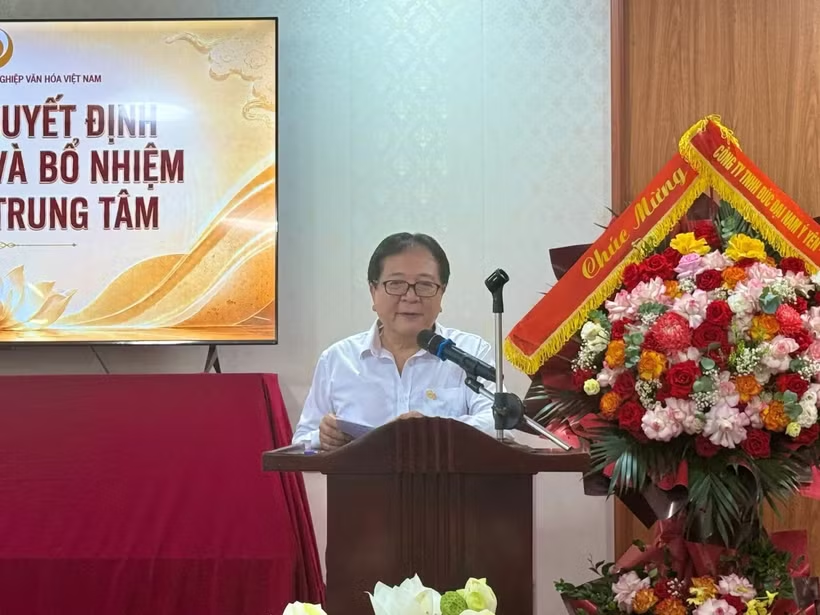
VietnamPlus spoke with People's Artist Vuong Duy Bien, Chairman of the Vietnam Association for Cultural Industry Development and former Deputy Minister of Culture, Sports and Tourism, about Vietnamese culture in the new era.
Changing perceptions to drive major shifts
Reporter: General Secretary of the Communist Party of Vietnam Central Committee and President To Lam has recently issued specific directions on cultural development, while the third Plenum of the 14th Party Central Committee highlighted human and cultural value systems as an endogenous strength. How do you assess the significance of these developments?
People's Artist Vuong Duy Bien: The directions from General Secretary and President Lam have revived confidence and raised high expectations among artists and cultural practitioners for the development of the country's culture and arts.
Identifying the “four gaps” and calling for “three major shifts” are particularly important in shaping strategic thinking and creating a development framework for Vietnamese culture at this stage.
The directions are notable both in terms of thinking and approach. The Party leader has shown deep interest in culture, providing a detailed and in-depth analysis of the core issues emerging from reality.
Importantly, the directions are not only theoretically profound but also highly practical. Those working in culture, the arts and cultural management can readily identify what needs to be done, rather than spending considerable time interpreting broad theoretical concepts.
The most important factor in realising these shifts is awareness. Successful implementation requires a shared understanding, determination and resolve across the entire system. Only then can sufficient strength be generated to bring about substantive change.
Reporter: The Party and State have demonstrated strong determination to develop culture, together with Politburo Resolution No. 80, National Assembly Resolution No. 28 and other policies. How effective do you think these resolutions will be in translating cultural policy into practice?
People's Artist Vuong Duy Bien: Resolution No. 80 is an important breakthrough, not only at the macro level but also because of its direct relevance to people's lives. A particularly notable aspect is its people-centred approach to cultural enjoyment.
The designation of November 24 as Vietnam Cultural Day, together with the provision for workers to take paid leave, is an important milestone in honouring culture. It is not merely symbolic but also a concrete step towards bringing culture closer to everyday social life.
When people have greater opportunities to participate in and experience cultural activities, the day can truly become a festival and help spread cultural values throughout the community.
I also welcome the resolution's concrete targets, including the proposal to allocate around 2% of the State budget to culture.
This represents significant resources and reflects the Party and State's strong attention to culture. However, the key issue is not the figure itself but the mechanism for implementation.
Officials must understand not only the spirit of the resolution but also practical realities, identify emerging problems and translate policy into appropriate action programmes. Only when shared awareness is transformed into determination to act can the directions of the General Secretary and President produce tangible results.
Resolution No. 80 also creates a new mindset and status for cultural practitioners. While inter-sectoral coordination in cultural programmes previously faced difficulties, stronger political resolve, clear orientations and coordinated measures should help improve the formulation and implementation of cultural policies and programmes. I believe the targets are achievable because we now have the policies, resources, determination and a favourable opportunity.
Establishing cultural sovereignty in digital space
Reporter: State budget spending on culture currently accounts for only around 1.5% of total expenditure, while the resolution sets a minimum target of 2%. What needs to be done to achieve this?
People's Artist Vuong Duy Bien: Based on the implementation of previous resolutions, I believe effectiveness will remain limited without coordinated mechanisms and resolute implementation. This is also a major concern among artists and the public.
A resolution becomes meaningful only when translated into feasible policies, backed by clear monitoring and evaluation mechanisms.
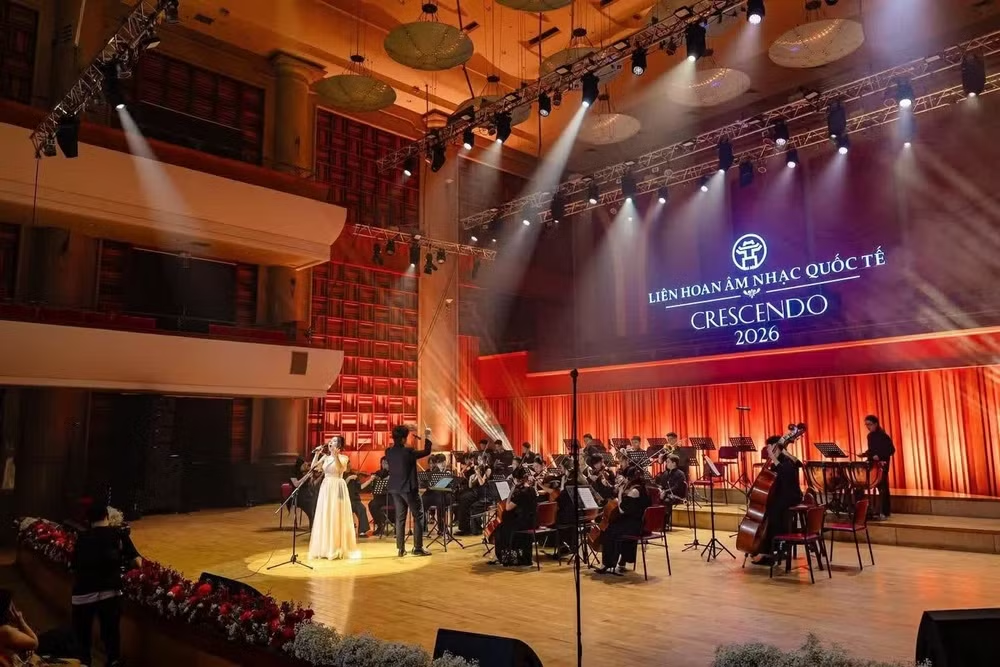
Implementing the resolution effectively requires a change in awareness across society. Cultural development is not the responsibility of a single sector but a shared responsibility. The approach must also be underpinned by a clear legal framework and concrete mechanisms for implementation, monitoring and evaluation, requiring coordinated involvement from the entire political system, from central to local levels and from management agencies to communities.
The resolution goes beyond general orientations and requires concrete measures, particularly as localities have expanded in scale and gained greater development space and richer cultural resources. As economic conditions and resources improve, implementing cultural policies will also become more feasible.
Another important factor is social resources, particularly businesses. With State resources limited, mobilising non-State resources can provide additional impetus for cultural development while reducing pressure on public finances. To do this effectively, the State needs appropriate mechanisms and supportive policies for businesses contributing to Vietnamese culture, including tax incentives.
The implementation of the resolution must be accompanied by concrete Government action programmes communicated to every locality and level of leadership. Clear and strict reward and disciplinary mechanisms are also needed to ensure effectiveness and enforcement. Only with sufficiently strong and specific measures, implemented seriously, can Resolution No. 80 become a reality and enable people to benefit from cultural values.
Reporter: General Secretary and President Lam has pointed out that “the appeal and capacity of positive cultural values to spread in the digital environment have not kept pace with the development of digital platforms and content”. How can this limitation be addressed?
People's Artist Vuong Duy Bien: I am particularly impressed by General Secretary and President Lam's emphasis on promoting and protecting Vietnamese cultural values in the digital space.
In my view, this represents a new approach with profound theoretical and practical significance. The concept of “cultural sovereignty” goes beyond affirming national identity. It also requires us to establish cultural “markers” rooted in national identity to protect and affirm sovereignty, because cultural identity is the foundation of cultural sovereignty.
The concept also encompasses both “building” and “protecting”. On the one hand, we must build, enrich, and promote the positive values of national culture. On the other, we need sufficient resilience and capacity to protect those values from negative influences and the risk of eroding cultural identity. This places greater responsibility on cultural and artistic practitioners to work alongside the Party and the State in promoting Vietnamese cultural values.
Reporter: Resolution No. 80 sets the target for cultural industries to contribute 7% of GDP by 2030 and 9% by 2045. What plans does the Vietnam Association for Cultural Industry Development have to contribute to these targets?
People's Artist Vuong Duy Bien: General Secretary and President Lam's call to develop cultural industries as a new growth driver and turn cultural strength into national competitiveness is highly significant.
To achieve this, we must simultaneously develop human resources, improve institutions and policies, build a creative environment, and facilitate the participation of different actors in the cultural market. Only when human resources, institutions, policies and markets are developed together can cultural values be transformed into competitive and widely influential products.
This requires unified awareness and determination from the central to local levels, across ministries and sectors, and throughout the political system.
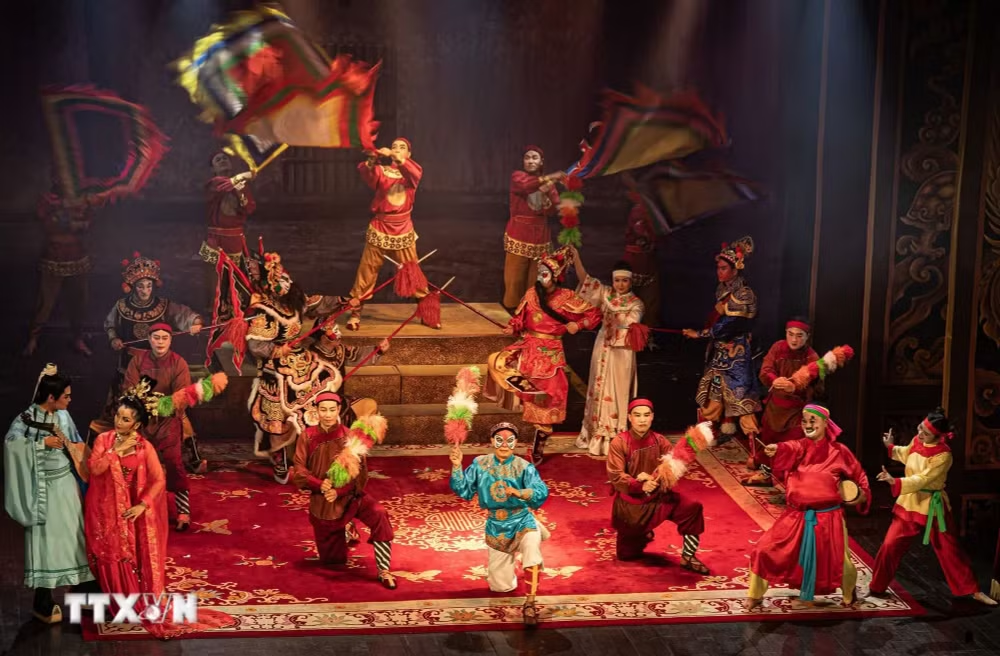
Not only grassroots officials directly implementing policies but also strategic-level officials need to share the same determination and vision to create a breakthrough in awareness of cultural development and cultural industries. This is essential to translate the direction of the General Secretary and President into concrete programmes, projects and cultural products.
Those working in culture and the cultural industries need to change their creative mindset and embrace new trends. Artists should move beyond creating art for its own sake and turn artistic works into distinctive products for export, expressing pride in Vietnam, its people and culture. In doing so, they can create economic value and contribute to the country's overall development.
The Vietnam Association for Cultural Industry Development is proactively positioning itself as a strategic bridge between State management agencies, the creative community and technology businesses.
With a vision of becoming a national focal organisation for promoting professional, creative, integrated and sustainable cultural industries, the association will focus on building an industry ecosystem, proposing policies, promoting markets, supporting human resource training, advancing digital transformation and innovation, and promoting international integration in the cultural industries.
Reporter: Thank you very much.