Malaysia begins exporting bio-LNG

The delivery follows a memorandum of understanding signed by Petronas and Tokyo Gas on October 27 to expand collaboration across the LNG value chain and explore decarbonisation opportunities.

Kuala Lumpur (VNA) – Malaysia’s national oil and gas company Petronas, through its subsidiary Petronas LNG Ltd. (PLL) and in partnership with Tokyo Gas Co., Ltd., has delivered its first International Sustainability and Carbon Certification (ISCC) PLUS-certified bio-liquefied natural gas (bio-LNG) cargo to Japan.

The delivery follows a memorandum of understanding signed by Petronas and Tokyo Gas on October 27 to expand collaboration across the LNG value chain and explore decarbonisation opportunities, Petronas said in a statement on November 26.

The bio-LNG is produced from palm oil mill effluent (POME) and transported through Petronas’ existing LNG infrastructure. The first shipment was transported alongside conventional LNG from the Regasification Terminal Pengerang (RGTP) in Johor to Japan.

Adif Zulkifli, Petronas Executive Vice President and Chief Executive Officer of Gas and Maritime Business, said that by combining abundant biomethane supplies and existing infrastructure with the needs of its customer partners, the company is creating a roadmap to bring bio-LNG to market, promote practical decarbonisation solutions and support growing demand for low-carbon energy in the region.

Japan aims to incorporate 1% renewable gas, including e-methane and biomethane, into its urban gas system by 2030.

For Malaysia, bio-LNG exports not only help Petronas pursue new growth opportunities in the clean and low-carbon energy sector but also support the country’s energy transition goals under the National Energy Transition Roadmap (NETR), particularly in developing its bioenergy potential, towards achieving net-zero emissions by 2050./.

VNA

See more

Thailand to raise rice, crude palm oil reserves for El Nino

Thailand optimistic about tariff negotiations with US

Thai Deputy Prime Minister and Finance Minister Ekniti Nitithanprapas has described the US' increasing use of tariffs as a trade protectionist measure as a consequence of global polarisation, while expressing confidence that Thailand can negotiate with Washington to safeguard the competitiveness of its exports.

Southeast Asia gains ground amid shifting supply chain

Southeast Asia gains ground amid shifting supply chain

With geopolitical tensions pushing companies to diversify, manufacturers are increasingly moving plants out of China, said Mads Lauritzen, chief strategy officer for Southeast Asia and supply chain lead for Asia-Pacific at Accenture.

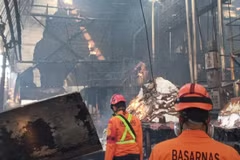
The scene of the fire at the Fonusa Agung Mulia factory in Indonesia’s Banten province on November 22 (Photo: Xinhua/VNA)

Fire leaves 40 missing in Indonesia

Indonesian rescue forces are searching for 40 people missing after a fire broke out at a confectionery and sugar products factory in western Jakarta.

Malaysia prioritises domestic rare earth processing industry

Malaysia prioritises domestic rare earth processing industry

The Malaysian government has established a mechanism to consider the limited and conditional export of REE for research, development and processing purposes, aiming to develop the entire mineral industry value chain, covering upstream mining, midstream processing and separation, and downstream production of high-value-added products.

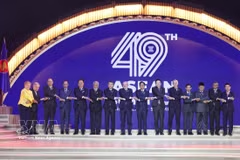
ASEAN Secretary-General Kao Kim Hourn announces the outcomes of the 49th ASEAN Summit and related meetings at the ASEAN headquarters in Jakarta, Indonesia, on November 18, 2026. (Photo: VNA)

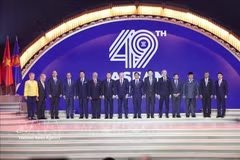
49th ASEAN Summit highlights action-oriented regional cooperation

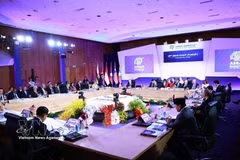
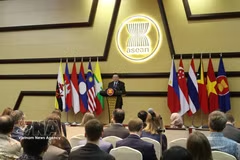
As 2026 marks the first year of implementing the ASEAN Community Vision 2045, leaders underlined the bloc's solidarity and centrality as well as closer coordination among the three community pillars in response to global economic uncertainties and security challenges, with priorities including digital transformation, AI application, energy security and supply chain resilience.

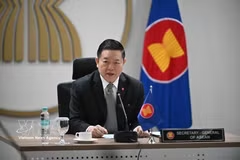
ASEAN Secretary-General Kao Kim Hourn (Photo: VNA)

Growing together: 11 nations, one ASEAN home

The new emblem signals an ASEAN that is growing more inclusive while holding to its founding principles of building a peaceful, stable, dynamic region based on equality and cooperation. Its colours come from member states’ national emblems, reflecting diversity inside a single community.