Jakarta (VNA) – Indonesia should study Vietnam’s development experience, particularly in export diversification, investment attraction and education quality improvement, to achieve faster and more sustainable economic growth, according to Indonesian economist Jonathan Pincus.
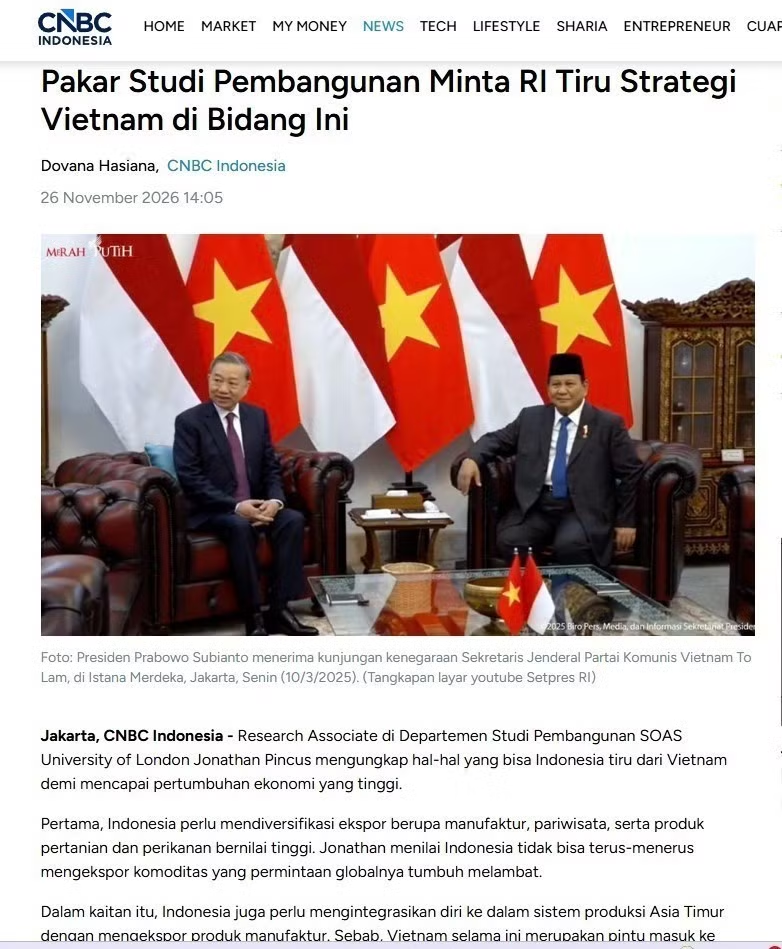
In an article published by CNBC Indonesia on November 26, Pincus, a research fellow at the Department of Development Studies, SOAS University of London (UK), analysed lessons Indonesia could learn from its Southeast Asian neighbour as it seeks to accelerate economic growth.
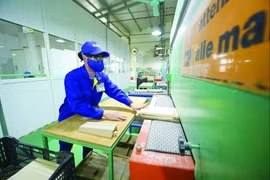
Pincus said Indonesia needs to restructure its export composition and reduce its reliance on raw materials, since global demand for many commodities is growing more slowly.
Instead, the country should expand exports of manufactured goods, tourism services, agricultural products and high-value seafood.
He stressed that deeper integration into East Asian production networks through manufactured exports is essential for Indonesia to improve its competitiveness.
Vietnam has emerged as an important gateway connecting regional economies with East Asian production networks, enabling it to better capitalise on rising global demand for industrial goods, he noted.
Pincus warned that Indonesia will struggle to make major economic progress if it continues to rely heavily on resource exports. Shifting towards industrial production is necessary, as demand for manufactured goods is growing faster globally and this will allow the economy to participate more deeply in international value chains.
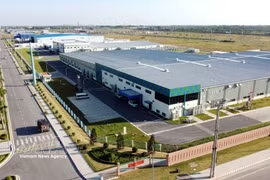
Another lesson concerns promoting competition among local governments in attracting investment.
According to Pincus, Vietnam has created incentives for local authorities to take a more proactive approach to improving the business environment, seeking investors and strengthening their competitiveness.
In contrast, Indonesian localities tend to focus on securing budget allocations from the central government rather than competing healthily to attract investment projects and promote economic development.
Improving education quality, from preschool to high school levels, is another area where Indonesia could learn from Vietnam.
Pincus cited results from the Organisation for Economic Co-operation and Development's (OECD) Programme for International Student Assessment (PISA), which show that Vietnamese students perform well compared with those in many countries with similar income levels.
He attributed part of this achievement to teachers' responsibility for students' learning outcomes. In Vietnam, teachers are expected to link their professional responsibilities with students' progress and academic performance, helping improve the quality of general education.
These recommendations come as Indonesia pursues a target of raising economic growth to 8% by 2029, significantly above the about 5% growth rate maintained in recent years.
Diversifying production, boosting labour productivity and improving human resource quality have therefore become key priorities for Southeast Asia's largest economy.
Pincus's analysis suggests that Vietnam's experience offers valuable lessons for Indonesia as it seeks to move away from a resource-dependent growth model towards an economy with stronger manufacturing and export capacity./.