Hanoi (VNA) - As digital transformation and artificial intelligence reshape the tourism industry, changing how destinations are managed and promoted, tourism communication is no longer merely a supporting activity, it has become a core competitive advantage of destinations, said insiders.
Media helps promote cultural values, stimulate tourism consumption, and enhance national image
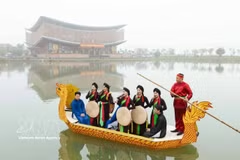
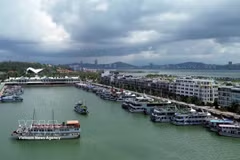
In recent years, Vietnam’s tourism sector has made a strong recovery and development, reinforcing its role as a key driver of economic growth. Beyond its economic contribution, tourism also contributes to enhancing the country’s soft power, allowing international visitors to experience Vietnam’s culture, people and national image firsthand.
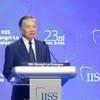
Deputy Minister of Culture, Sports and Tourism Ho An Phong described the media as a “soft bridge” connecting destinations with travellers, cultural values with markets, and the national image with the international community.
In the digital era, the press is not only a communication channel but also a force that shapes public perception, influences trends, promotes cultural values and supports economic development, he said.
However, Phong pointed to several shortcomings in tourism journalism and communications, such as fragmented content, destination storytelling yet to create a distinctive identity, and insufficient collaboration among media agencies, businesses and local authorities.
To address these challenges, he stressed the need to modernise multi-platform communication, harness AI and digital data, and strengthen partnerships to build a more integrated tourism media ecosystem.
According to Nguyen Trung Khanh, Director of the Vietnam National Authority of Tourism (VNAT), post-COVID pandemic travel trends are creating favourable conditions for Vietnam, as tourists increasingly seek safe, green, friendly destinations with rich cultural identity.
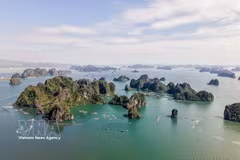
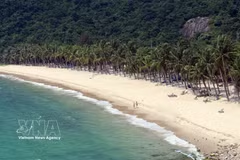
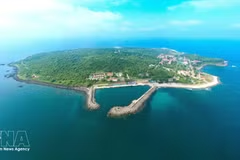
Vietnam enjoys significant advantages thanks to its diverse natural landscapes, rich cultural ecosystem, renowned cuisine and stable political environment, he said.
UN Tourism forecasts that international tourist arrivals worldwide could reach 1.8 billion by 2030, with the Asia-Pacific expected to be one of the world’s most dynamic regions. The trend presents an opportunity for Vietnam to reposition itself from a “low-cost destination” to a "provider of high-quality travel experiences", Khanh noted.
Dang Thi Phuong Thao, Deputy Director General of the Press Department under the Ministry of Culture, Sports and Tourism, said the media is playing an increasingly important role within the tourism development ecosystem. Apart from promoting destinations, it helps spread cultural values, stimulate travel demand and enhance the country’s image.
She emphasised that closer cooperation among State management agencies, media organisations and businesses, combined with digital innovation and multi-platform communication, will be key to improving the effectiveness of tourism promotion in the time to come.
Media helps stimulate demand, shape tourism trends
Khanh noted that Vietnam’s tourism industry is entering a new stage of development, supported by a series of policies of the Party and State aimed at making tourism a spearhead economic sector. Those underscore the Government’s strong determination to positioning tourism as a key driver of economic growth in the future, he said.
Measures such as expanded visa exemptions, broader e-visa access, longer temporary stay periods and streamlined immigration procedures have significantly improved competitiveness of Vietnam’s destinations in the international arena.
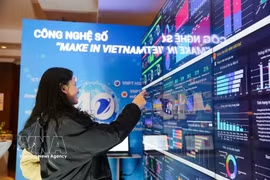
At the same time, advances in transport infrastructure, digital platforms, electronic payments, AI and big data are fundamentally transforming tourism management and marketing, and consumption patterns.
Against this backdrop, communication has emerged as a decisive factor in destination competitiveness. Through articles, documentaries, digital content and social media campaigns, the media has helped project an image of Vietnam as a safe, welcoming and culturally vibrant destination.
Khanh said media coverage can also stimulate tourism demand and shape travel trends, with compelling stories and creative campaigns inspiring exploration and boosting visitor spending.
The media has further supported sustainable tourism models, including green, net-zero, wellness and community-based tourism, while helping combat misinformation, manage communication crises and protect Vietnam’s tourism image, he added.
By connecting localities, businesses and travellers, media organisations have also helped attract investment and strengthen cooperation between tourism and related sectors such as aviation, culture, sports, film and creative industries.
Vietnam aims to welcome 25 million international visitors and 150 million domestic travellers in 2026. Alongside the sector’s efforts, strong, responsible and innovative media engagement is expected to play a key role in helping the country achieve its tourism growth ambitions and enhance its position on the global tourism map./.