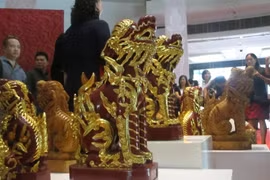
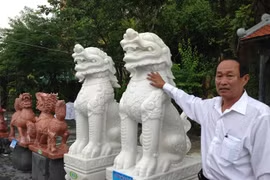
A statue of a nghe displayed at the exhibition (Photo: VNA)
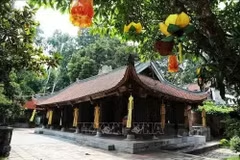
Hanoi (VNA) - Images and stories of the nghe (a sacredand mythical animal in Vietnamese traditional culture) are currently on displayat the capital city’s Temple of Literature, highlighting the important role ofthis symbol in the history and culture of the country.
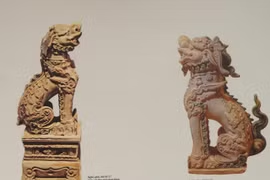
The exhibition features 200 photos and documents of the sacred animal whichhas a lion’s head, a long tail and a dog-like body, that guards temples andcommunal houses.
The show helps promote the unique features of the traditional art of Vietnamthat has been preserved in the community for centuries. It also aims to raiseawareness of the sacred symbol while comparing it with other sacred animalsfrom China, Japan and Korea – countries with similar culture and religion to Vietnam.
The exhibition identifies the mythical animal; its appearance at royalpalaces, pagodas, temples, communal houses; and statues of nghe createdrecently by modern artisans.
“The exhibition is the result of cooperation between many individuals andorganisations to bring a panoramic and authentic view of nghe, theVietnamese sacred symbol,” said Le Xuan Kieu, director of the Temple ofLiterature’s Culture and Science Centre.
Nghe statues were used widely in the past with various facialexpressions – happy, joyful, faithful, respectful and serious. It reflects therichness of traditional Vietnamese culture as well as the skill of thecraftsmen.
But due to the domination of foreign symbols, many people nowadays do not knowmuch about the nghe and confuse it with other mascots.
The Ministry of Culture, Sports and Tourism issued regulation No 2662 in2014 that bans foreign-style symbols, sculptures and worship objects unsuitablefor Vietnamese culture.
Since then, organisations, experts and authorities actively worked torestore the nghe to its worthy and sacred position. The exhibitionwill run until February 15, next year at the Temple of Literature.-VNA