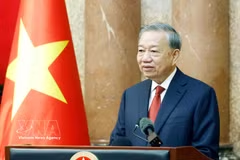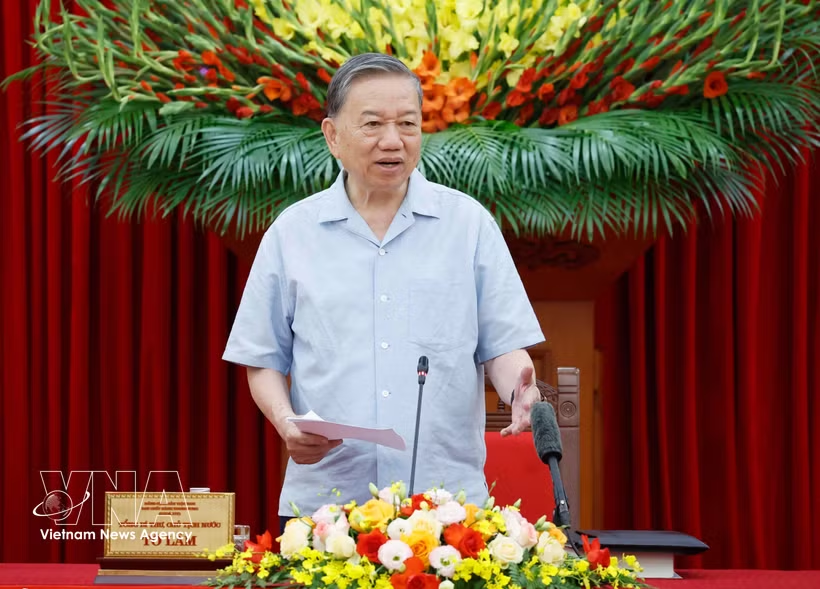
Hanoi (VNA) – A forthcoming resolution on Vietnam’s new development model must affirm that the country's core development philosophy in the new era is to build national capacity for innovation, self-reliance and adaptation, Party General Secretary and State President To Lam said on June 4.
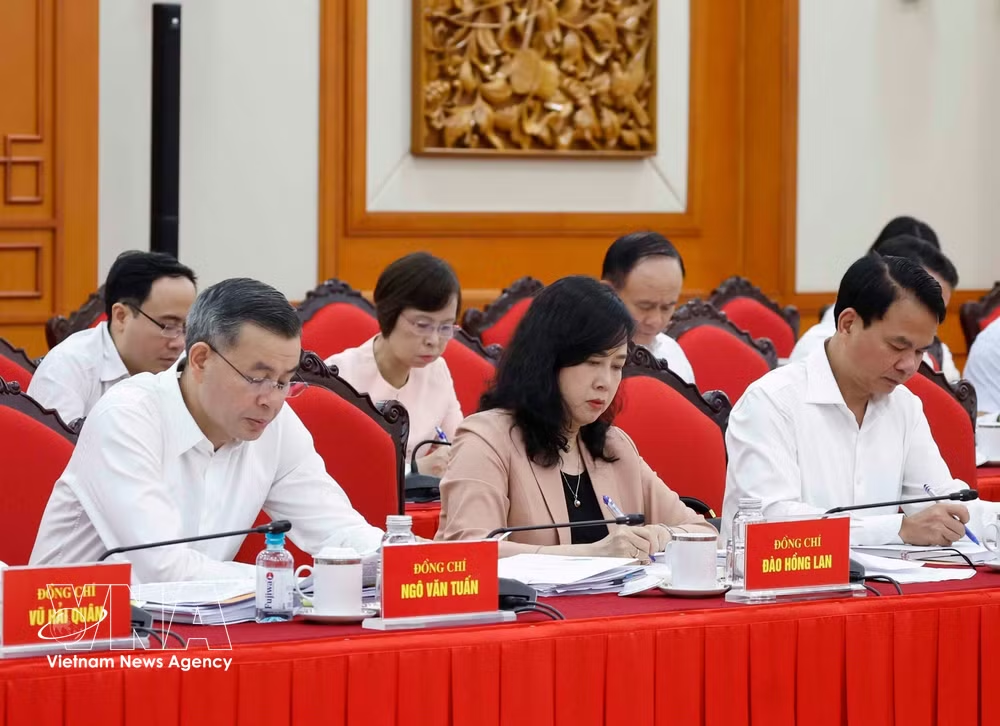
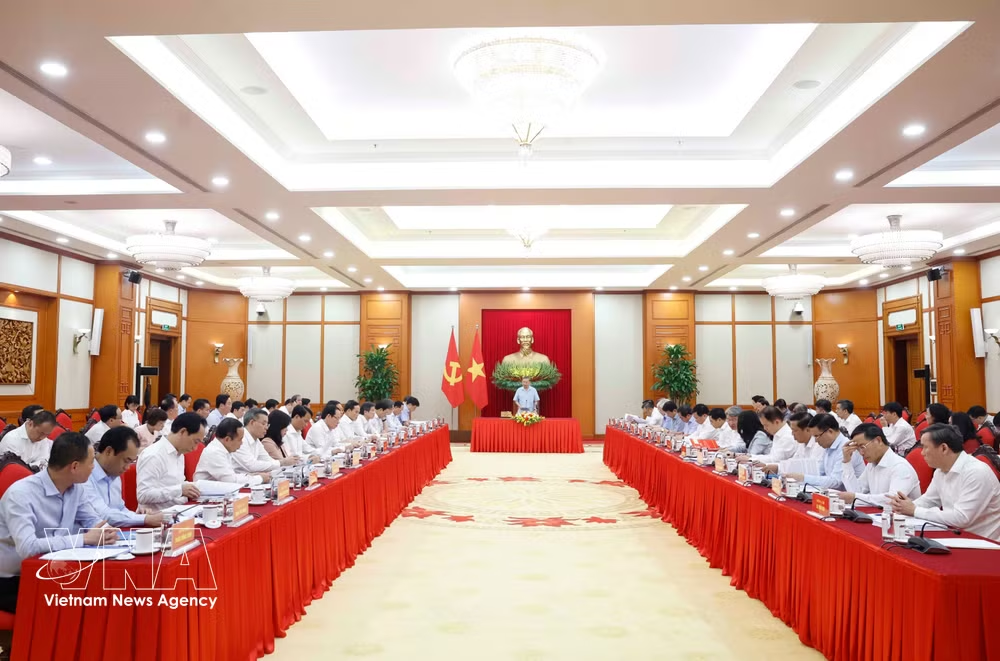
Chairing a working session with the Party Central Committee’s Commission for Policies and Strategies and relevant agencies on a project to renew the country’s development model based on science, technology, innovation and digital transformation, the top leader said the proposal will be submitted to the Politburo for consideration before being presented to the 14th Party Central Committee for the issuance of a resolution.
According to Party General Secretary and State President To Lam, development means enhancing the nation’s ability to understand the times, reform institutions, master knowledge and technology, nurture creativity, regenerate living environments, safeguard national interests, and expand development space.
Regarding guiding principles, he stressed that the new development model must place people at the centre as the objective, driving force and key actor of development. All development policies should aim to improve people’s material and spiritual well-being, creative capacity, dignity, opportunities for advancement and equitable access to development benefits.
Vietnamese citizens in the new era, he said, should possess innovative thinking, lifelong learning skills, adaptability, the ability to collaborate in a global environment, digital competencies, digital ethics and a strong sense of digital citizenship.
The overarching goal is to create a fundamental transformation in growth quality, labour productivity, innovation capacity, national competitiveness, economic self-reliance and quality of life, helping the country achieve rapid, sustainable and inclusive development while ensuring social progress, environmental protection and resilience to external shocks. The model must also contribute to maintaining political stability, macroeconomic stability, national defence, security and national sovereignty.
Outlining key breakthroughs, the top leader said science and technology, innovation, digital transformation and data must serve as the foundational infrastructure for the country’s next stage of development.
He called for the synchronised development of an innovation ecosystem connecting infrastructure, finance, data, standards and markets, with businesses, research institutes and universities playing core roles. The State should share risks with enterprises, establish a comprehensive legal framework for national data governance, accelerate the application of artificial intelligence, significantly improve the business environment and undertake deep financial-sector reforms to support long-term development.
He emphasised that the resolution must address all dimensions of development strategy, national progress, social advancement and human security.
It should strengthen the country’s strategic autonomy and capacity to master critical sectors while ensuring economic, energy, food, data, financial and supply-chain security.
The resolution should also aim to develop Vietnamese people into high-quality human resources, encouraging creativity and nurturing a spirit of openness, discipline, responsibility, and dedication.
According to the leader, the new development model must nurture national identity, social ethics, community spirit, aspirations for progress, resilience and the ability to integrate confidently into the global community. It must also provide solutions to major challenges such as climate change, sea-level rise, biodiversity loss, air pollution, land degradation, groundwater depletion and natural disaster risks.
He called for restructuring the national development space through growth-driving regions and building a modern, transparent and effective governance system based on the rule of law, appropriate decentralisation, accountability and performance measurement.
Social governance, he said, should increasingly be based on digital platforms, data and artificial intelligence, while efforts should continue to promote a digital society and digital inclusion.
He also stressed the need to improve population quality and maintain replacement-level fertility. Alongside training younger generations, Vietnam must prepare for an ageing society in which older people can continue to live healthy, productive and fulfilling lives while receiving adequate care. A flexible, multi-tier social security system with universal coverage should also be developed.
On implementation, he underscored the need for the resolution to define national action programmes, flagship projects, measurable targets and regular monitoring and evaluation mechanisms.
Each major objective should be linked to a designated lead agency, supported by a data-driven monitoring system, adequate resources and a clear timeline. Pilot initiatives should be launched in selected localities, economic regions, strategic sectors and special functional zones. Successful models, he said, must be promptly reviewed, institutionalised and replicated nationwide instead of requiring separate approval requests from individual localities or sectors.
The top leader stressed that the resolution must embody long-term vision, breakthrough thinking, national aspiration and a strong commitment to action. It should serve as a pathway-setting framework enabling Vietnam to enter a new era of development with confidence, resilience, creativity and responsibility.
The highest goal is to achieve faster, more sustainable, self-reliant and people-centred development; to fully harness the intelligence, courage, cultural values and creativity of the Vietnamese people; and to build a strong, prosperous, democratic, equitable, civilised and happy Vietnam, he said./.