Hanoi (VNA) – Vietnam has emerged as a dynamic and open economy with an increasingly important role in the trade and investment architecture of the Association of Southeast Asian Nations (ASEAN).
Vietnam's accession to ASEAN in 1995 marked a historic turning point in its international economic integration. From bilateral trade with ASEAN worth just 3 billion USD at the time of joining, the country's commerce with the bloc has expanded nearly 30-fold over the past 31 years. It has transformed Vietnam into one of ASEAN's key growth engines and an important contributor to regional supply chains.
A major market supporting regional production
According to the Customs Department, two-way trade between Vietnam and ASEAN reached nearly 91 billion USD in 2025, up about 7 billion USD from 2024 and almost 30 times higher than in 1995. Vietnam's exports to ASEAN totalled 38.4 billion USD, up 3.8%, while imports climbed 12% to 52.5 billion USD.
The momentum has continued this year. During the first five months of 2026, Vietnam exported 18.5 billion USD worth of goods to ASEAN, a year-on-year increase of 16.9%, while imports from the bloc rose 21.6% to 27.1 billion USD.
Vietnam's trade deficit with ASEAN - more than 14 billion USD in 2025 - reflects its growing role as a major consumption market for regional products rather than a structural weakness. At a time when Vietnam consistently records trade surpluses with the rest of the world, rising imports from ASEAN demonstrate its role as a stable market supporting production across the region.

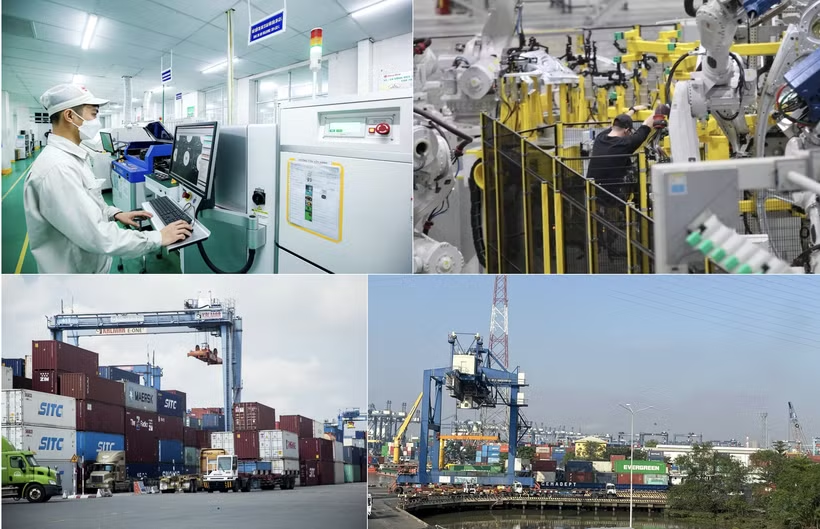
ASEAN has become an indispensable supplier of machinery, electronic components, industrial parts and production materials, particularly petroleum products, for Vietnam's manufacturing sector. Intermediate goods imported from Thailand, Malaysia and Singapore are processed or assembled in Vietnam before being exported worldwide, underscoring the increasingly integrated nature of ASEAN's production networks.
According to former Deputy Director of the Ministry of Industry and Trade's Centre for Industry and Trade Information Dr. Le Quoc Phuong, Vietnam's deep economic integration has been the key driver behind this rapid expansion.
For more than three decades since Vietnam joined ASEAN, the bloc has become one of Vietnam's largest trading partners, ranking fourth among its export markets after the US, China and the Republic of Korea.
Trade liberalisation under agreements such as the ASEAN Free Trade Area (AFTA), the ASEAN Trade in Goods Agreement (ATIGA), the Regional Comprehensive Economic Partnership (RCEP) and ASEAN+ free trade agreements has reduced tariffs on most goods to between zero and 5%, providing a strong boost to intra-regional commerce.
"Vietnam's active participation in ASEAN's free trade agreements has been a major factor behind the strong growth in trade with the bloc," Phuong said.

Beyond trade, Vietnam is also contributing to regional prosperity through two-way investment flows. ASEAN remains one of Vietnam's largest sources of foreign direct investment, led by Singapore, Malaysia and Thailand. At the same time, Vietnamese enterprises are expanding investments in Laos, Cambodia, the Philippines and Indonesia, supporting infrastructure development, job creation and economic growth across the region.
Advancing towards high-tech manufacturing
After 31 years of integration, Vietnam has significantly outpaced the newer ASEAN members and is narrowing the development gap with the ASEAN-6 economies. Its next objective is to move further up the regional value chain.
In the years ahead, Vietnam's contribution to ASEAN's prosperity will increasingly depend on its ability to foster innovation, upgrade industrial value chains and establish itself as a regional centre for high-tech manufacturing.
Associate Professor Nguyen Thuong Lang said Vietnam should focus on industries with the greatest potential to become regional production hubs, including electric vehicles, semiconductors, energy technology, unmanned aerial vehicles, digital equipment and other advanced manufacturing sectors.
He said that once priority industries are identified, Vietnam should invest systematically in research and development, industrial ecosystems and large-scale manufacturing complexes. Strengthening partnerships with multinational corporations will help to acquire advanced technologies, management expertise and modern production methods.
From a late entrant to ASEAN, Vietnam has evolved into one of the bloc's most dynamic economies. Today it serves simultaneously as a market of nearly 100 million consumers, a manufacturing base, an attractive investment destination and an increasingly active regional investor.
Vietnam's development is therefore closely intertwined with ASEAN's. As its economy continues to expand, Vietnam is generating greater demand for regional goods, attracting more ASEAN investment and strengthening supply chains, helping enhance the competitiveness and resilience of the ASEAN Economic Community./.