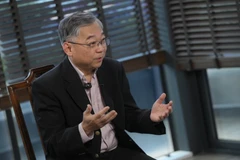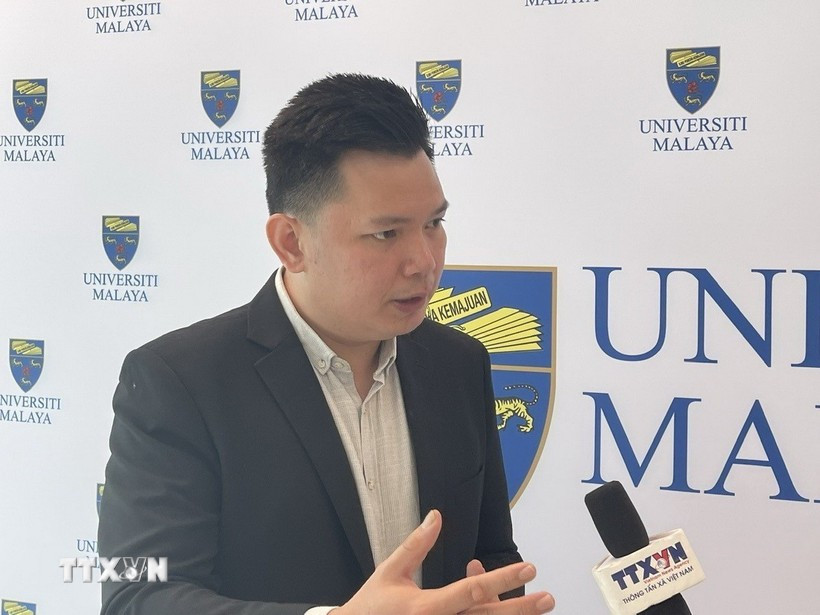
Kuala Lumpur (VNA) – Vietnam has been a key economic engine, major power connector, and steadfast advocate for dialogue and diplomacy within the Association of Southeast Asian Nations (ASEAN), according to foreign affairs, security and strategy analyst Collins Chong Yew Keat at the University of Malaya.
In an interview with the Vietnam News Agency (VNA)'s resident reporter on the threshold of the 47th ASEAN Summit and Related Summits in Malaysia on October 26-28, he said that Vietnam has made remarkable contributions to the bloc since its accession in 1995, particularly in the areas of economy, trade, investment, and maintenance of regional stability. With its increasing role, the country has been seen as one of the core drivers propelling ASEAN’s development toward the Community Vision 2045.
Vietnam has established itself as one of the region's fastest-growing economies, he said, adding the country is swiftly transitioning to a new economic model, leading in such critical domains as energy transformation, green economy initiatives, digital economy development, essential minerals extraction, and emerging as a new hub for FDI and advanced manufacturing.
The country’s development has created a domino effect for the whole region which is striving to follow the same trajectory. Vietnam is functioning as a regional magnet, attracting capital, resources and technologies from external partners.
Collins noted that Vietnam has also become a top destination in the "China Plus One" strategy, he said, adding as businesses are relocating production outside China in search of more competitive environments and sustainable long-term economic benefits, Southeast Asia presents the most suitable foundation, with Vietnam leading the charge. He predicted that Vietnam’s economic and trade stability will expand its influence over the next 10-20 years.
On regional security and stability, Collins underscored that Vietnam has pursued the principles of neutrality, strategic balance, and non-alignment that are similar to those of ASEAN. Its diplomacy and “Four No’s” defence policy helps reinforce the bloc’s approach of peace and stability through dialogue, diplomacy, and friendship.
He described Vietnam as a “great power connecter” and “power balancer”, which has maintained sound relations with major powers including the US, China, Russia, and India. Besides, its ability to connect with the Democratic People's Republic of Korea (DPRK), Russia, and the US helps ASEAN affirm its image as a rising power bloc, receiving respect from global powers and maintaining its role as a platform for dialogue.
Amidst fierce political competition, Vietnam's role in upholding ASEAN's principles has become increasingly vital. The country can provide substantial support in building any final draft or joint declaration of ASEAN, capitalising its unique diplomatic advantages to consolidate multilateral and minilateral approaches.
Boasting young demographic advantage, economic transformation, investment in advanced sectors like AI, semiconductor, and critical minerals, Vietnam is well-positioned to achieve the high-income status, he added./.
See more
Thailand changes its approach to dealing with fuel crisis
After scrapping the fuel price cap, state assistance will be directed to the poor, as well as drivers, farmers, fishermen, contractors, and operators in sectors directly affected by the energy crisis.
S&P upbeat on Philippines’ growth outlook, warns of energy risks
The updated forecast places the Philippines below the government’s growth targets of 5-6% for 2026.
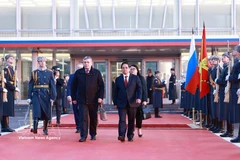
Vietnamese PM’s Russia visit reinforces confidence in bilateral cooperation prospects
Prime Minister Pham Minh Chinh’s visit is seen as a catalyst for developing new and effective cooperation mechanisms to realise the comprehensive strategic partnership between Vietnam and Russia.
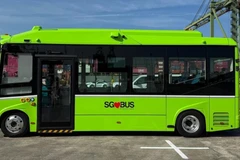
Singapore begins trial of driverless public buses
The autonomous buses will undergo rigorous testing to ensure that they meet all safety and operating requirements before hitting the roads in Singapore.
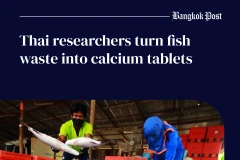
Thailand extracts bio-calcium from fish waste
Researchers at Rajamangala University of Technology, Thanyaburi (Thailand) developed a method to extract calcium from discarded parts of blackchin tilapia, including heads, bones, scales and tails - materials typically treated as waste and a source of pollution.
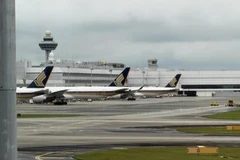
Singapore delays aviation green fuel surcharge amid Middle East conflict impact
Passengers flying out of Singapore from January 1, 2027, will pay a levy of between 1 and 41.6 SGD that will go towards the purchase of sustainable aviation fuel, which is mostly made from waste materials such as used cooking oil.
Singapore deepens ties with Germany to boost regional trade
Beyond strengthening bilateral ties, Singapore and Germany can also cooperate on promoting multilateral relations between the European Union and ASEAN regions.
Philippines receives first Russian oil shipment in five years
On March 24, Philippine President Ferdinand Marcos Jr. declared a national energy emergency through an executive order, allowing the government to fast-track fuel procurement, make advance payments for fuel contracts, and ensure the availability of fuel and other essential goods amid rising prices.
Philippines declares energy emergency
The Philippine Government on March 24 announced an "imminent danger of a critically low energy supply" as tensions in the Middle East threaten fuel supplies and the stability of the country’s power system.
Cambodia accelerates access to climate-resilient water services
Funded by the UN Joint Sustainable Development Goals (SDG) Fund, the Water Infrastructure & Smart Energy Joint Programme (WISE JP) introduces a pioneering financial model that combines commercial and low-interest capital - a revolving blended‑finance facility - dedicated to ensuring climate‑smart water systems.
Thailand seizes 20,000 litres of diesel bound for Myanmar
Authorities of Thailand's Tak province have ordered intensified patrols and stricter inspections to prevent fuel stockpiling and illegal cross-border exports. They also called on local residents to report any suspicious signs related to fuel hoarding or smuggling.
Cambodia discovers new animal species in karst caves
Exploring over 60 caves across ten hills in western Cambodia’s Battambang province, the survey uncovered a treasure trove of extraordinary creatures, many of which are found nowhere else on Earth.
Laos sets major goals in five-year socio-economic development plan
Laos targets average annual gross domestic product (GDP) growth of at least 6%. By 2030, GDP per capita is projected to reach 3,104 USD, while gross national income (GNI) per capita is expected to rise to 2,914 USD.
Wildfires surge to 96 hotspots in Thailand
According to the provincial forest fire and haze prevention centre, satellite data from the Suomi NPP VIIRS system recorded the hotspots at 02:13. The fires were spread across multiple districts though firefighting teams have been working around the clock to contain the blazes.
Norwegian ambassador highlights transparency, public participation in effective decentralisation
Vietnam has recently transitioned to a two-tier local administration system, similar to models in many countries. Regardless of the number of administrative tiers, maintaining public trust in the State and public agencies is essential, said Hilde Solbakken, Norway’s Ambassador to Vietnam.
Vietnamese pet market attractive to RoK businesses
RoK pet food companies are increasingly targeting Vietnam as a key growth market, leveraging the country’s rapidly developing pet economy and rising demand for premium pet care products in Southeast Asia.
Philippines pushes for ASEAN fuel-sharing mechanism
Oil-producing ASEAN members such as Brunei, Indonesia, and Malaysia would play a key role in ensuring that emergency fuel supplies are available and delivered when needed.
Cambodia introduces energy-saving measures amid Middle East conflict
Despite these challenges, the government noted that Cambodia’s fuel and electricity supply remains stable, supporting economic activities and public service delivery, based on assessments conducted with the Ministry of Mines and Energy, Electricité du Cambodge (EDC), and fuel import companies.
Philippines allows temporary sale of lower-grade fuel
The authority is narrowly targeted and strictly regulated, and does not replace the country’s Euro IV fuel standards, which remain in force under existing laws and regulations.
Indonesia pushes sustainable energy transition
Diesel plants remain widely used but should gradually be replaced by renewable energy sources, particularly solar power, due to their economic and environmental advantages, said an Indonesian minister.