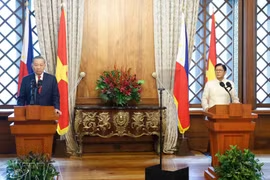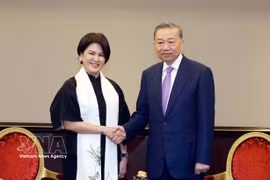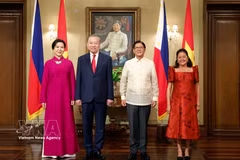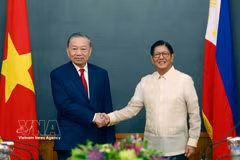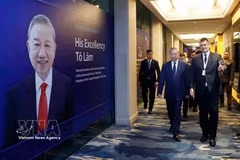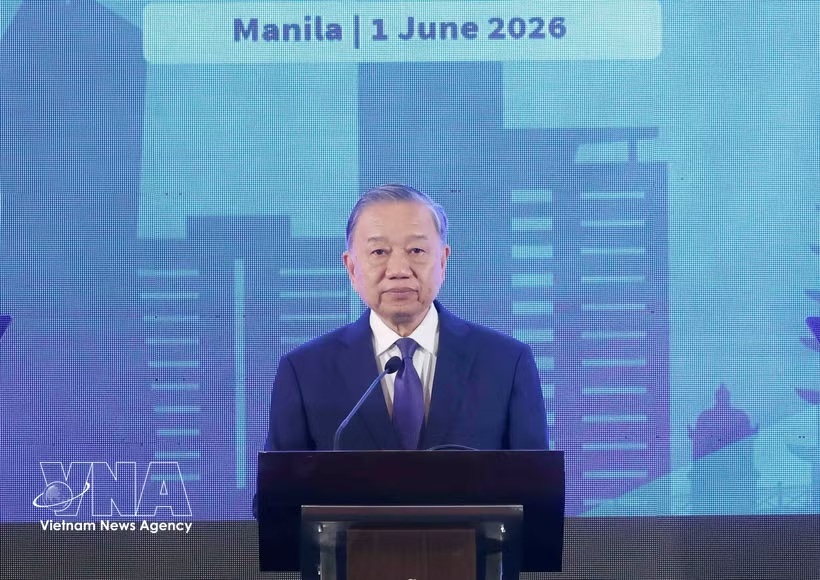
Manila (VNA) - General Secretary of the Communist Party of Vietnam (CPV) Central Committee and State President To Lam on June 1 called for fresh breakthroughs to turn trade, investment and tourism into important drivers of Vietnam-Philippines relations, stressing that economic cooperation between the two countries should now be elevated to a new level.
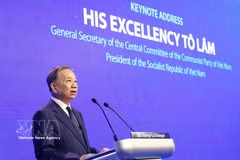
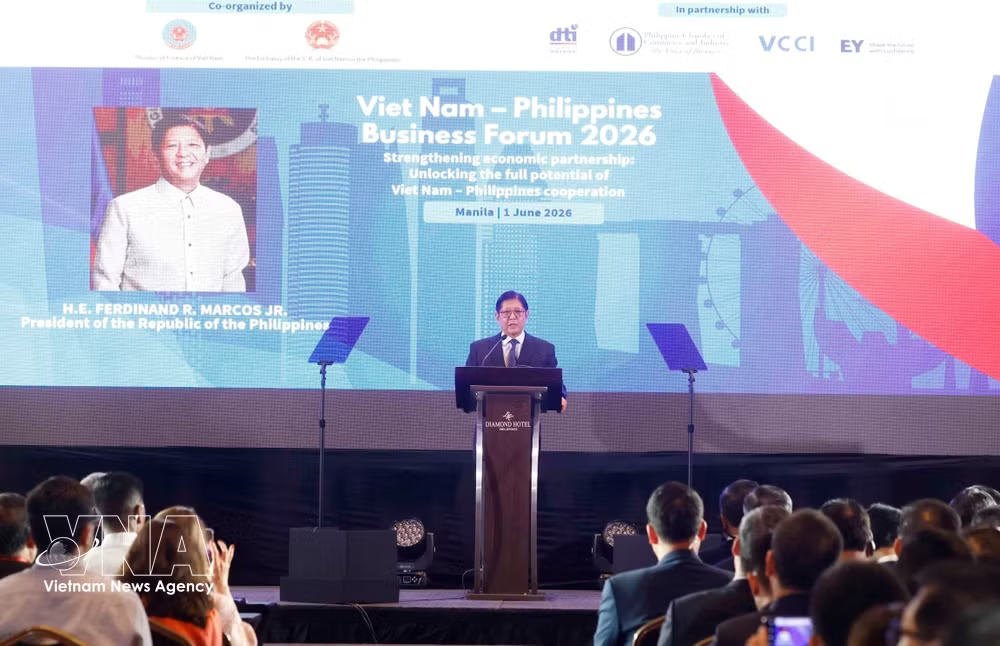
Speaking at the Vietnam-Philippines Business Forum in Manila as part of his state visit to the Philippines, the top Vietnamese leader said the two countries have built a solid foundation of political trust, complementary economies and dynamic business communities, creating favourable conditions for stronger economic engagement.
He noted that as members of the Association of Southeast Asian Nations (ASEAN), Vietnam and the Philippines have enjoyed a longstanding friendship and cooperation. The bilateral ties have expanded significantly since the establishment of their Strategic Partnership in 2015, covering politics, defence, security, trade, investment, agriculture, tourism, education and people-to-people exchanges.
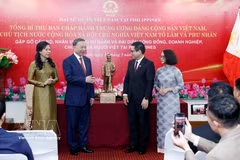
During this visit, the two sides agreed to upgrade the bilateral relations to an Enhanced Strategic Partnership, he stressed.
The Vietnamese leader showed his belief that the Philippines, as ASEAN Chair in 2026, will help advance a united, resilient, inclusive and highly connected ASEAN capable of adapting to regional and global changes.
Highlighting the positive development of bilateral economic relations, the General Secretary and President said the next step is to deepen cooperation rather than merely expand its scale.
He called on businesses from both countries to strengthen cooperation in trade and food security in a more stable, balanced and sustainable manner, while making better use of the complementarities between their economies.
Attention should be paid to expanding partnerships in the fields of agriculture, fisheries, processed food, consumer goods, digital trade and logistics, as well as jointly building resilient supply chains to better withstand global uncertainties, he said.
The Vietnamese leader urged the two sides to further promote two-way investment in highly complementary and long-term value-adding sectors, such as modern agriculture, food processing, clean energy, logistics, supporting industries, digital economy, and innovation. He stressed the need to move from mere trade exchange to co-investment, co-production, and deeper participation in regional value chains.
General Secretary and President Lam suggested the two nations expand air connectivity, logistics networks, and tourism cooperation and people-to-people exchanges, to shorten the geographical distance, reduce cooperation costs and create new business opportunities.
He reaffirmed Vietnam’s commitment to creating the best possible conditions and investment climate through transparent and predictable policies, improved infrastructure, high-quality human resources and stronger dialogue with businesses.
The leader stressed the importance for both sides to renew economic cooperation mechanisms in a more flexible and practical manner, with businesses placed at the centre, noting that such mechanisms should serve as tools to open markets, remove bottlenecks, connect projects, and deliver concrete outcomes.
He noted that while the two governments can pave the way, it is the business communities that ultimately play a decisive role in turning vision into reality.
General Secretary and President Lam expressed his hope that Vietnamese and Philippine businesses will move beyond opportunity-seeking toward stronger investment, technology sharing, market expansion, and deeper participation in regional value chains.
For his part, Philippines President Ferdinand Romualdez Marcos Jr. said the presence of the two countries’ top leaders reflected the enduring strength of the bilateral ties and their shared determination to expand cooperation across areas.
As the global economy is being reshaped by rapid technological advances, evolving supply chains and emerging challenges, cooperation has become increasingly important, he said, noting that Vietnam-Philippines relations have continued to grow stronger.
He stressed that over many decades, the Vietnam – Philippines relationship has grown steadily, and the two sides have built their ties based on economic resilience, sustainable growth, and a shared commitment to strong, independent, and integrated nations.
The Philippine President described Vietnam as an indispensable partner in trade, investment and technology, as well as an important contributor to food security and industrial supply chains. He expressed his hope that discussions at the forum would be translated into concrete plans and projects that bring greater prosperity and opportunities to the people of both nations.
At the forum, which was hosted by the Ministry of Finance and Embassy of Vietnam in the Philippines, the Philippine Department of Trade and Industry, the Philippine Chamber of Commerce and Industry, and the Vietnam Chamber of Commerce and Industry (VCCI), Vietjet Air of Vietnam announced a direct air route connecting Ho Chi Minh City with Cebu, an important economic, tourism, and aviation hub in the Philippines, helping facilitate travel and strengthen ASEAN connectivity.
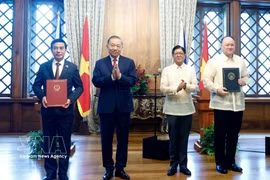
Several corporations and enterprises from both countries also exchanged cooperation agreements in key areas, including energy, tourism, aviation, chemicals, science and technology, innovation, digital transformation, and other areas of mutual strength./.