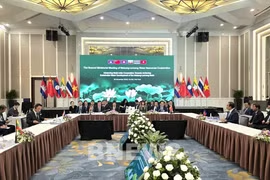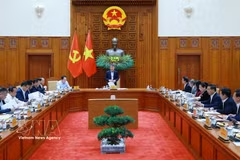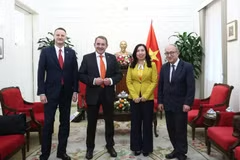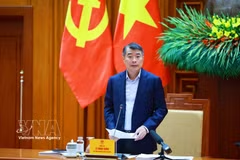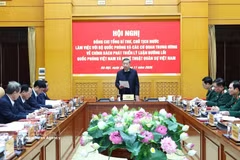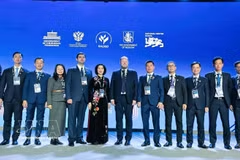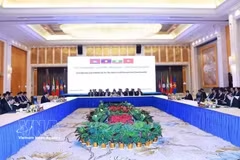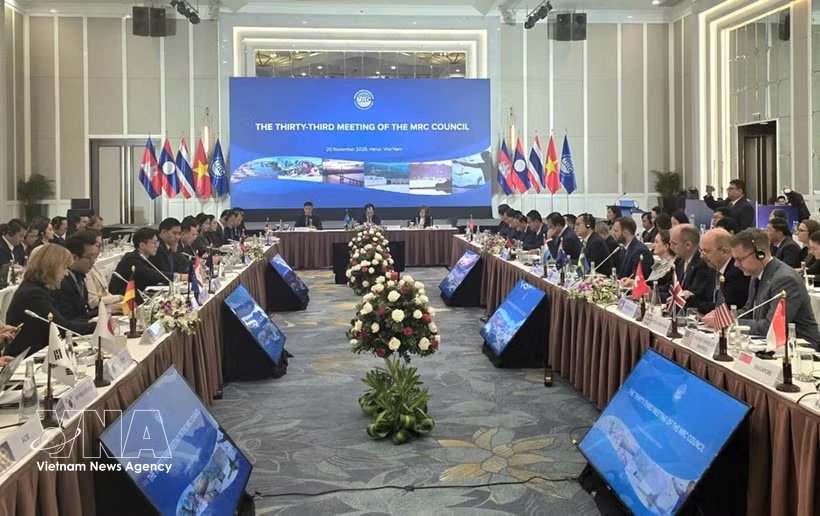
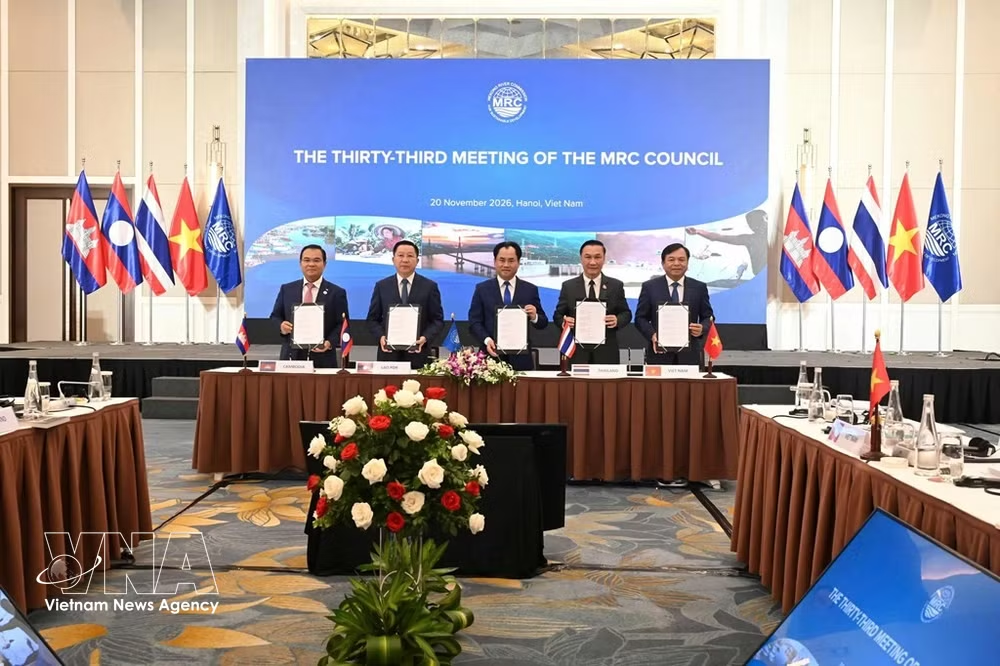
Hanoi (VNA) – The 33rd session of the Mekong River Commission (MRC) Council, together with its 31st Joint Session with Development Partners, took place in Hanoi on November 20, under the chair of Vietnam’s Minister of Agriculture and Environment Trinh Viet Hung, Chairman of the Vietnam National Mekong Committee and Chair of the MRC Council for 2026.
The meeting brought together representatives of the four member countries, Cambodia, Laos, Thailand and Vietnam, as well as the MRC Secretariat and partners.
It was held as the Mekong River basin faces mounting challenges related to water resources and the environment. Unusual weather patterns, floods, droughts, water pollution, declining sediment flows and deteriorating ecosystems are directly affecting people's lives and livelihoods. Notably, several international studies have warned that a strong or even very strong El Niño may emerge towards the end of 2026, increasing the risk of drought, reduced river flows and saltwater intrusion in the Mekong Delta during the 2026-2027 dry season. In his opening remarks, Hung stressed that these challenges are not confined by national borders, making stronger coordinated action essential to address transboundary risks.
The year 2026 is significant as the MRC begins implementing its 2026-2030 Strategic Plan, which focuses on strengthening institutions and governance, improving data, monitoring and forecasting capacity, enhancing coordination in basin management, promoting transboundary projects, and fostering partnerships and knowledge sharing. During this period, the MRC is also gradually pursuing a roadmap towards financial autonomy for its core functions by 2030.
Following the first year of implementing the Strategic Plan, MRC cooperation has made positive progress. The Mekong monitoring network has continued to be upgraded and operated, flood and drought forecasting capacity has improved, and data and information sharing on hydropower operations has been maintained. The MRC's Procedures for Water Use Monitoring have also continued to be implemented. A number of projects supporting riverside communities have been carried out, helping strengthen climate resilience and improve local livelihoods.
However, given the growing challenges across the basin, these achievements are only an initial step. The MRC needs to enhance its coordinating role and promote cooperation among member countries.
At the joint meeting with development partners, Deputy Minister of Agriculture and Environment Nguyen Hoang Hiep, who leads the Vietnamese delegation, emphasised the importance of implementing the 1995 Mekong Agreement and the associated Procedures for Water Use Monitoring. He highlighted the need to enhance monitoring, forecasting, and early warning capabilities, actively prevent transboundary water pollution, and promote cooperative projects that provide tangible benefits to riverside communities.
He highlighted the importance of enhancing information sharing on reservoir operations, improving emergency notification mechanisms and coordinating responses to floods, droughts and environmental incidents across the basin. Vietnam is ready to work with other countries during consultations on relevant hydropower projects and called for stronger transboundary initiatives to address shared challenges in the basin.
At the session, Swiss Ambassador to Vietnam Thomas Gass, speaking on behalf of development partners, affirmed their commitment to continuing to work with the MRC and its member countries in the coming years to successfully implement strategic tasks, improve operational effectiveness and gradually strengthen the commission's autonomy. He said joint efforts should be further intensified to protect the environment, local communities and economic activities that depend on the Mekong River. Development partners encouraged stronger regional cooperation in monitoring, information sharing and risk forecasting, paving the way for coordinated responses to pressures on the river in line with the 1995 Mekong Agreement and relevant MRC procedures.
In his closing remarks, Hung said the council approved the terms of reference for the MRC Secretariat Chief Executive Officer for the 2028-2030 term and the 2027-2028 Work Plan, providing a basis for implementing the commission's priority tasks in the coming period.
Reports and discussions at the meeting highlighted positive progress during the first year of the 2026-2030 Strategic Plan, particularly in monitoring, forecasting, information sharing and coordination in water resource management across the basin. The outcomes reaffirmed the member countries' commitment to and consensus on strengthening cooperation and improving the MRC's operational effectiveness, he said.
At the conclusion of the meeting, Hung, Chair of the MRC Council for 2026, handed over the chairmanship for 2027 to Thor Chetha, Cambodian Minister of Water Resources and Meteorology and Chairman of the Cambodia National Mekong Committee./.