Quang Tri (VNA) - Deputy Secretary of the Quang Tri provincial Party Committee and Chairman of the provincial People's Committee Le Hong Vinh outlined the province's ambition to become a strong and prosperous maritime province by 2045.
In an interview with VietnamPlus, an online newspaper of the Vietnam News Agency (VNA), he said that the central province of Quang Tri aims to develop a sustainable marine economy underpinned by modern maritime governance and advanced technology, while improving the lives of coastal and island communities, preserving maritime culture, and safeguarding national defence, security and maritime sovereignty.
Turning maritime advantages into new growth drivers
Reporter: Quang Tri has considerable potential for marine development, particularly in the maritime economy. Which sectors offer the greatest opportunities for breakthroughs as the province works towards becoming a major maritime economic hub?
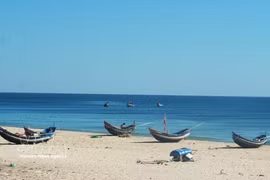
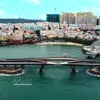
Chairman Le Hong Vinh: Quang Tri is entering a new phase of development, with more room and opportunities for growth. The province has over 191 km of coastline, Con Co special zone, extensive fishing grounds, rich marine resources and diverse coastal landscapes and ecosystems.
It also occupies a strategic geographical position along Vietnam's north-south corridor, serving as a gateway to the East Sea for central Laos, northeastern Thailand, Myanmar and the Greater Mekong Subregion.
Its extensive network of national highways, the Ho Chi Minh Road, coastal roads, the north-south railway, airports, seaports, coastal economic zones, industrial parks, urban areas and international border gates connects the sea, lowlands, mountains and border regions with international markets.
The challenge now is to turn these advantages into real engines of growth.
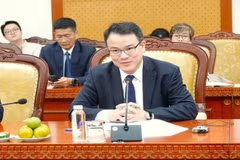
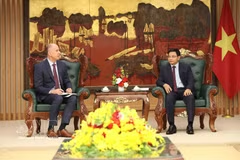
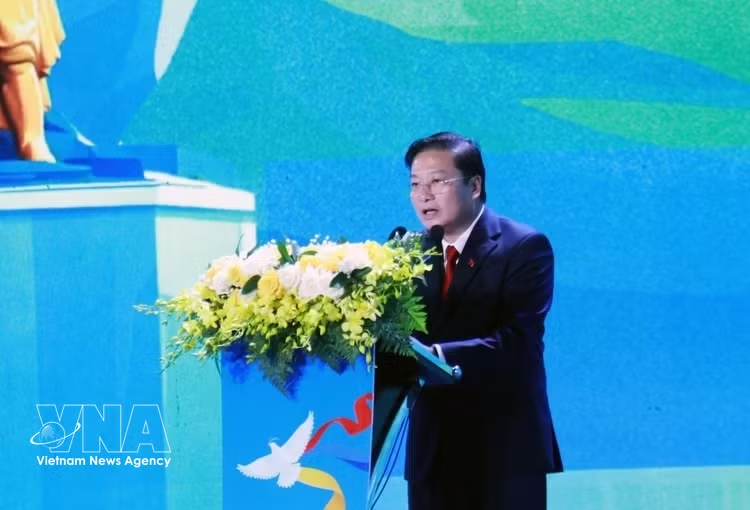
Deputy Secretary of the Quang Tri provincial Party Committee and Chairman of the provincial People's Committee Le Hong Vinh. (Photo: Tuong Vi/VNA)
Our first priority is maritime economy, seaports and logistics. By 2030, we aim to establish one or two modern logistics centres of regional standing, develop one or two shipping fleets serving import-export activities, and bring logistics costs down to below 12% of GDP.
The second priority is energy and coastal industries, alongside the development of emerging economic sectors.
We aim to develop offshore wind power projects with a combined capacity of around 5,000 MW by 2030, make better use of our oil and gas potential, explore plans to bring gas from the Ken Bau field ashore and develop the Bao Vang gas pipeline. We also plan to gradually establish liquefied natural gas (LNG) hubs and energy storage facilities.
Overall, Quang Tri has identified four priority areas with the potential to deliver major breakthroughs.
The other two are tourism, services and coastal urban development, including high-end resorts and tourist destinations; and fisheries, marine aquaculture and the marine ecological economy, all developed along modern, sustainable lines.
Looking east, reaching west to reshape development
Reporter: A fundamental shift in thinking is considered one of Quang Tri's major breakthroughs in developing its marine economy. Could you explain this new approach?
Chairman Le Hong Vinh: I believe this is fundamental. Having potential is an advantage, but potential alone does not translate into economic growth.
If Quang Tri is to become stronger and more prosperous through its marine economy, we must first change how we view the sea, manage marine resources and organise development.
Our guiding strategy for the years ahead is to "look east, reach west".
Looking east means moving beyond simply exploiting marine resources towards a more strategic approach to planning and managing maritime development.
The sea must be recognised as a strategic space for development and a new driver of growth, bringing together economic interests, science and technology, national defence, security, foreign relations and international integration.
It also means gradually expanding development further offshore and into deeper waters, while promoting offshore wind power, high-tech marine aquaculture, oil and gas, maritime logistics, deep-sea technologies and emerging high-value industries.
However, Quang Tri cannot expand eastwards without a strong economic hinterland to the west.
That is why the second part of our strategy is to reach west.
This means making full use of our three international border gates, Cha Lo, Lao Bao and La Lay, together with major transport corridors such as National Highways 12A, 9 and 15D.
These routes will connect production centres, economic zones and industrial parks in Quang Tri with central Laos, northeastern Thailand and other countries in the Greater Mekong Subregion.
With effective planning, goods from the west can travel along economic corridors to Hon La, Cua Viet and My Thuy ports before reaching international markets via the East Sea.
In the opposite direction, Quang Tri's seaports can offer shorter, more convenient routes linking inland regions to global supply chains.
In other words, we want to turn our geographical advantages into economic opportunities.
Another important shift is moving away from developing sectors in isolation towards building an integrated marine economic ecosystem.
Seaports must be linked to logistics services; logistics to economic zones and industrial parks; industry to energy; and urban development and tourism to culture and the environment.
Marine economic centres must also have direct connections to border gates and international transport corridors.
Only when these elements work together as an integrated system can the province retain more of the economic value generated by the sea.
Another key principle is that we must not sacrifice the environment for short-term economic gains.
Quang Tri is pursuing a green, smart and resilient marine economy, in which science and technology, innovation, digital transformation, artificial intelligence, big data, remote sensing and the Internet of Things will play increasingly important roles.
These technologies will support maritime spatial planning, environmental monitoring and the management of economic activities.
Turning ambitions into measurable targets
Reporter: The Standing Board of the Quang Tri provincial Party Committee has set a target of making Quang Tri a strong and prosperous maritime province by 2045. What are the key measures needed to achieve this goal?
Chairman Le Hong Vinh: Our vision for 2045 is clear. Quang Tri must become a strong maritime province that draws lasting prosperity from the sea.
We aim to develop a sustainable marine economy supported by modern maritime governance and advanced science and technology, while improving the material and spiritual well-being of coastal and island communities, preserving maritime culture, and firmly safeguarding national defence, security and maritime sovereignty.
But achieving such a long-term ambition means translating our vision into measurable targets and practical actions that can begin immediately.
The provincial Party Committee's Standing Board has therefore set specific targets for 2030.
These include achieving average annual GRDP growth of more than 11% and increasing annual per capita income in coastal localities to over 84.3 million VND.
If implemented effectively and in a coordinated manner, our strategy of looking east and reaching west will do more than expand Quang Tri's geographical development space.
It will open up new avenues for growth and strengthen the province's position in Vietnam's marine economy and the wider region.
To achieve these goals, particularly during 2026-2030, the province will focus on nine groups of priority tasks and measures.
The first is to fundamentally rethink our approach to development and improve maritime governance.
Other priorities include developing infrastructure and marine economic growth hubs in a coordinated manner, making environmental and ecosystem protection an essential requirement for development, and taking firm action against illegal, unreported and unregulated (IUU) fishing.
We will also work to preserve maritime culture, improve residents' quality of life, link marine economic development with stronger national defence and security, and expand international cooperation.
For Quang Tri, the ambition to become strong and prosperous through the sea must translate into more modern seaports, better transport links, new energy and industrial projects, more liveable coastal towns and cities, and better-protected ecosystems.
Above all, it must bring lasting improvements to the lives of people in coastal and island communities.
Reporter: Thank you.