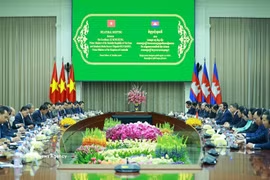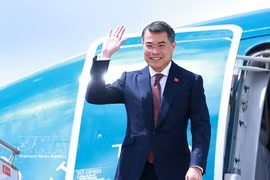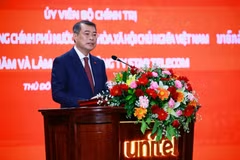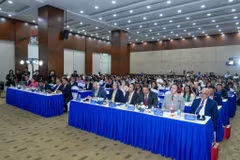
Phnom Penh (VNA) - Prime Minister Le Minh Hung and his Cambodian counterpart Hun Manet co-chaired the Vietnam-Cambodia Business Forum 2026 in Phnom Penh on the afternoon of October 9.
Jointly organised by Vietnam’s Ministry of Finance in coordination with the Council for the Development of Cambodia (CDC), Cambodia’s Ministry of Commerce and the Vietnamese Embassy in Cambodia on the occasion of PM Hung’s official visit to Cambodia, the event brought together leaders of ministries, sectors and localities, along with around 300 business representatives from both countries.
Data released at the forum showed that bilateral trade reached approximately 11.4 billion USD in 2025, up more than 12% year on year, and nearly 8.7 billion USD in the first eight months of 2026. Vietnam is Cambodia’s largest trading partner within ASEAN and its third-largest globally. Leaders of the two countries have agreed to work towards raising bilateral trade to 20 billion USD in the near future.
Vietnam currently has 223 investment projects in Cambodia, with total registered capital of around 3.4 billion USD, spanning agriculture, telecommunications, finance and banking, aviation, food processing, trade and services. Cambodian businesses, meanwhile, have 50 projects in Vietnam with total investment capital of 81.6 million USD.
Many Vietnamese businesses have maintained a long-term presence in Cambodia in sectors including agriculture, telecommunications, finance and banking, aviation, food processing, trade and services. Besides achieving positive business results, they have created tens of thousands of jobs, contributed to state budget revenues and actively participated in local social welfare activities.
Addressing the forum, PM Hung stressed that Vietnam and Cambodia are close neighbours and affirmed that, guided by the motto of “good neighbourliness, traditional friendship, comprehensive cooperation and long-term sustainability”, bilateral relations have continued to grow closer, more comprehensive, positive and effective.
He said that economic, trade and investment cooperation constitutes an important pillar of bilateral ties, which has achieved positive results. However, considerable room remains for further expansion to match the strong political ties and the potential of both countries.
He held that Vietnam and Cambodia need to demonstrate determination to increase the scale of investment projects, promote infrastructure and logistics connectivity, and simplify and facilitate procedures, as proposed by businesses.
He noted that Vietnam is entering a new stage of development and implementing comprehensive measures to renew its growth model, with science and technology, digital transformation, innovation and improved human resource quality serving as the foundation for strengthening economic capacity, productivity and competitiveness.
Vietnam is accelerating institutional reforms and regards the private sector as one of the most important drivers of the economy. The country is determined to achieve double-digit economic growth in the 2026-2030 period and become a high-income developed country by 2045, he said.
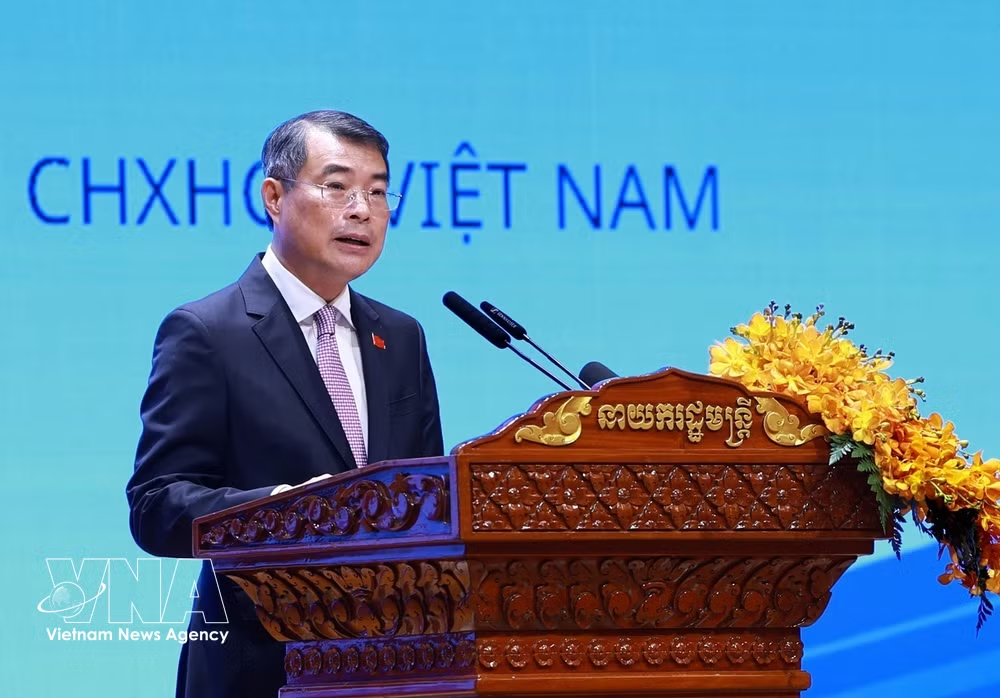
Briefing participants on Vietnam’s recent socioeconomic achievements, PM Hung spoke highly of Cambodia’s development progress and the marked improvement in its investment and business environment.
He emphasised the strong complementarities between the two economies. Cambodia has advantages in land resources, agriculture, raw materials, a young workforce and access to international markets. Vietnam, meanwhile, has processing capabilities, seaports, logistics infrastructure, experience in international economic integration and a network of more than 60 free trade agreement partners.
“If we establish effective links, one country’s advantages can become opportunities for the other. The resources of both countries can generate highly competitive shared value chains and reach regional and international markets. The target, agreed upon by the leaders of both countries, of raising bilateral trade to 20 billion USD in the near future is entirely feasible and within reach, provided that our governments and businesses are determined to act together,” he said.
To elevate bilateral economic cooperation to a new level commensurate with the current positive political relationship, PM Hung proposed a number of major orientations.
First, the two Governments, as well as ministries and sectors of the two countries should further align institutions and policies. They should review and continue simplifying investment, land, immigration, customs and quarantine procedures, while maintaining regular government-business dialogues at least once a year, either at government leadership or ministerial level, to ensure that all difficulties are heard and resolved thoroughly and promptly.
Second, infrastructure connectivity should be strengthened to link markets. Priority should be given to highways, railways and inland waterways connecting the two countries. Progress on the Ho Chi Minh City-Moc Bai-Bavet-Phnom Penh expressway should be accelerated, while border gates, border markets and logistics centres should be upgraded. The two sides should also promote the “single-window, single-stop” model at major border crossings to enable faster and lower-cost movement of goods.
Third, Vietnam and Cambodia should deepen value-chain cooperation in agriculture and processing. Rather than limiting cooperation to trading raw materials, they should jointly invest in raw material production areas, deeper processing, quality standards and traceability in Cambodia, allowing Cambodian farmers to capture a greater share of added value.
Fourth, financial and banking connectivity should be expanded, including greater use of local currencies and cross-border QR payments. Conditions should be created for banks in both countries to expand their networks and provide capital to businesses and residents. Vietnamese commercial banks were also urged to step up consideration of lending to Vietnamese enterprises investing in Cambodia.
Fifth, the two countries should connect new growth drivers, including digital transformation, e-commerce, renewable energy, power grid interconnection, tourism and high-quality human resource training.
PM Hung emphasised that while the Government creates favourable conditions, businesses are the ones that turn opportunities into results, outlining several messages for the business community.
First, he called for long-term and responsible investment, urging Vietnamese businesses in Cambodia to strictly comply with local laws, respect Cambodian culture and customs, prioritise local recruitment and training, protect the environment and contribute to host communities.
Second, he urged businesses from both countries to strengthen links through joint investment, supply chain development, product development and access to third-country markets. Vietnam also encourages Cambodian businesses to invest in Vietnam and leverage its existing infrastructure and network of free trade agreements to connect with regional and global markets. He affirmed that Vietnam’s market of more than 100 million people remains open to Cambodian businesses and goods.
Third, he called on businesses to compete through quality, technology and sustainability, focusing on projects with high added value, modern technology, environmental benefits and broader economic impact.
Reaffirming the principle that business growth drives national development, the leader pledged that the Vietnamese Government would continue supporting businesses investing and operating in Cambodia while welcoming and facilitating Cambodian investment and business activities in Vietnam.
Regarding proposals raised by businesses at the forum, the PM tasked Vietnam’s Minister of Finance with coordinating with relevant ministries and agencies, the Ministry of Foreign Affairs and the Vietnamese Embassy in Cambodia to compile all recommendations. Issues within Vietnam’s jurisdiction must be resolved conclusively and reported to the PM, while matters requiring bilateral coordination should be discussed promptly with Cambodian authorities.
The PM expressed confidence that traditional friendship, strong political trust and the shared determination of both governments and business communities would deliver notable results in bilateral economic cooperation during a new phase of development, contributing to celebrations marking the 60th anniversary of diplomatic relations in 2027.
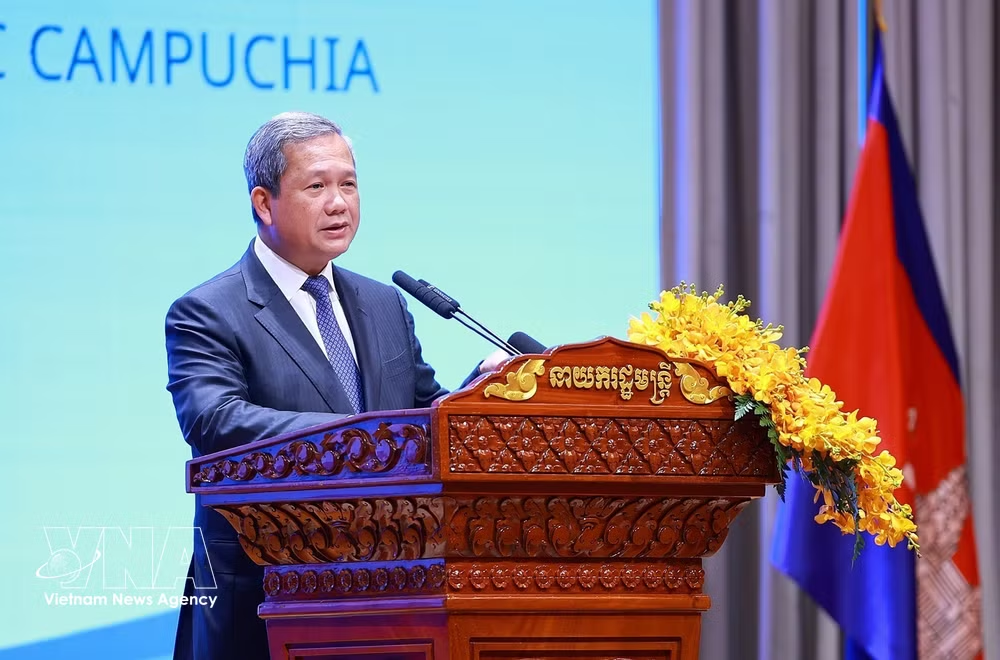
PM Hun Manet praised the organisation of the forum, saying the strong participation of businesses from both countries reflected confidence and interest in expanding trade, investment and business cooperation.
Against rapid and complex regional and global changes, Cambodia and Vietnam continued to pursue closer cooperation and complementarity, he said. Their relationship remained stable and was expanding across trade, investment, tourism, connectivity and people-to-people exchanges.
Frequent high-level visits and contacts reflected strong political trust and a shared commitment to strengthening good neighbourliness, traditional friendship, comprehensive cooperation and long-term sustainability, while taking economic ties to a new level.
Congratulating Vietnam on its remarkable progress across various fields, PM Hun Manet said the two countries’ deep-rooted relationship and economic potential made the target of raising bilateral trade to 20 billion USD achievable, with scope to go further. More importantly, he stressed, the quality and depth of economic connectivity between the two countries must improve.
He also highly valued the presence and positive contributions of Vietnamese investors to Cambodia’s economic development over more than three decades.
Agreeing with PM Hung on the considerable potential for cooperation, PM Hun Manet said stronger connectivity and more efficient cross-border trade were essential to achieving their goals, including improved transport links and mechanisms to facilitate bilateral commerce.
He stressed that infrastructure connectivity was only the starting point. The next step was to turn road links into production links and transform the Ho Chi Minh City–Moc Bai–Bavet–Phnom Penh transport corridor into an economic and production corridor connecting factories, industrial parks, economic zones, logistics providers and markets in both countries.
The leader also highlighted significant potential for deeper tourism cooperation. More than one million Vietnamese tourists visited Cambodia in 2025, making Vietnam one of Cambodia’s largest source markets. Meanwhile, increasing numbers of Cambodians were choosing Vietnam for tourism and healthcare.
He encouraged ministries, travel companies, airlines and hotels in both countries to step up promotion, develop tourism products, connect destinations and attract visitors from third-country markets.
The PM affirmed that the Cambodian Government would continue to safeguard key conditions for investment and improve the business environment. He urged businesses and investors from both countries to seek new opportunities, moving beyond conventional trade towards deeper processing, higher value creation and stronger integration into regional supply chains.
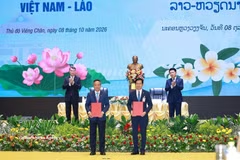
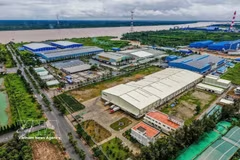
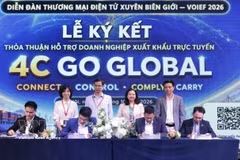
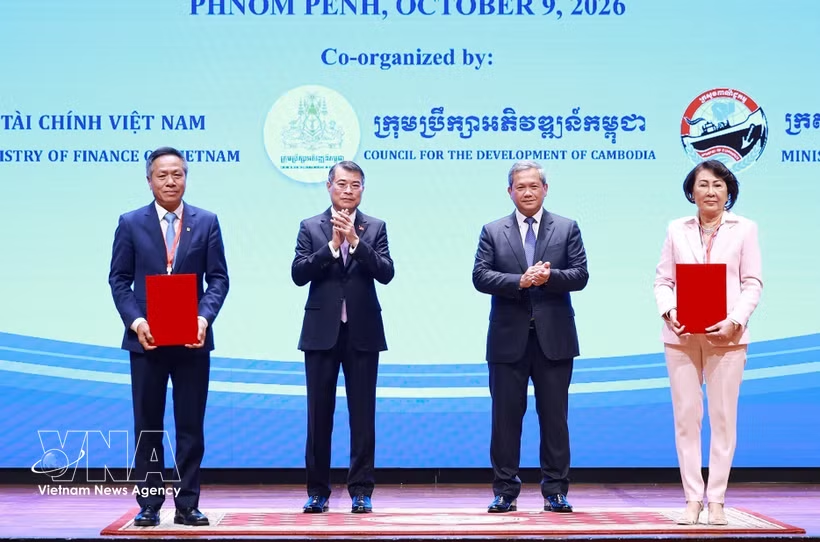
At the forum, witnessed by the two PMs, agencies and businesses from Vietnam and Cambodia exchanged five cooperation documents. These included two amended overseas investment registration certificates for THACO AGRI’s crop cultivation and livestock projects in Kratie and Ratanakiri provinces, with total investment capital of 648 million USD./.