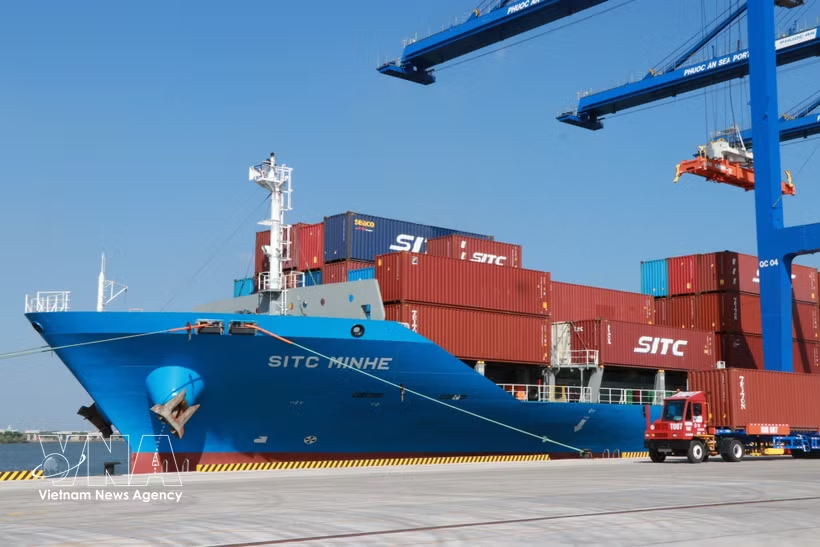
Hanoi (VNA) - Located at the heart of the southeastern region, Dong Nai city is emerging as a leading logistics hub in southern Vietnam, thanks to its strong industrial base and strategic multi-modal transport infrastructure. The city plays a key role in regional connectivity and access to international markets.
Bringing strategic advantages into full play
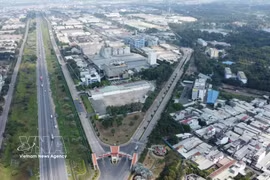
Dong Nai has a comprehensive transport network covering all five modes of road, air, rail, maritime and inland waterways. Major infrastructure projects include Long Thanh International Airport, Phuoc An Port and 10 expressway routes which are completed, under construction or planned. Following the administrative merger with Binh Phuoc province on July 1, 2025, the city also has Hoa Lu International Border Gate and several other border gates with Cambodia, creating favourable conditions to form cross-border trade corridors.
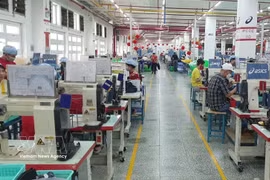
With 44 operational industrial parks, Dong Nai has a substantial cargo base for transport, warehousing, distribution and integrated logistics services. In the first nine months of 2026, its exports reached nearly 28 billion USD, while cargo transport volume was estimated at 92.7 million tonnes. Revenue from warehousing and transport support services totalled an estimated 11.82 trillion VND, up 27.53% year-on-year.
Vo Tan Duc, Deputy Secretary of the municipal Party Committee, said the Politburo's Resolution No. 16-NQ/TW, dated July 21, 2026, on the city's development, identifies Dong Nai as a key growth pole and regional and international gateway, as well as an industrial, service, logistics and innovation centre.
Nguyen Duy Hung, Director of Hung Thinh Phat Co., Ltd. and Vice Chairman of the Dong Nai Logistics Association, said that the upcoming operation of Long Thanh International Airport will create major opportunities. He stressed the need to develop an integrated logistics ecosystem linking the airport with Cai Mep–Thi Vai Port complex and Phuoc An Port, positioning Dong Nai as a key supply-chain hub in the South.
Building smart and efficient connections
The city is prioritising links between industrial parks and production areas with Phuoc An and Dong Nai ports, inland container depots, Hoa Lu border gate and Long Thanh International Airport, while strengthening connections with Cat Lai, Cai Mep–Thi Vai and the wider southeastern logistics network.
It plans to develop specialised logistics centres, including aviation logistics, cold storage and high-value cargo services in Long Thanh, port logistics and container handling in Phuoc An–Nhon Trach, and cargo consolidation and distribution facilities in Trang Bom, An Vien and Dau Giay.
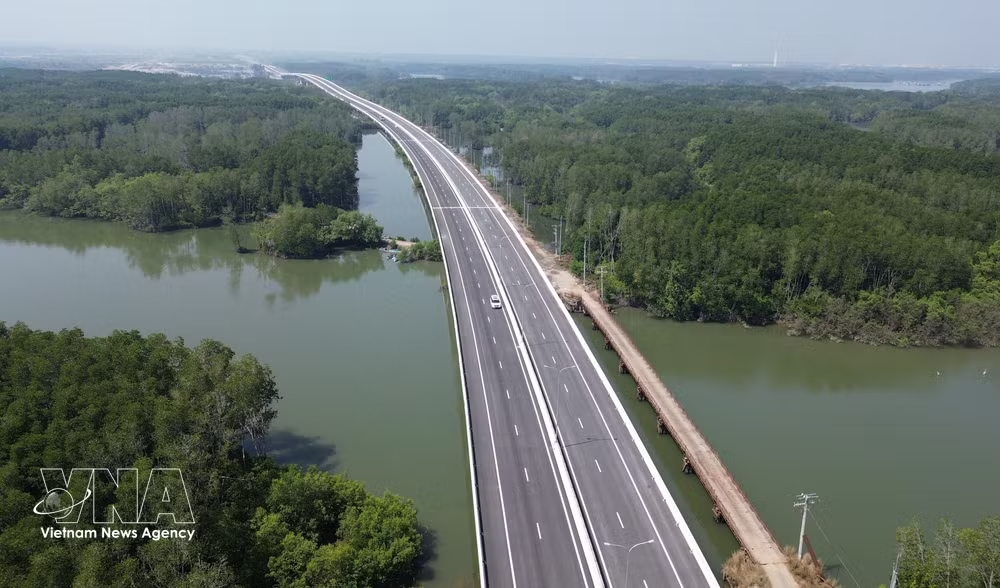
The municipal Department of Industry and Trade is working to connect cargo owners with transport, warehousing and port operators, while promoting integrated services from raw-material supply and storage to customs clearance, transport and distribution. These efforts aim to shorten delivery time, cut transit costs and retain more logistics-related value locally.
Duong Van Hieu, Deputy Director of the municipal Department of Construction, said that logistics planning should focus not only on individual centres or industrial parks, but also on connectivity and future cargo flows. Digital data, artificial intelligence and digital platforms can improve monitoring, forecasting, coordination and optimisation, making smart operations essential to the city's logistics ambitions.
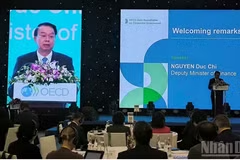
Vo Minh Trung, Deputy Director of the municipal Department of Finance, said that the city is studying plans for a Long Thanh special economic zone linking the airport with seaports, logistics centres, free trade zones, high-tech parks and modern urban areas.
The strategy is expected to maximise the value of Dong Nai's transport infrastructure and enable the city to participate more deeply in regional and global supply chains./.