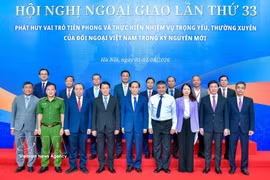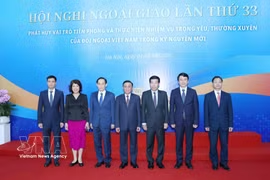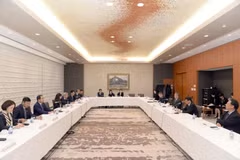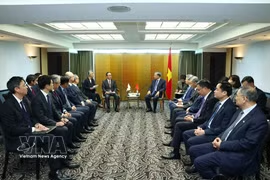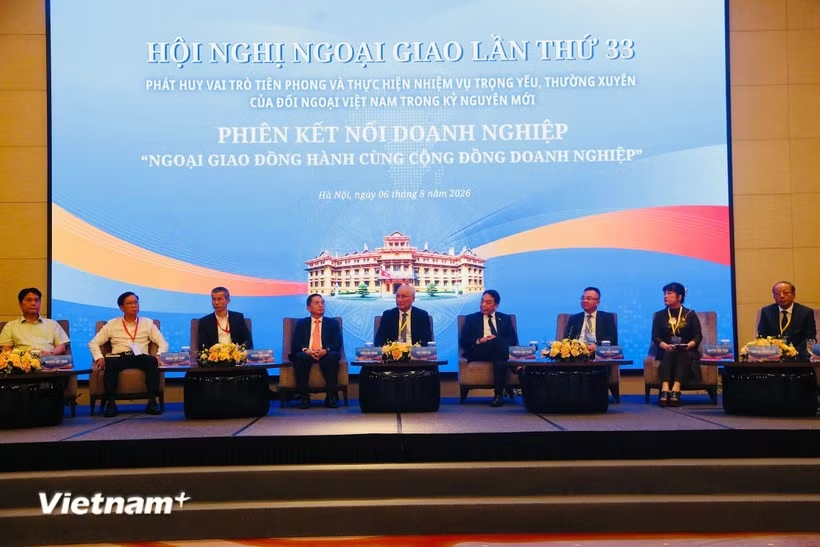
Hanoi (VNA) – Representatives of business associations and enterprises discussed key issues to turn economic diplomacy into a driving force for development amid deeper international integration at the business connectivity session held on August 6 within the framework of the 33rd Diplomatic Conference.
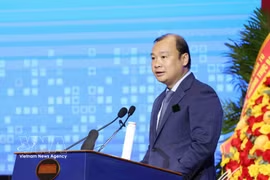
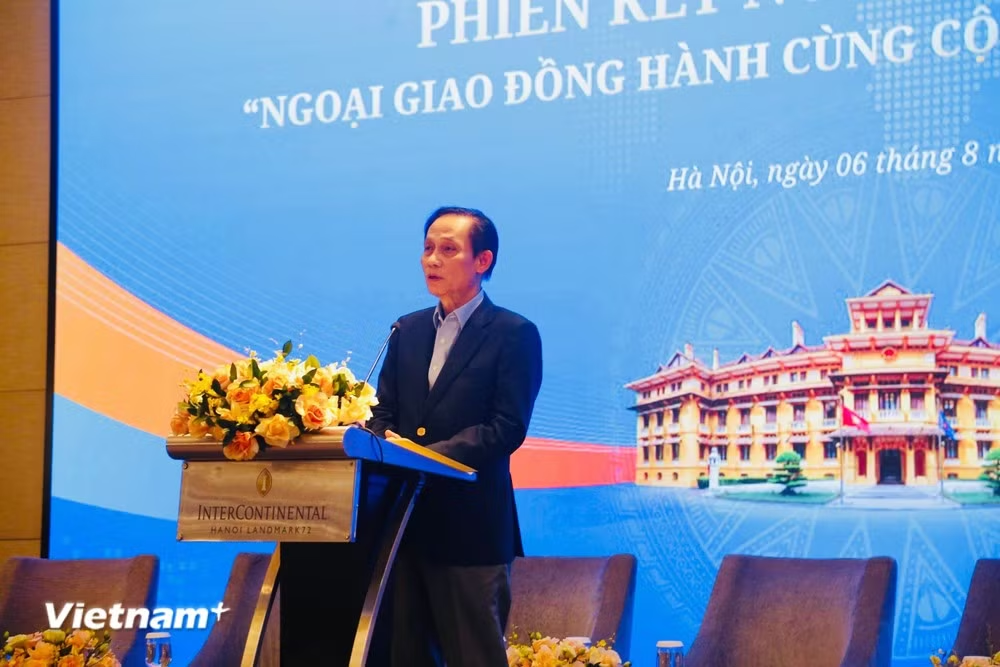
In his opening remarks, Minister of Foreign Affairs Le Hoai Trung outlined the role of foreign affairs in the new era, stressing the importance of creating a safe and healthy investment environment to support national economic development.
He said Vietnamese representative missions abroad should maximise their initiative, actively accompany domestic businesses and help address difficulties.
“Foreign affairs and international cooperation must become a key resource for development, with Vietnamese representative missions playing a pioneering and enabling role,” the minister stressed.
Building a public-private support ecosystem
At the discussion, speakers agreed that the diplomatic sector now goes beyond traditional trade promotion to directly accompany businesses and build a solid foundation of trust in global markets. The combination of the credibility of State diplomacy and the creativity of the private sector can generate greater strength to overcome international barriers.
Sharing the company’s development journey, Nguyen Anh Tuan, Deputy General Director of Sovico Group, highlighted the legal support and credibility provided by diplomatic agencies during the difficult early days of the company’s expansion into international markets.
After 15 years of development, Vietjet Air has expanded from an initial fleet of three aircraft to 135, gradually affirming its role in building a strong aviation infrastructure, with support from economic diplomacy.
To maximise the strength of the domestic business community in the new era, Luu Thi Thanh Mau, Vice President of the Vietnam Young Entrepreneurs Association, proposed building close domestic linkages between large and small businesses to create a sustainable supply chain before expanding into international markets.
Assessing the diplomatic sector’s role in guiding and leading businesses, Mau said it is like a navigator sailing across the ocean and guiding corporations, associations and businesses into bigger markets.
“With a good navigator and a strong fleet, we can go farther, stay the course longer and develop more sustainably,” she said
Mastering core technologies, attracting talents
Speakers also discussed strategies for greater self-reliance through mastery of technologies, supply-chain optimisation and efforts to prevent a “brain drain.”
Amid rapid advances in automation and artificial intelligence (AI), adapting the approach to diplomacy is crucial to strengthening the country’s position.
From the perspective of a technology enterprise, Tran Kim Chung, Chairman of CT Group, shared views on innovation in the new era. He said businesses do not necessarily need to invent everything themselves, what matters is mastering foundational technologies. He also expressed the group’s hope that Vietnam’s diplomatic missions would actively help Vietnamese businesses establish the image of a high-quality national technology brand internationally.
Sharing this view and practical experience from large-scale agricultural projects in Russia and Australia, Ngo Minh Hai, Chairman of the Board of Directors of TH Group, stressed the importance of overseas Vietnamese talents and the need for a strategy to protect the country’s “brainpower.”
Hai noted that, at this stage, human capital rather than natural resources is a decisive factor. He expressed his hope that the Ministry of Foreign Affairs would take the lead in developing strategies to retain and promote Vietnamese talents.
Representatives of business associations and enterprises also called on the Ministry of Foreign Affairs to strengthen its role in “financial diplomacy,” shifting from simply attracting FDI to connecting high-quality capital flows, supporting businesses seeking international listings, and building a global database linking the State and businesses to make full use of international resources.
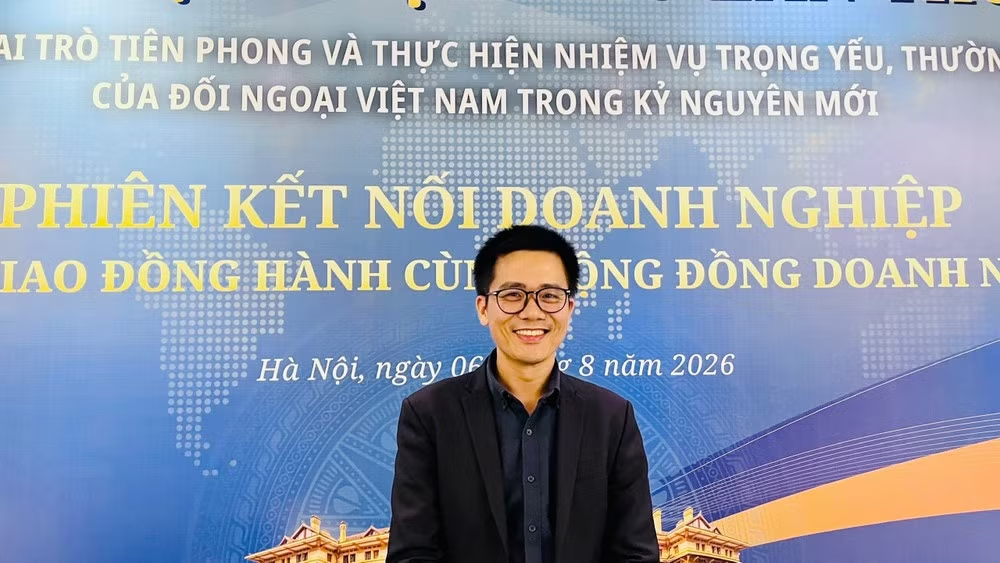
On the sidelines of the 33rd Diplomatic Conference, Tran Dinh Tung, Chairman of the Vietnam Association of Civil Engineers, shared his assessment of the strong transformation in economic diplomacy in supporting businesses.
He praised the Ministry of Foreign Affairs and Vietnamese representative missions abroad for taking the initiative in establishing specific key performance indicators (KPIs) to support and promote business connectivity and trade activities.
Regarding innovation and digital transformation, Tung stressed the importance of mastering technologies and optimising domestic supply chains in the construction sector. Amid rapid advances in automation and AI, improving human resources and changing management mindsets are decisive to helping Vietnamese businesses integrate firmly into the global economy.
He also said that greater decentralisation and delegation of powers to grassroots authorities is expected to strengthen investor confidence, simplify administrative procedures and create breakthroughs in key projects.
“Innovation does not mean we have to invent everything ourselves. What matters is mastering core technologies and domestic supply chains so that we can take control of the game and avoid dependence on external sources,” Tung affirmed./.