EU-funded project supports circular Arabica coffee production in Son La

The project “Circular solutions for coffee MSMEs in Son La province” (CAFE-CIRCLE) aims to help more than 150 coffee businesses and cooperatives adopt circular production practices, reduce pollution and unlock new economic opportunities from coffee by-products.

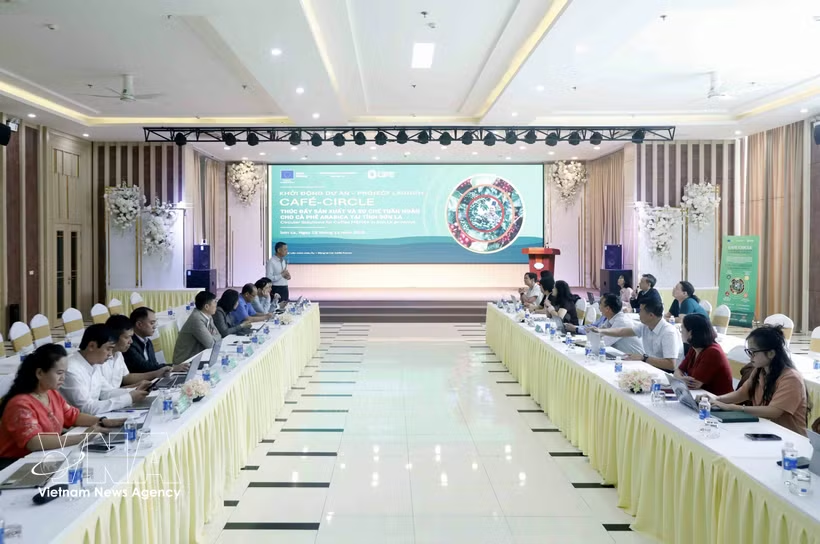
The project funded by the European Union (EU) and co-financed by CARE France is launched in Son La province on November 18 (Photo: VNA)

Son La (VNA) - A 1.75-million-EUR (1.92 million USD) project funded by the European Union (EU) and co-financed by CARE France was launched in Son La province on November 18 to promote circular production and processing in the Arabica coffee value chain, helping businesses reduce waste and improve resource efficiency.

The project “Circular solutions for coffee MSMEs in Son La province” (CAFE-CIRCLE) will be implemented by CARE France and CARE International in Vietnam, in coordination with the provincial Department of Agriculture and Environment and local partners, through December 2029. It aims to help more than 150 coffee businesses and cooperatives adopt circular production practices, reduce pollution and unlock new economic opportunities from coffee by-products.

Speaking at the event, Brenda Candries, Programme Manager of the EU Delegation to Vietnam, said the coffee industry's future competitiveness will depend not only on product quality but also on resource efficiency and responsible production. Through CAFE-CIRCLE, the EU aims to help local businesses reduce environmental impacts and create new economic opportunities. She noted that this investment demonstrates a commitment to building a greener, more competitive and inclusive coffee value chain.

The project will focus on coffee-growing and processing areas, particularly Chieng Mung, Chieng Mai and Muong Chanh communes and neighbouring production clusters.

It focuses on three interconnected solutions - water efficiency and pollution reduction, waste-to-value innovation, and cleaner energy and improved quality.

Accordingly, it will introduce water-saving coffee pulping equipment and affordable biological wastewater treatment systems; convert coffee pulp and husks into bio-organic fertilizers and explore higher-value products such as cascara tea; and promote solar-assisted drying systems to improve energy efficiency and maintain coffee quality.

These interventions will be complemented by technical training, business development support and market connections.

By December 2029, CAFE-CIRCLE aims to establish five demonstration models, document ten case studies and enable at least 100 businesses and cooperatives to adopt circular practices. More than 6,000 farming households could benefit indirectly.

To address financial barriers, CAFE-CIRCLE will establish a competitive small-grant facility supporting approximately 25 MSMEs and cooperatives, with grants of up to 15,000 EUR per business and a minimum 30% matching contribution from recipients.

The project will also facilitate access to green finance, encourage partnerships and demonstrate commercially viable circular business models.

Prioritising women-led businesses and ethnic minority communities, the project seeks to demonstrate how environmental responsibility, resource efficiency and business competitiveness can reinforce one another, contributing to a greener and more inclusive coffee value chain in Vietnam.

Vietnam is among the world’s leading coffee producers, with more than 718,000 hectares of coffee plantations and annual production exceeding 1.95 million tonnes in 2024. According to a 2025 study by the United Nations Development Programme (UNDP) and the Institute of Strategy and Policy on Agriculture and Environment (ISPAE), the industry generates approximately 1.6 million tonnes of dry coffee husks annually, representing significant potential for resource recovery.

However, much of this potential remains untapped. Coffee processing generates substantial organic waste and wastewater, contributing to environmental pollution. In Son La, a major Arabica coffee-growing region, these challenges directly affect local communities and businesses.

An assessment by UNDP and the International Water Management Institute (IWMI) identified key barriers to adopting circular practices, including limited technical knowledge, inadequate wastewater treatment infrastructure, difficulties in recovering processing waste, and insufficient investment. Smaller enterprises and cooperatives face particular challenges in accessing affordable technologies and financing. /.
VNA

See more

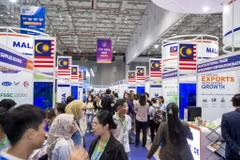
Vietnam Expo HCMC 2026 features 986 booths showcasing products from 825 businesses. (Photo: bnews.vn)

Vietnam Expo 2026 to feature 986 booths, 825 exhibitors

The 24th Vietnam International Trade Fair (Vietnam Expo 2026) will feature 986 booths and 825 enterprises, trade promotion bodies and industry associations from 18 countries and territories, including Vietnam, India, Belarus, the Republic of Korea, Malaysia, China and Taiwan (China)

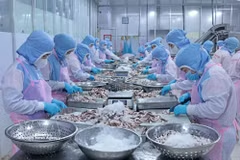
Processing octopus for export to the Japanese market at Huy Nam Company, An Giang (Photo: VNA)

Vietnam shifts focus towards import-export quality, efficiency

Speaking at a consultation workshop on the strategy for merchandise exports and imports, recently held by the Ministry of Industry and Trade (MOIT), Deputy Minister of Industry and Trade Luong Hoang Thai said rising export turnover did not necessarily reflect a corresponding improvement in the economy's endogenous capacity.

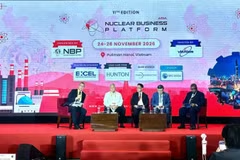
Delegates at the event (Photo: SGGP)

Asia Nuclear Business Platform makes Vietnam debut

The 11th Asia Nuclear Business Platform, taking place in Hanoi on November 25-26, offers Vietnam an opportunity to strengthen ties with international partners, gain access to advanced technologies and experience, and promote cooperation while enhancing national capacity, laying the groundwork for safe, secure and sustainable nuclear power development.

Domestic and international businesses engage in trade networking at the exhibition. (Photo: VNA)

VINAMAC EXPO 2026 spotlights industrial machinery, technologies

Exhibitors are showcasing a wide range of products, machinery, equipment and advanced solutions in mechanical engineering, metalworking, welding and cutting technologies, metallurgy, control and automation, industrial robotics, electromechanics, industrial equipment and supporting industries.

Vehicles showcased at the Vietnam Mobility Show 2025 (Photo: VNA)

Vietnam Mobility Show 2026 gears up for 40-plus brands

The fourth edition is scaling up, spanning mass-market, electric vehicle (EV), luxury and high-performance segments. Beyond static displays, the show will offer test drives, tech showcases, and ownership and operating solutions.

Travis Mitchell, Executive Director at the American Chamber of Commerce (AmCham) in Ho Chi Minh City. (Photo courtesy of AmCham)

Vietnam well placed to build win-win cooperation in APEC: AmCham

As host of the Asia-Pacific Economic Cooperation (APEC) forum in 2027, Vietnam is well positioned to build consensus among member economies for mutually beneficial economic cooperation, says Travis Mitchell, Executive Director at the American Chamber of Commerce (AmCham) in Ho Chi Minh City.

Vietnam Digital Industry and Trade Summit 2026 to bring together over 700 delegates

Vietnam Digital Industry and Trade Summit 2026 to bring together over 700 delegates

Hosted by the Ministry of Industry and Trade (MoIT), with professional coordination from the Vietnam E-commerce and Digital Economy Agency, the event will bring together representatives of regulatory agencies, localities, international organisations, universities, research institutes and businesses in e-commerce, technology, manufacturing, energy, transport and logistics.

Participants discuss potential business cooperation opportunities between Vietnam and African countries at the workshop. (Photo: VNA)

Vietnam, Africa seek to expand agricultural cooperation

A Vietnamese official stressed the need to move beyond experience-sharing and technical transfers towards comprehensive partnerships linking science and technology with investment, production, processing and market development, enabling businesses from both sides to jointly develop value chains on the basis of equality and mutual benefit.