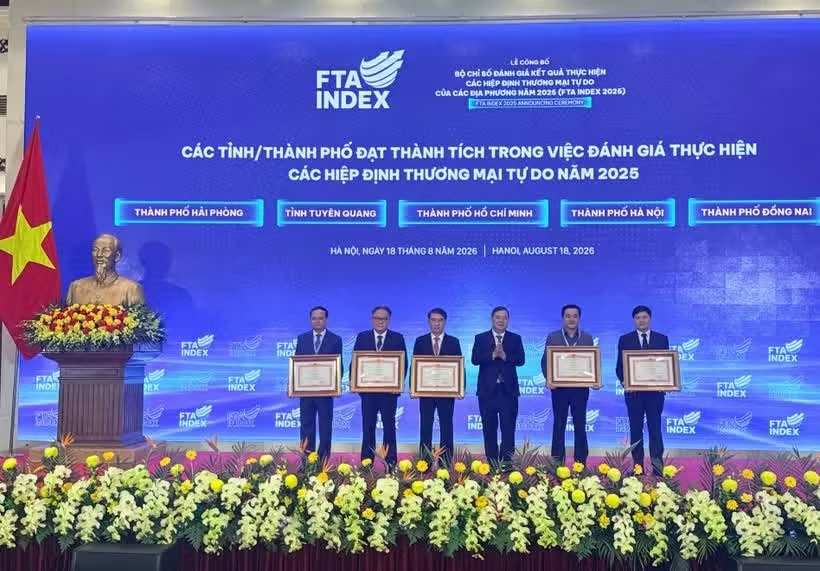
Hanoi (VNA) – The northern port city of Hai Phong ranked first in Vietnam’s 2025 FTA Index, which gauges how well localities deliver on free trade agreements (FTAs), and was the only one to earn the top “very good” rating.
Creating momentum for reform
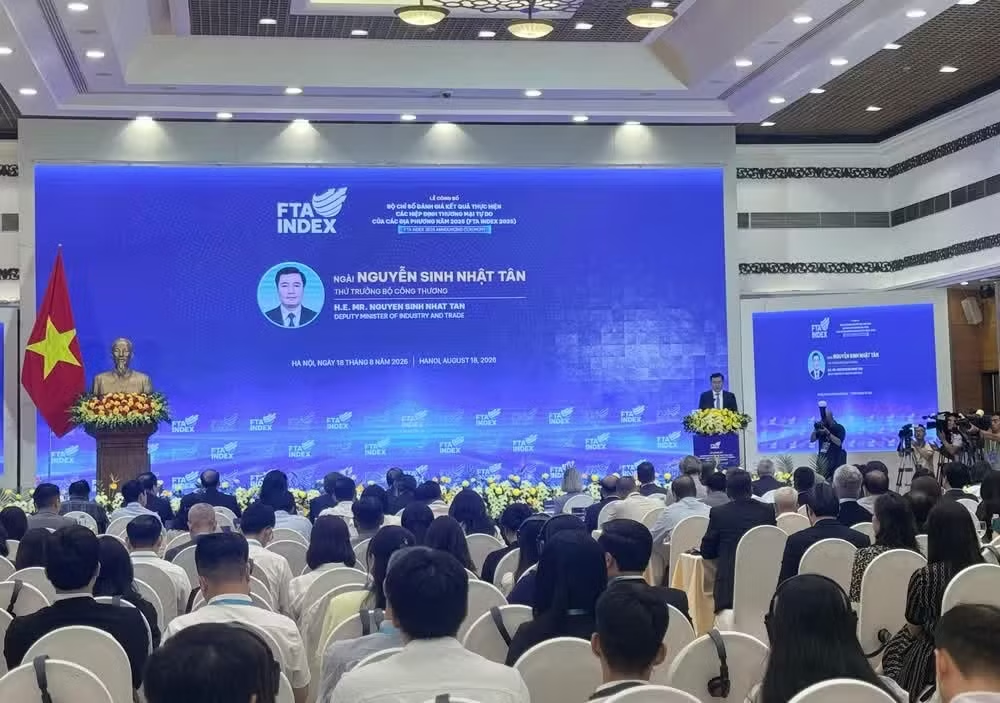
Deputy Minister of Industry and Trade Nguyen Sinh Nhat Tan said at an August 18 ceremony announcing the results that 2024 was the first year the ministry, working with other ministries, agencies and localities, built the index nationwide.
The 2025 edition refined its assessment methodology, survey coverage and data quality. It kept firms at the centre, widened feedback collection and tightened data verification and standardisation, giving a fuller picture of how businesses view FTA delivery in each locality.
Importantly, the results let localities see where they are performing well and where shortcomings, bottlenecks and business dissatisfaction remain, so they can devise fixes.
Each indicator must lead to specific action
As of December 31, 2025, the survey covered 4,066 companies across 34 cities and provinces. They had to have a registered production or business headquarters in Vietnam and have engaged in export-import activity for two consecutive years, 2023 and 2024.
Sampled enterprises were selected by business type, main production and trade area, and size, measured by export-import turnover, in sectors directly involved in using FTAs under the Vietnam Standard Industrial Classification. Those cover agriculture, forestry and fisheries; mining; processing and manufacturing; and wholesale and retail trade, including repair of automobiles, motorcycles, motorbikes and other motor vehicles.
The results show localities’ FTA delivery continued to improve, pushing local authorities to pay more attention to international economic integration and help firms make better use of the agreements.
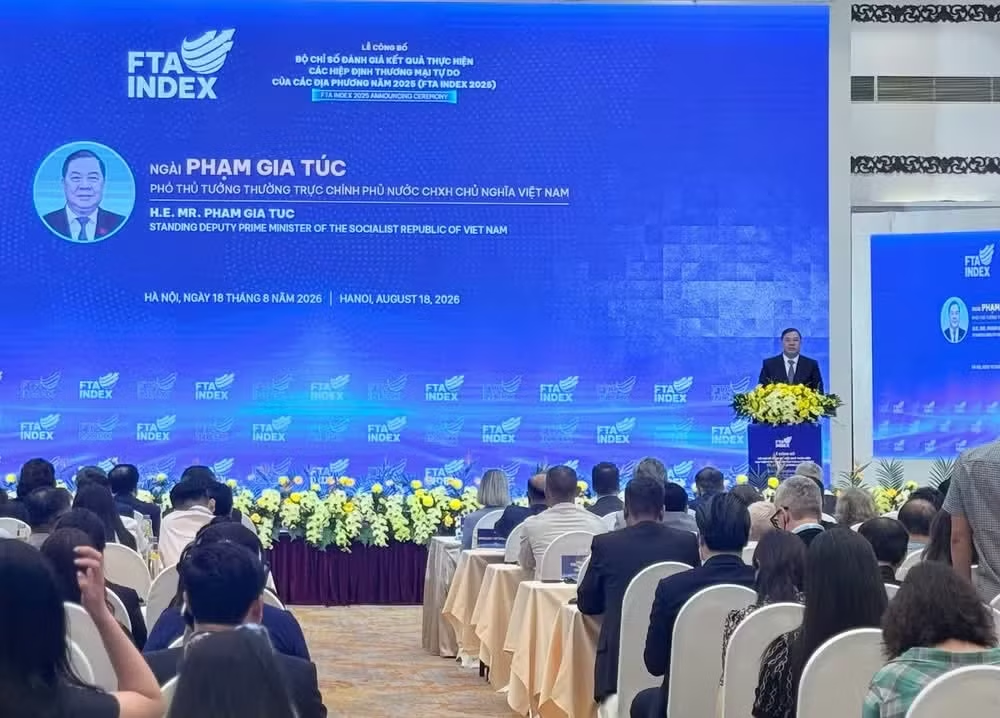
Standing Deputy Prime Minister Pham Gia Tuc, in his speech, said 2025 was the first year the index was released, laying a foundation to gauge localities’ ability to follow FTAs and support firms. In its second year, he said, the task goes beyond scoring and ranking to turning results into concrete actions and substantive improvements in local governance, administration and competitiveness.
Tuc said the index should be seen as an important tool to govern international economic integration, not just a sector-specific set of indicators. Using feedback and local delivery results, it should show which localities are performing well and which have shortcomings, and whether bottlenecks lie in mechanisms, procedures, information, infrastructure, workforce or coordination among agencies. Every finding must be tied to a specific solution, a responsible agency and a clear deadline for improvement.
“Every indicator must lead to a specific action; every international commitment must be translated into resources and tangible development momentum for each locality and the country,” Tuc said. “Every market opportunity will help create stronger firms, better jobs and higher value-added products, while sharpening the sustainable competitiveness of the entire economy.”
Hai Phong ranked first with 35.62 out of 40, well above the national average of 21.66. The city also led two of the four component indices, scoring 9.85 points on access to information (Component 1) and 9.4 points on enforcement of FTA-related legal regulations (Component 2).
Lai Chau topped Component 3, which covers policies supporting firms’ use of FTAs, with 7.59 points, while Ca Mau led Component 4, on sustainable development, with 9.29 points.
At the event, the ministry also launched a portal for the 2025 index at index.fta.gov.vn, funded by the Australian Government./.