Hanoi (VNA) – With more than 50 years of development behind it, the Vietnam National Industry-Energy Group (Petrovietnam) is now well positioned to expand its role in exploration and production, gas and power, and new energy.
Strengthening domestic supply, developing gas-to-power chains
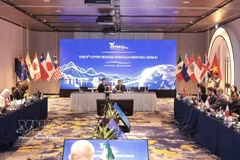
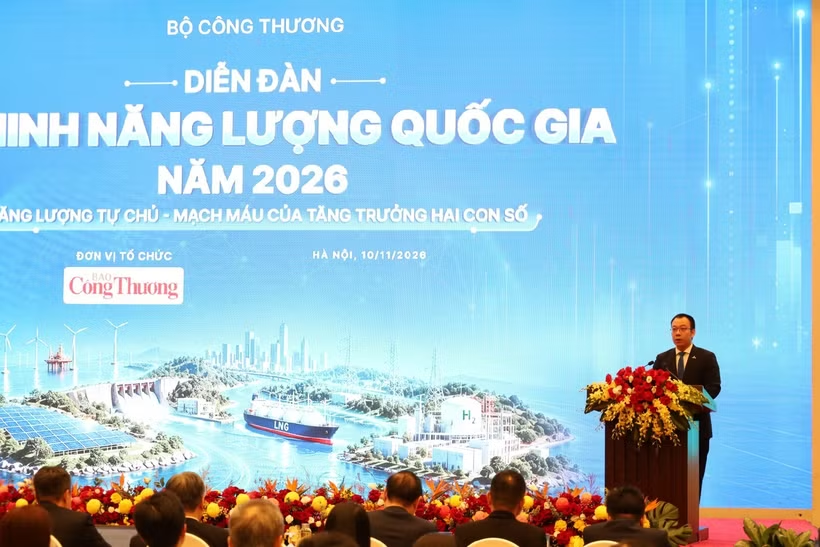
Speaking at the 2026 National Energy Security Forum organised by the Ministry of Industry and Trade, Pham Gia Minh, Deputy Head of Petrovietnam's Exploration and Production Department, said Vietnam is ranked by the International Energy Agency (IEA) among Asian countries with significant crude oil reserves.
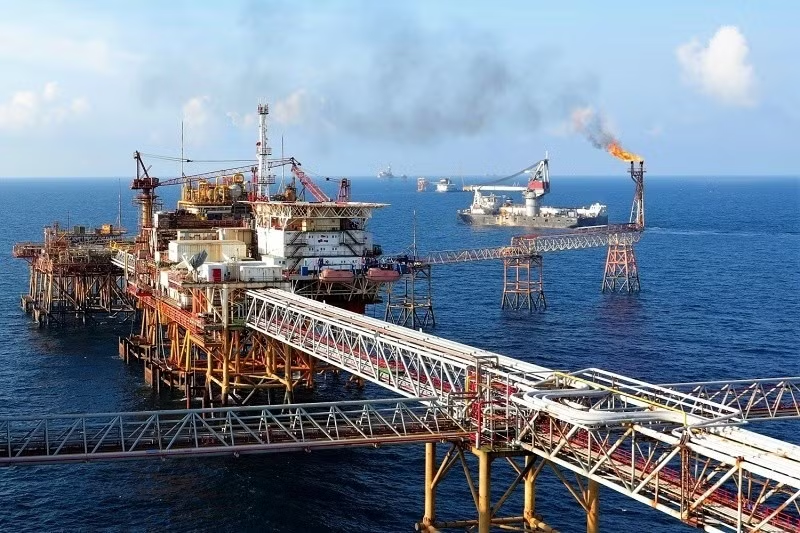
The firm is currently engaged in oil and gas extraction across 36 fields, located within 21 contract blocks. In 2025, its total revenue reached approximately 1.105 quadrillion VND (42.8 billion USD), equivalent to 9–10% of national GDP, while its contributions to the state budget amounted to hundreds of trillions of VND.
These figures highlight the oil and gas industry's important role in the economy and its capacity to help safeguard national energy security. Amid geopolitical tensions, the risk of supply chain disruptions and increasingly intense competition for fuel sources, proactively exploiting domestic resources is essential to securing supplies and mitigating the impact of fluctuations in global oil prices and import markets.
According to Minh, strengthening energy autonomy through the oil and gas sector and integrated gas-to-power chains is a strategic priority in the current context. The focus is on increasing domestic oil and gas reserves and production while ensuring gas self-sufficiency for power generation and industrial use.
In recent years, Petrovietnam has maintained stable oil and gas production while promoting new exploration projects to increase reserves and secure long-term supplies.
Alongside exploration and production, developing gas-to-power value chains has been identified as another key direction. In line with Politburo Resolution No. 70-NQ/TW and the revised Power Development Plan VIII, infrastructure and gas-fired power projects continue to receive attention, covering both domestically produced natural gas and imported liquefied natural gas (LNG).
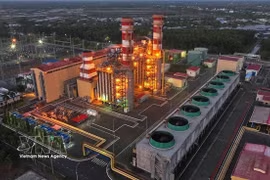
Across this value chain, Petrovietnam and its subsidiaries, including PV GAS and PV Power, have opportunities to participate in every stage, from gas gathering, transportation, import and distribution to the operation of gas-fired power plants.
Policy support opens up new development opportunities
Alongside resource potential and production capacity, policies and mechanisms are considered a crucial factor in enabling Petrovietnam to unlock resources and expand its operations.
Minh said the orientations set out in Resolution No. 70-NQ/TW and the amended 2026 Law on Petroleum have established a new legal framework, enabling the group to further strengthen its role in upstream operations, gas-to-power value chains and new energy.
In exploration and production, the amended Law on Petroleum introduces additional incentives for projects involving small and marginal fields, deepwater and offshore areas, and locations with complex geological conditions. The policies also support projects applying enhanced oil and gas recovery solutions and maximising resource extraction.
These provisions provide a basis for Petrovietnam and its partners to address investment obstacles and expand exploration activities, thereby increasing production.
The 2026 Law on Petroleum, adopted by the National Assembly on August 23, 2026, is expected to take effect on March 1, 2027. It aims to simplify procedures, clarify the division of authority and grant businesses greater autonomy. Flexible contractual arrangements and preferential policies are expected to help accelerate project implementation.
Petrovietnam is expanding its development opportunities into new energy and high-tech sectors. Offshore wind power and carbon capture and storage (CCS) are among the areas it is studying and developing in line with the energy transition and Vietnam's goal of achieving net-zero emissions by 2050. With its existing advantages, the firm is well placed to explore and participate in these sectors.
Alongside offshore wind power, it is actively pursuing research into CCS, seabed minerals, geothermal energy, natural hydrogen and gas hydrates.
Exploration and production remain key growth pillar
Despite its expansion into new sectors, exploration and production remain at the core of Petrovietnam's development strategy.
According to Minh, the group plans to promote investment in exploration and production, focusing on key projects capable of driving investment in related sectors, while exploring mergers and acquisitions of domestic and overseas projects. Developing a highly skilled workforce, training the next generation of personnel to master new technologies and attracting leading experts are also urgent priorities.
Against a backdrop of persistent volatility in global energy markets, driven by geopolitical tensions, the risk of supply chain disruptions and increasingly intense competition for fuel sources, Petrovietnam's efforts to expand oil and gas exploration and production and develop gas-to-power project chains are particularly important for national energy security.
Beyond helping stabilise supplies, exploration and production activities also provide a foundation for Vietnam to take a more proactive approach to macroeconomic governance and strengthen the economy's resilience to global shocks./.