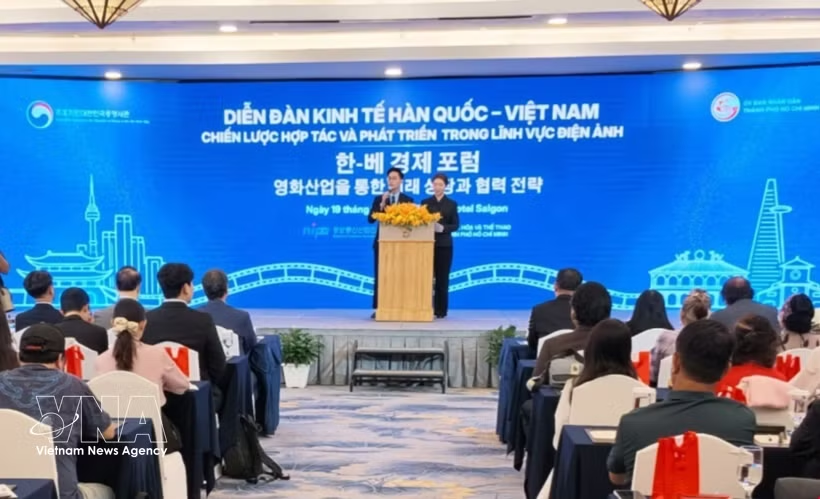
Ho Chi Minh City (VNA) - Co-investment, co-production, talent training and wider distribution markets topped the agenda at a Republic of Korea (RoK)-Vietnam economic cooperation forum in Ho Chi Minh City on November 19.
The event was co-hosted by the municipal People’s Committee and RoK Consulate General in the city, drawing nearly 100 regulators, film bodies, experts, directors, producers and companies on both sides.
Vice Chairman of the municipal People’s Committee Nguyen Manh Cuong said Ho Chi Minh City treats the cultural industry as a key economic sector, with cinema expected to pull investment, develop talent, lift tourism and market the city. Its merger with Binh Duong and Ba Ria-Vung Tau has widened the location menu, from sea, forest, mountains, waterways, to architecture works and modern urban space, giving it room to build studios, production services and attract domestic and foreign crews.
After joining the UNESCO Creative Cities Network for cinema in 2025, Ho Chi Minh City is delivering on the 2026-2030 commitments on talent, creative space and international film festivals. Cuong said the city will keep improving its investment climate and connect film companies and organisations on both sides to drive co-production, expert exchanges, technology cooperation and film distribution.
RoK Deputy Consul General Kwon Tae-han said Korean and Vietnamese film companies can jointly hunt for stories and talent and team up from script development through investment, production and international distribution. He called for clearer co-production procedures and profit-sharing rules, stronger copyright protection and smoother filming permits and location support.
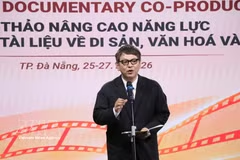
Do Lenh Hung Tu, President of the Vietnam Cinema Association, proposed a national focal point for film export promotion to help companies access market information, join film markets, promote works and sell copyrights abroad. Film exports, he said, should sit inside the cultural industry and national-image strategy.
He advised producers to study audience tastes, pick markets at the script stage and work with rights trading specialists on distribution plans. At international festivals, delegations need sales catalogs, project profiles, foreign-language promotional materials and qualified negotiators for distributors and investors. Cooperation in capital, technology, post-production and creative talent can push Vietnamese identity stories to a broader international audience.
Yun Ha, Director of the Policy R&D Team at the Korean Film Council (KOFIC), said domestic films are helping drive box-office growth in Vietnam. In the RoK, capital concentrated in big film companies and investment funds, plus shifting entertainment habits, have slowed the market’s post-pandemic recovery. Some hits are lifting revenue again, but sustained recovery hinges on a diverse pipeline of works strong enough to pull audiences into theaters./.