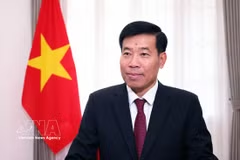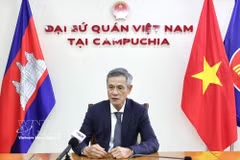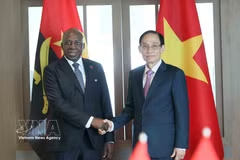
Vientiane (VNA) – The upcoming official visit to Vietnam by Lao Prime Minister Sonexay Siphandone and his attendance at the third ASEAN Future Forum from June 7–9 will help strengthen the great friendship, special solidarity, comprehensive cooperation, and strategic cohesion, according to Vietnamese Ambassador to Laos Nguyen Minh Tam.
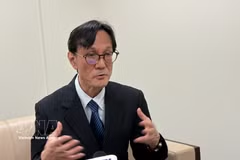
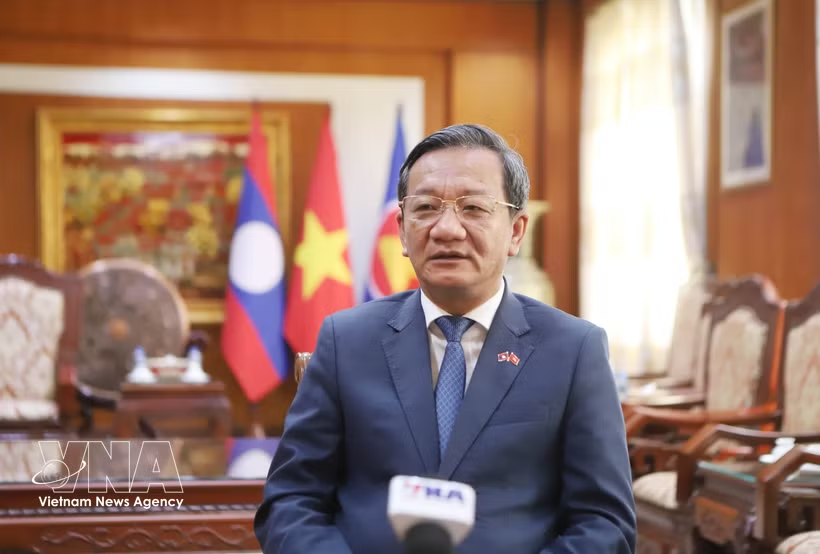
In an interview granted to the Vietnam News Agency (VNA)'s resident correspondents in Vientiane ahead of the visit, Tam described the trip as particularly significant as both countries are entering a new development phase following the successful organisation of Party congresses, National Assembly elections and the consolidation of senior leaders for their new terms.
The ambassador noted that the visit follows the recent state visits by the top leaders of the two countries earlier this year and reflects the determination to deepen the bilateral ties across all fields. He emphasised that the visit will translate the concept of “strategic cohesion” into concrete cooperation outcomes.
According to the Ambassador, Vietnam remains one of the priority destinations in PM Sonexay’s diplomatic agenda, underscoring the special nature of the bilateral relationship and reaffirming that ties between Vietnam and Laos continue to occupy a foremost position in the foreign policy of each country.
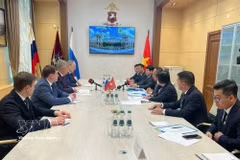
The visit is also expected to provide an opportunity for leaders of the two nations to review the implementation of high-level agreements and bilateral cooperation mechanisms, including outcomes of the annual meeting between the two Politburos and the 48th meeting of the Vietnam–Laos Intergovernmental Committee for Bilateral Cooperation. These discussions are anticipated to help identify new measures to enhance the effectiveness and depth of bilateral collaboration.
The attendance of the Lao PM in two of the three ASEAN Future Forum editions in 2024 and 2026, underscores Laos’s strong support for Vietnam’s initiative to promote strategic dialogue on the future of ASEAN. Laos’s active engagement not only reflects the increasingly close coordination between the two countries on regional issues, but also demonstrates their shared commitment to building a united, resilient, innovative and people-centred ASEAN, and upholding the bloc’s centrality in the evolving regional architecture.
Against a backdrop of profound geopolitical, geo-economic and technological shifts, the visit conveys a clear message that Vietnam and Laos will continue to stand side by side, share strategic interests, support each other’s development efforts and work closely together to address common challenges. It is expected to provide fresh momentum for implementing high-level agreements and further advancing the strategic cohesion between the two countries, contributing to the continued growth of their special relationship for the benefit of their people and for peace, stability and development in the region and the world, said Tam.
Regarding the bilateral ties, the diplomat shared that economic cooperation is one of the key pillars of the bilateral partnership. Tam observed that bilateral economic cooperation is increasingly shifting from a traditional assistance-based model towards a long-term development partnership centred on strategic cohesion. Priority is being given to three major areas: infrastructure connectivity, energy cooperation and institutional and market integration. Strategic projects such as the Hanoi–Vientiane Expressway, the Vientiane–Vung Ang railway, smart border gates and East–West economic corridors are expected to create new opportunities for growth while strengthening regional connectivity.
Energy cooperation has emerged as a particularly bright spot. Vietnam has approved plans to import more than 4,250 MW of electricity from Laos, while several hydropower and wind power projects are already supplying electricity to the Vietnamese market. These projects are contributing to Vietnam’s energy security and generating significant revenue for Laos, supporting its socio-economic development.
Investment and trade relations have also expanded steadily. Vietnam currently has nearly 7 billion USD invested in approximately 289 active projects in Laos, making it one of the country’s largest foreign investors.
Tam highlighted that economic cooperation not only generates tangible benefits for businesses and local communities but also reinforces political trust and strengthens people-to-people bonds between the two neighbouring countries.
Regarding regional cooperation, the Ambassador stressed that both Vietnam and Laos remain active and responsible members of ASEAN and have consistently coordinated closely within regional and international mechanisms. Their cooperation has contributed to strengthening ASEAN's unity, safeguarding the bloc’s core principles and enhancing its role in regional and global affairs.
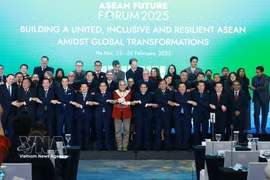
Regarding the ASEAN Future Forum, the diplomat shared that the forum, themed “Shaping Our Future Together: Peace, Prosperity and People-Centred,” is expected to provide a platform for discussions on resilience, digital transformation, energy security, emerging technologies and sustainable development.
Looking ahead, he said Vietnam and Laos will continue to work closely to uphold ASEAN’s fundamental principles, including solidarity, consensus, respect for international law and ASEAN's centrality. Both countries are also expected to intensify cooperation in new priority areas such as green transition and digital transformation, sustainable development, human resources development and regional resilience.
He expressed his confidence that the visit will create fresh momentum for implementing high-level agreements, advancing strategic cohesion and elevating the Vietnam–Laos special relationship to new heights, contributing to peace, stability, cooperation, and sustainable development in the region./.
VNA