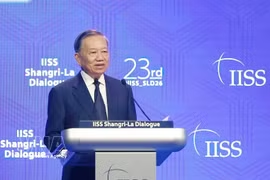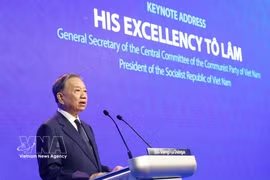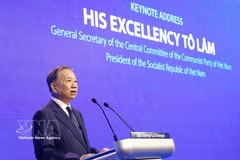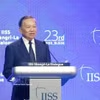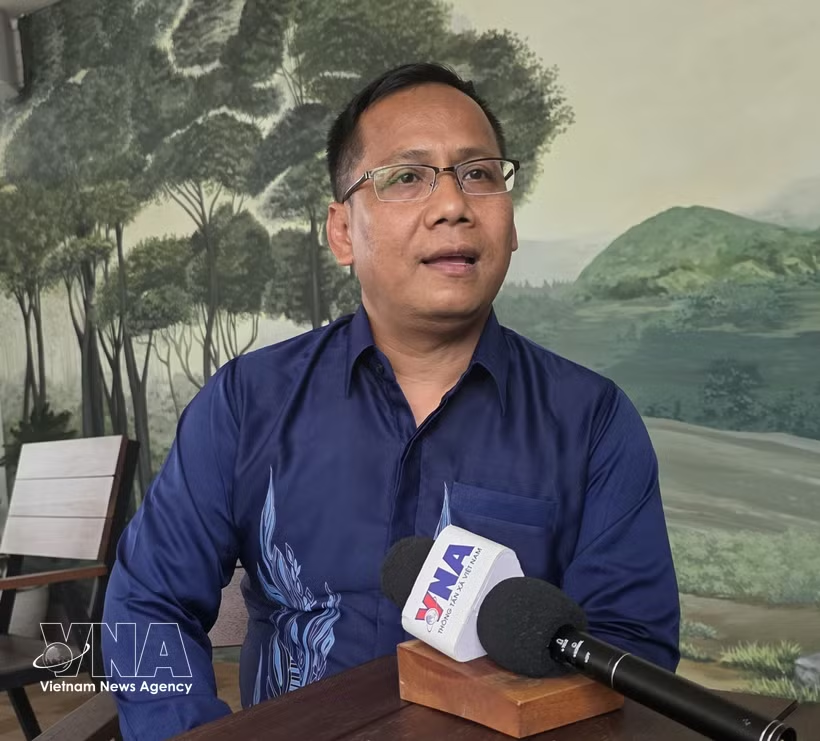
Jakarta (VNA) – Vietnam is increasingly positioning itself as a proactive contributor to regional peace, stability and cooperation, according to Indonesian scholar Lamijo of the National Research and Innovation Agency (BRIN), who described General Secretary of the Communist Party of Vietnam’s Central Committee and State President To Lam’s keynote address at the 23rd Shangri-La Dialogue as a landmark diplomatic statement.
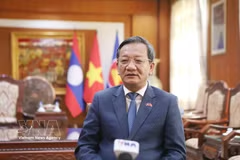
Speaking to the Vietnam News Agency’s correspondents in Jakarta, Lamijo said the speech reflected not only Vietnam’s national interests but also a broader strategic vision for the region, demonstrating the country’s readiness to share leadership responsibilities in the Association of Southeast Asian Nations (ASEAN).
He noted that one of the speech’s most significant contributions is its identification of three interrelated challenges confronting the region and the world: the crisis of the international order, the crisis of development models, and the crisis of strategic trust.
According to the scholar, the Vietnamese leader’s message reflects Vietnam’s proactive approach. He highlighted the country’s approach of “shifting from passive response to proactive shaping, from post-crisis management to early risk prevention,” describing it as evidence of a more confident and forward-looking approach to regional affairs.
Lamijo also pointed to Vietnam’s emphasis on mediation and preventive diplomacy as a strategic priority. By advocating stronger preventive diplomacy as a “strategic capability”, Vietnam has demonstrated a sophisticated understanding of security challenges and the need for credible diplomatic mechanisms to prevent disagreements from escalating into confrontation or conflict.
On maritime issues, he praised Vietnam’s consistent support for the rule of law and its commitment to resolving disputes through peaceful means in accordance with international law, particularly the 1982 United Nations Convention on the Law of the Sea (UNCLOS).
Vietnam, he said, conveyed a clear message that legal principles must be implemented consistently through mechanisms promoting early warning and restraint, ensuring that vital maritime routes do not become arenas for power projection or threats of force.
The Indonesian researcher also highlighted the speech’s broader conception of security, noting that it placed human security and societal resilience at the centre of sustainable peace and stability. In his view, Vietnam correctly recognised that insecurity stems not only from military threats but also from disruptions to development and social wellbeing.
He said Vietnam’s support for open and diversified supply chains, together with efforts to strengthen societies against disinformation and information manipulation, reflects a practical approach to reinforcing public trust and resilience.
Lamijo further welcomed Vietnam’s proposal to develop responsible norms governing emerging technologies such as artificial intelligence, cybersecurity, data infrastructure and the defence industry. He said the call to ensure that humans retain ultimate responsibility for decisions with major security implications demonstrated Vietnam’s awareness of the non-traditional challenges of the digital era.
At the regional level, he viewed the address as a strong affirmation of Vietnam’s commitment to an open, inclusive and transparent multilateral security architecture centred on ASEAN. Vietnam, he said, reaffirmed its determination to prevent Southeast Asia from becoming an arena for bloc confrontation while preserving ASEAN’s central role.
The scholar also cited Vietnam’s pledge to work closely with the Philippines during its ASEAN Chairmanship in 2026 as a clear example of regional solidarity and burden-sharing among key member states, with ASEAN citizens placed at the centre.
Overall, Lamijo described the Vietnamese Party and State leader’s Shangri-La Dialogue address as a strategic anchor that underscored Vietnam’s growing diplomatic stature. By welcoming the transparent and responsible engagement of major powers, Vietnam is helping promote a regional environment in which competition is managed within the framework of international law, reducing the risk of fragmentation and supporting the development of a resilient and prosperous Asia-Pacific region./.
VNA