AI could streamline personalised language training in Vietnam: Experts

Artificial intelligence (AI) is emerging as a practical solution to one of the biggest challenges facing personalised learning in Vietnam – delivering tailored instruction in classrooms.

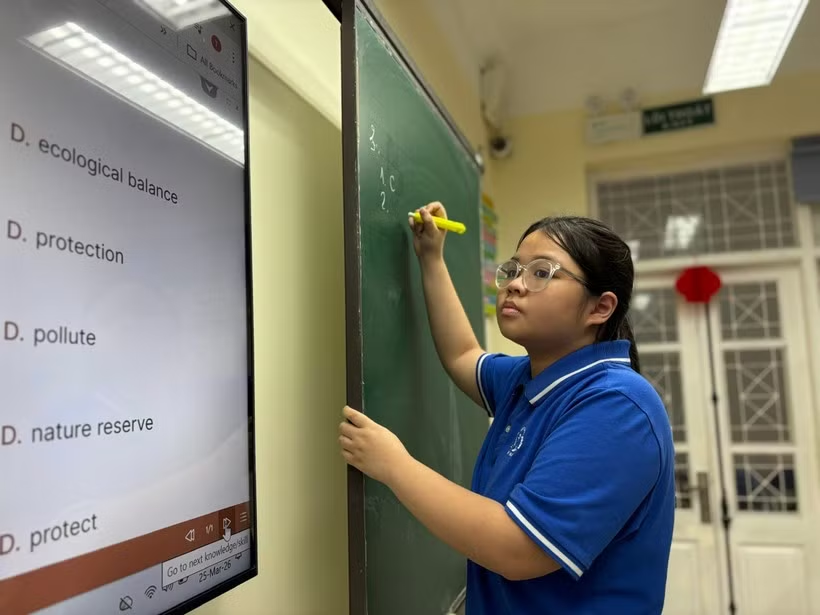
A student in an English lession at Chuong Duong Secondary School in Hanoi. (Photo: VNA)

Hanoi (VNA) – Artificial intelligence (AI) is emerging as a practical solution to one of the biggest challenges facing personalised learning in Vietnam – delivering tailored instruction in classrooms, experts said at a seminar in Hanoi on June 4.

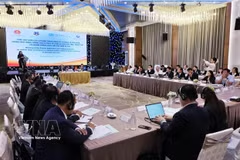
The seminar, titled "Personalising Mathematics Learning with AI: A Strategic Direction for Vietnamese Education," was organised by the Education Journal under the Ministry of Education and Training.

The discussion comes as the Politburo's Resolution No. 71 on breakthrough development in education and training calls for the stronger application of digital technology and AI in teaching and learning.

Technology helps overcome bottlenecks

Associate Prof. Dr Nguyen Chi Thanh, Dean of the Faculty of Education at the University of Education under Vietnam National University, Hanoi, said differentiated instruction requires teachers to adjust learning content, teaching methods, and classroom environments to meet different needs.

He explained that personalised learning is built around an individual competency profile for each student, identifying strengths, areas for improvement, learning styles and interests. Continuous assessment enables teachers to update those profiles and adapt instruction accordingly.
2.png
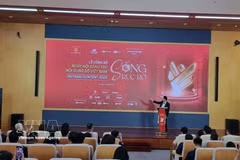
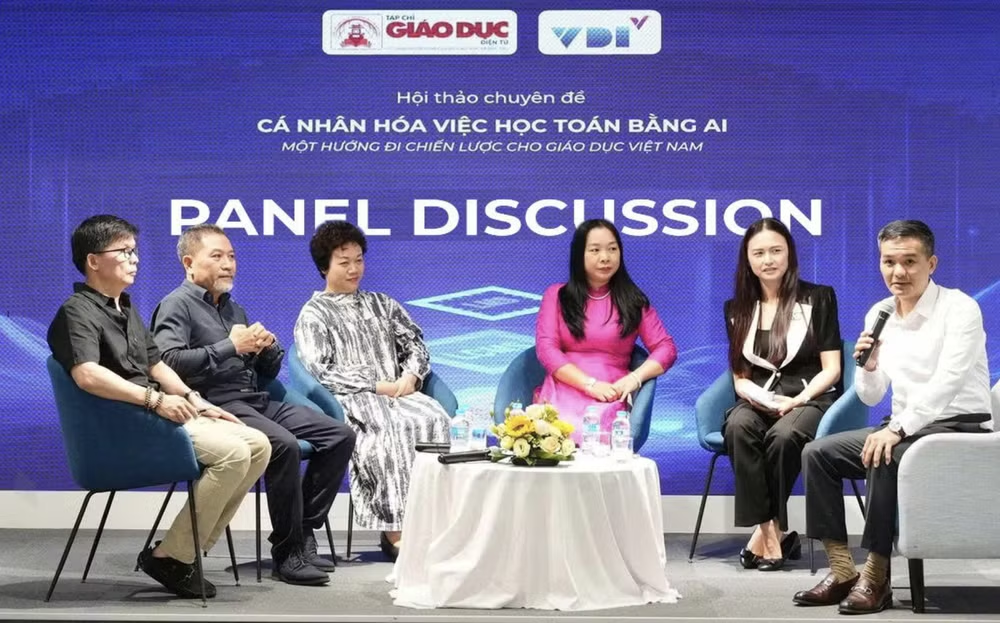
Participants discuss personalised learning at the seminar. (Photo: VietnamPlus)

​Associate Prof. Dr. Chu Cam Tho, Head of the VMathAI project and former Director of the Educational Assessment Research Division under the Vietnam National Institute of Educational Sciences, said adaptive learning differs from conventional teaching because every student follows a personalised learning pathway.

However, she noted that this approach faces practical challenges. Vietnam's national curriculum requires students to achieve common learning standards. Classrooms of 40 to 50 students make it difficult for teachers to understand each learner's abilities and provide differentiated instruction.

According to Tho, AI offers an effective way to address these constraints.

Unlike traditional classrooms where all students progress at the same pace, AI-supported learning platforms can analyse learning data, practice results and students' responses to recommend the most suitable next lessons. The aim is to keep learners within their "zone of proximal development" by providing tasks that are challenging enough to stimulate thinking without becoming overwhelming.

She cited VMathAI, a mathematics learning platform developed by her research team after 24 years of studying personalised education, as a practical example.
3.png
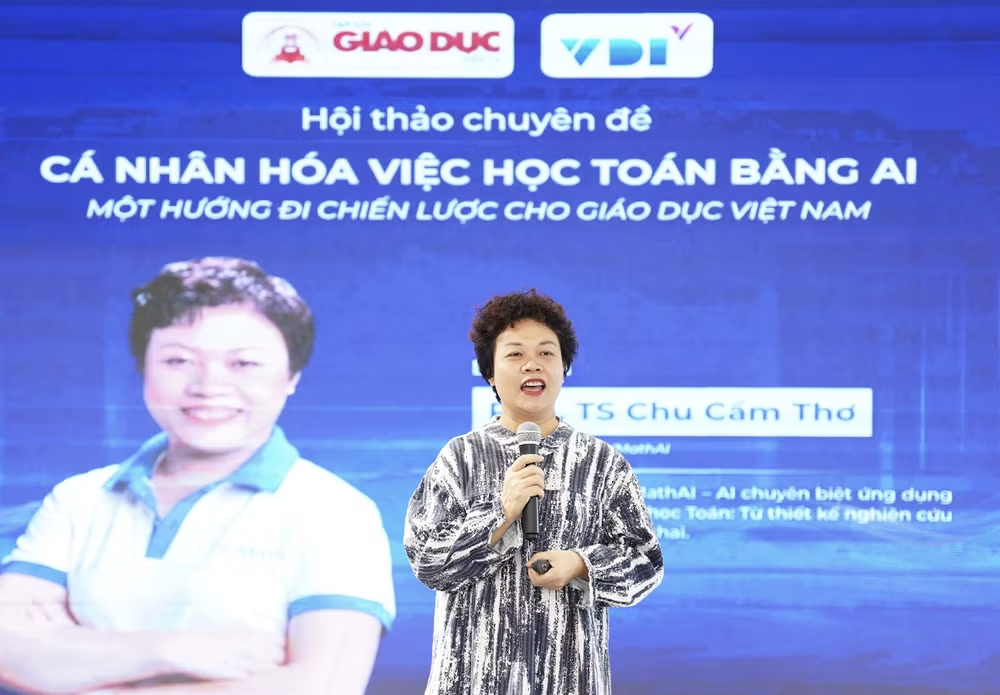
Assoc. Prof. Dr. Chu Cam Tho speaks at the seminar. (Photo: VietnamPlus)

​Designed as an adaptive learning solution, VMathAI combines AI with standardised digital mathematics resources to address two key questions: how to build an individual competency development pathway for each student and how to guide each learner through a curriculum suited to their abilities.

The platform has been introduced at 21 upper secondary schools, covering more than 800 classes, over 37,000 students and more than 350 teachers and education managers. More than 80% of users have expressed satisfaction with the platform, according to Tho.

She added that the model could be expanded beyond mathematics to other school subjects.

An inevitable trend

Speaking at the seminar, Bach Dang Khoa, Deputy Director of the Department of Education and Training of Bac Ninh province, said personalised and adaptive education is becoming an inevitable trend.

He stressed that teachers need to understand how well students have mastered previous lessons before preparing subsequent classes so that classroom teaching can be more effective.
4.png
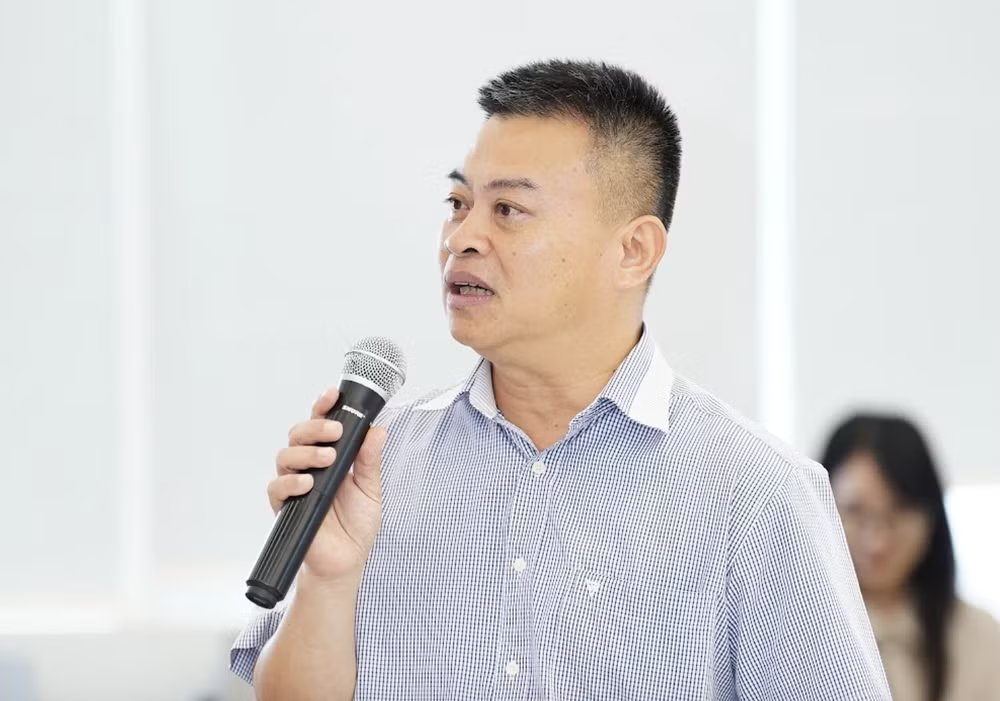
Bach Dang Khoa, Deputy Director of the Bac Ninh Department of Education and Training, addresses the seminar. (Photo: VietnamPlus)

"Teachers need to identify each student's strengths and competencies, and AI can help measure those individual capabilities," he said, noting that this was one reason Bac Ninh joined the VMathAI pilot programme.

Nguyen Thi Huong, Head of the Primary Education Division under Ninh Binh province’s Department of Education and Training, agreed that applying AI to adaptive and personalised learning is both necessary and increasingly urgent.

Huong said AI could also reduce subjectivity in teachers' assessment of students' abilities. However, she cautioned that AI-supported learning must remain aligned with the national curriculum, with appropriate safeguards to ensure learning tasks do not exceed expected competency levels. Ethical issues related to AI use should also receive special attention./.

VNA

See more

Deputy General Director of the Vietnam News Agency Doan Thi Tuyet Nhung (fifth, right) and representatives of regional news agencies and media organisations attend the launch of the Asia-Pacific Media Partnership Organising Committee at the Asia-Pacific Media Forum. (Photo: VNA)

VNA attends Asia-Pacific Media Forum in Shenzhen

Participants in the forum highlighted the need to increase coverage of the region's rapid opening-up and integration, provide comprehensive information on the progress and achievements of cooperation among economies across various fields, and help create a favourable environment for regional development.

Ngo Phuong Ly (right), the spouse of General Secretary of the Communist Party of Vietnam Central Committee and President To Lam, and Kyu Kyu Hla, the spouse of Myanmar President Min Aung Hlaing, visit Van Phuc silk village on September 5. (Photo: VNA)

First ladies of Vietnam, Myanmar visit Van Phuc silk village

Ngo Phuong Ly, the spouse of General Secretary of the Communist Party of Vietnam Central Committee and President To Lam, said the two countries share similarities in silk weaving and can enrich their cultural heritage through exchanges and experience sharing.

Prime Minister Le Minh Hung join students and teachers of the Muong Khuong Inter-level Primary and Secondary Boarding School, Lao Cai province, in the opening ceremony of the 2026–2027 academic year on September 5. (Photo: VNA)

PM urges substantive education reform in 2026–2027 school year

PM Le Minh Hung called on the education sector to continue making strong changes in management mindset and teaching methods, putting learners at the centre, and viewing schools as the foundation, teachers as the driving force, families as a source of support and society as a resource accompanying education development.

General Secretary of the Communist Party of Vietnam Central Committee and President To Lam (Photo: VNA)

Top leader extends message to education sector on new school year

Party General Secretary and President To Lam expressed confidence that with the nation’s traditional fondness for learning, the dedication of teachers and the aspirations of the younger generation, the 2026–2027 academic year will open a new chapter of progress for the country’s education sector.

Students attend the opening ceremony for the 2026–2027 academic year at the primary school campus of the Gia Quat Primary and Secondary School in Hanoi on September 5, 2026. (Photo: VNA)

Students across Vietnam begin 2026–2027 academic year

This milestone school year marks a pivotal transition from laying the groundwork for reform to delivering substantive changes as the country pushes ahead with implementing Politburo Resolution No. 71-NQ/TW on breakthroughs in education and training development.

Team K91 members depart to carry out their mission. (Photo: VNA)

Search efforts continue for Vietnamese fallen soldiers in Cambodia

During the 2026-2027 dry season, Teams K70, K71, K72 and K73 will continue their search and repatriation mission, striving to fulfil the target based on 185 pieces of information concerning 761 graves. Each team is expected to collect at least 100 sets of remains during each deployment.

Mai Nguyen Tuyet Hoa, First Secretary in charge of education affairs at the Vietnamese Embassy in Russia speaks at the closing ceremony (Phôt: VNA)

AI application boosts Russian language training in Vietnam

The programme introduced updated methods for teaching Russian as a foreign language while focusing on the application of digital technology and AI in lesson design to enhance the professional capacity and adaptability of Russian-language teachers amid changes in modern education.

A resident accesses the iHanoi app. (Photo: VNA)

Hanoi launches real-time flood and rainfall map on iHanoi

The map uses a standard colour scale to provide a visual assessment, enabling residents to gauge the level of danger within seconds. The application is expected to strengthen the capital’s disaster response capacity while helping residents plan safer routes during the rainy and stormy season.

Representatives of Naval Region 4 Command present 32 gift packages to the fishermen. (Photo published by VNA)

32 fishermen rescued at sea safely return home

Thirty-two fishermen rescued after their fishing vessel, coded QNa 90859 TS, encountered an accident at sea, were safely brought back to their hometown in Nui Thanh commune, the central city of Da Nang.

Dr. Do Xuan Hoang, Chairman of the Union of Vietnamese Organisations in Russia. (Photo: VNA)

Resolution marks new policy approach toward overseas Vietnamese

Chairman of the Union of Vietnamese Organisations in Russia Dr. Do Xuan Hoang said the Politburo’s Resolution 23-NQ/TW on overseas Vietnamese (OV) affairs is timely and more comprehensive, better aligned with the rapid evolution of the Vietnamese community abroad after more than two decades under the Politburo’s Resolution 36-NQ/TW issued on March 26, 2004.

Vietnamese companies showcase tourism in Beijing (Photo: VNA)

Hanoi pitches tourism in Beijing to deepen travel ties

Deputy Director of the Beijing Municipal Bureau of Culture and Tourism Guo Zhuqing said Beijing and Hanoi are key gateways for bilateral cultural and tourism exchange, with conditions in place to boost visitor numbers, build trust and expand business cooperation, thus supporting people-to-people ties.

Students contemplate paintings at the exhibition (Photo: VNA)

Vietnamese in Laos, Singapore honour President Ho Chi Minh on National Day

The display features 50 paintings by the late overseas Vietnamese artist Dao Trong Ly created between 2018 and 2024. Co-hosted by the Vietnamese Embassy in Laos, the Vietnam Cultural Centre in Laos and the Vietnam Fine Arts Museum, it serves as both a cultural highlight for Vietnam’s 81st National Day (September 2) and a bridge for Vietnam-Laos special solidarity.