Hanoi (VNA) - Investment in international railway connections is expected to transform cross-border rail into a strategic logistics channel, enabling Vietnam to take full advantage of high-capacity, low-cost freight transport while strengthening trade with China and beyond.
Despite growing demand, Vietnam's international railway currently carries only a small share of import-export cargo due to outdated infrastructure and incompatible track gauges.
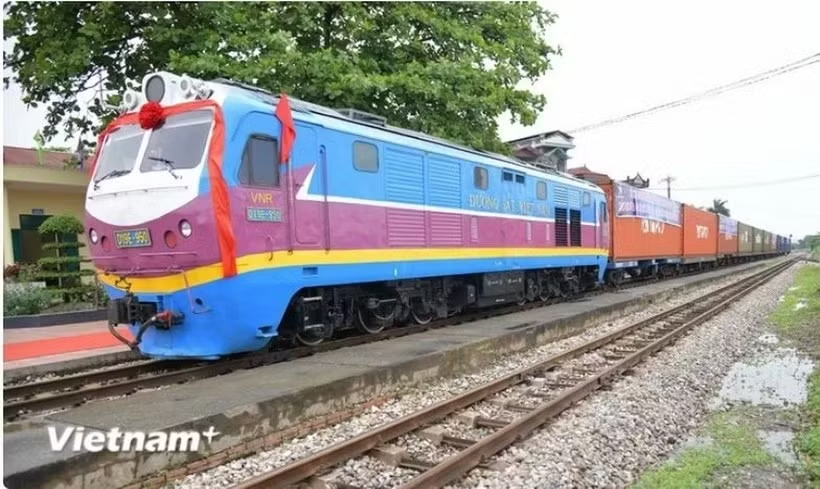
According to the Vietnam Railway Authority, the national railway network has seven main lines, including two international routes linking Vietnam with China and, via China, to Russia, Mongolia, Central Asia and Europe: the Lao Cai–Hanoi–Hai Phong and Hanoi–Dong Dang lines.
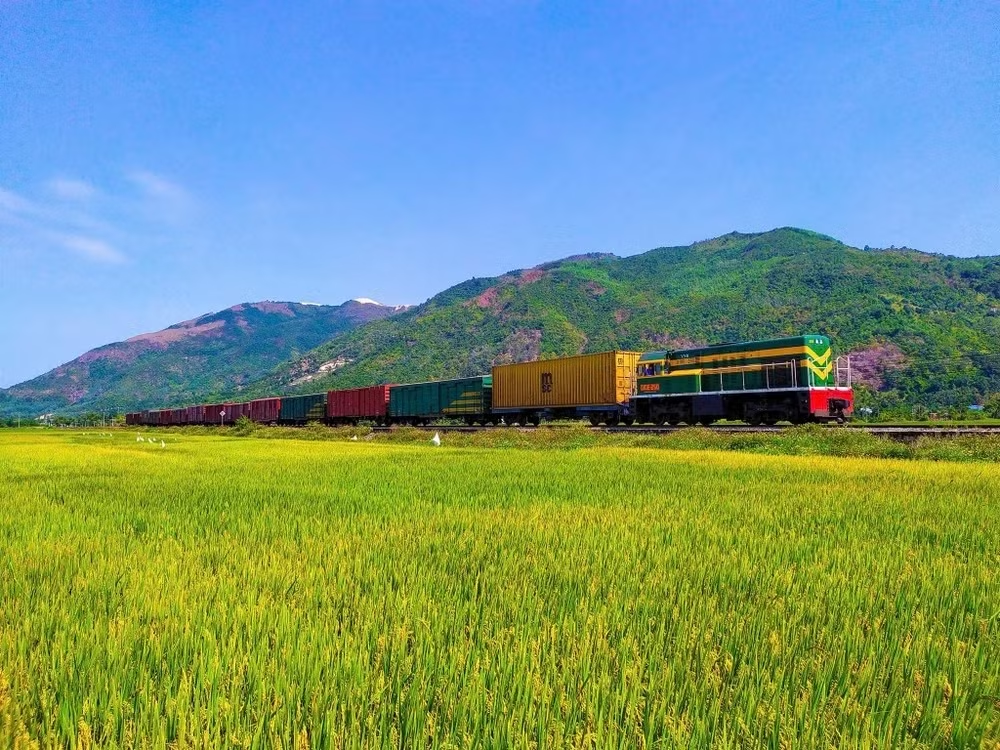
Nguyen Tien Thinh, Deputy Director General of the authority, said both routes were built between 1901 and 1910 and now suffer from outdated technical standards, including 1,000mm narrow-gauge tracks, diesel traction and low operating speeds, limiting the efficiency of international rail transport.
In 2025, the Vietnam–China railway transported more than one million tonnes of cargo, nearly 30% more than the previous year, reflecting a growing shift towards rail freight. However, rail accounted for only about 5% of total trade passing through Dong Dang International Border Gate.
To improve connectivity, Vietnam's Railway Network Development Plan for 2021–2030, with a vision to 2050, includes three standard-gauge railways linking Vietnam with the Eurasian rail network through China. They are the Lao Cai–Hanoi–Hai Phong line, whose construction began in December 2025, the Hanoi–Dong Dang line, and the Hai Phong–Ha Long–Mong Cai line, which is currently undergoing detailed planning with technical support from China.
All three routes will use 1,435mm standard-gauge, electrified tracks compatible with railway systems in China and Europe.
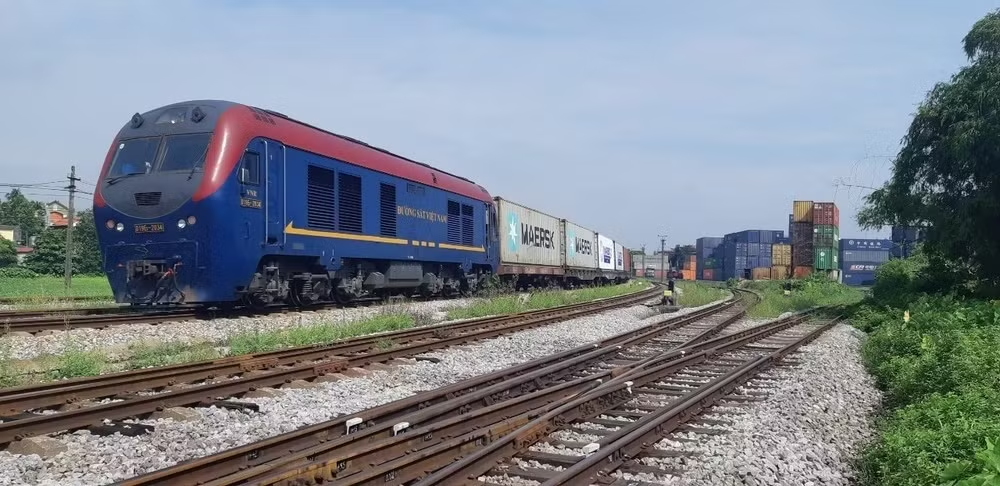
According to Thinh, these projects will improve access not only to China but also to Europe, Central Asia, Mongolia and Russia through the Eurasian rail network.
He added that expanding international rail freight would help reduce transport and logistics costs, increase customs clearance capacity and provide a safer, more fuel-efficient alternative to road transport, particularly for long-distance freight.
The railway projects also form part of the implementation of Politburo Resolution No. 79-NQ/TW on developing the state economy.
Deputy Minister of Construction Nguyen Danh Huy said the ministry is preparing investment for strategic railway lines connecting directly with China while also upgrading international railway stations into logistics hubs capable of handling larger volumes of containerised cargo and supporting multimodal transport.
The planned Hanoi–Dong Dang railway, approximately 156km long, and the Hai Phong–Ha Long–Mong Cai railway, around 187km, will be electrified, standard-gauge lines serving both passengers and freight. Passenger trains are expected to operate at speeds of up to 160km/h and freight trains up to 120km/h.
China is currently providing technical support for the detailed planning of the two projects, due for completion in 2026. At the same time, Vietnam's Ministry of Construction is preparing pre-feasibility studies and arranging investment capital.
The Lao Cai–Hanoi–Hai Phong railway, with a main line of about 391km, has an estimated investment of 203.231 trillion VND. A feasibility study is under way, with project approval expected in the third quarter of 2026 and construction scheduled to begin later that year.
Looking ahead, Huy said Vietnam is also strengthening links between railways, seaports, inland container depots (ICDs), roads and industrial parks to create an integrated logistics network from production to export.
The country is also studying options to connect its domestic railway network with international transport corridors, allowing Vietnam to capitalise on its strategic position within the Eurasian transport network, reduce logistics costs and enhance the competitiveness of the national economy./.