Top Vietnamese leader’s vision puts scientists at core of growth drive

As the country enters a new era, the Party and State have designated sci-tech and and innovation as central priorities, Kiem said, adding that VNU-Hanoi, alongside other higher education establishments, must not only produce high-caliber talents but also function as a hub for knowledge transfer and groundbreaking innovation.

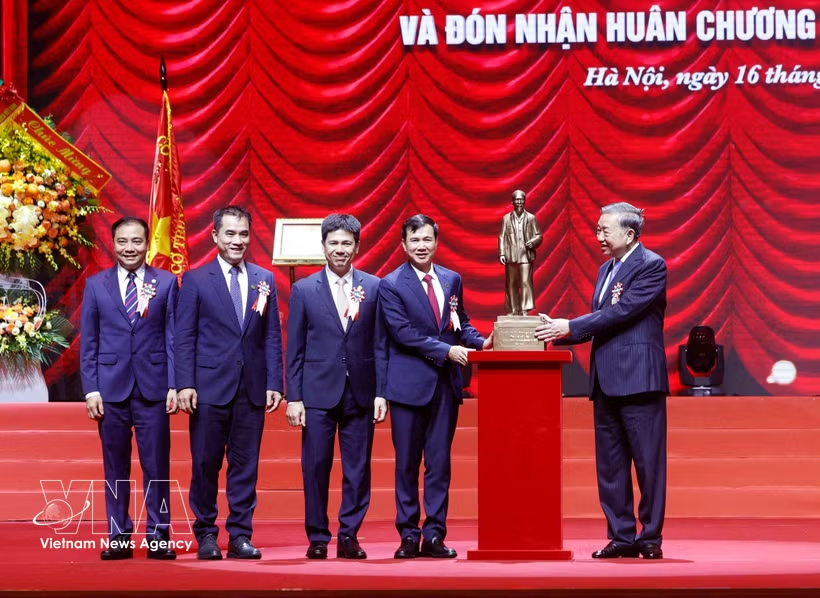
Party General Secretary and State President To Lam presents a statute of President Ho Chi Minh to VNU-Hanoi. (Photo: VNA)

Hanoi (VNA) – Following Party General Secretary and State President To Lam’s keynote address at a ceremony marking the 120th anniversary of Vietnam National University - Hanoi (VNU-Hanoi) on May 16, scientists and intellectuals are optimistic about the view that “scientists must play a central role in connecting knowledge and serving national development in the new era”.

Assoc. Prof. Dr Truong Ngoc Kiem, Director of VNU-Hanoi’s Technology and Innovation Park, said the ceremony also saw the university awarded the First-Class Labour Order.

At the ceremony, General Secretary and President Lam assigned several strategic tasks to the university, including its transformation into an elite institution and a national frontrunner in sci-tech, innovation, and digital transformation, all in direct support of Vietnam’s push for double-digit economic growth. This mission is not only a strategic orientation for VNU- Hanoi but also an inspiration for Vietnam’s entire higher education system, Kiem said.
vnanet-k.png
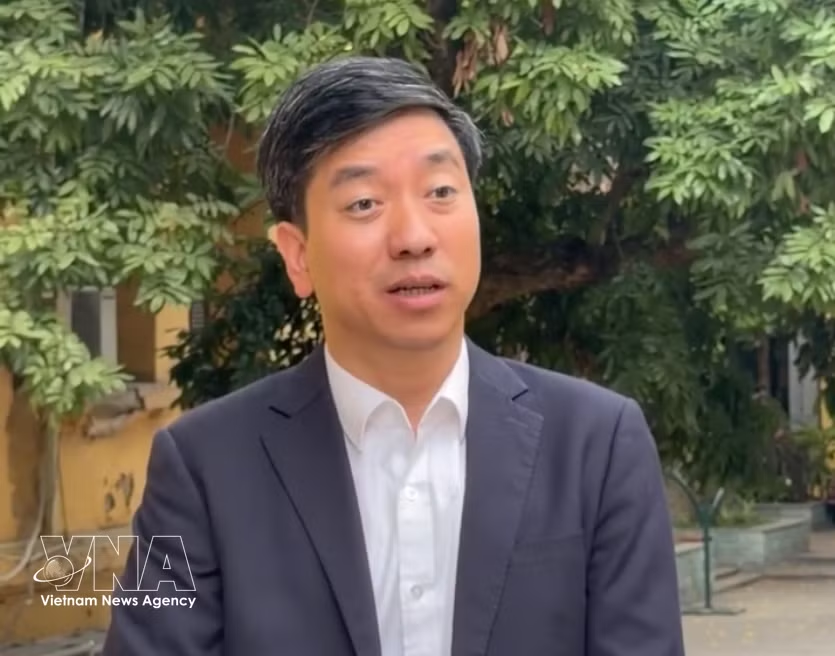
Assoc. Prof. Dr Truong Ngoc Kiem, Director of VNU-Hanoi’s Technology and Innovation Park
(Photo: VNA)

As the country enters a new era, the Party and State have designated sci-tech and and innovation as central priorities, he said, adding that VNU-Hanoi, alongside other higher education establishments, must not only produce high-caliber talents but also function as a hub for knowledge transfer and groundbreaking innovation.

Universities should act as bridges connecting the academia, State, and businesses, ensuring that sci-tech achievements are translated into practical applications for national development, Kiem elaborated.

According to Kiem, as the focal point for innovation activities within the park, VNU-Hanoi has locked onto two immediate priorities. First, it will review its scientific and innovation portfolio to accelerate partnerships and rapidly transfer research outcomes to local authorities and enterprises. Second, as a coordinating unit, it will link domestic and international sci-tech activities with localities and companies so that products developed by its faculty and scientists translate straight into national value.

Even with limited state resources, targeted investments in top research groups and standout scientists are a must. Such policies, he said, would attract leading overseas Vietnamese and foreign researchers, build up homegrown research muscle, and unlock the full intellectual power of scholars and lecturers, turning sci-tech and innovation into primary growth accelerants.
vnanet-v.png
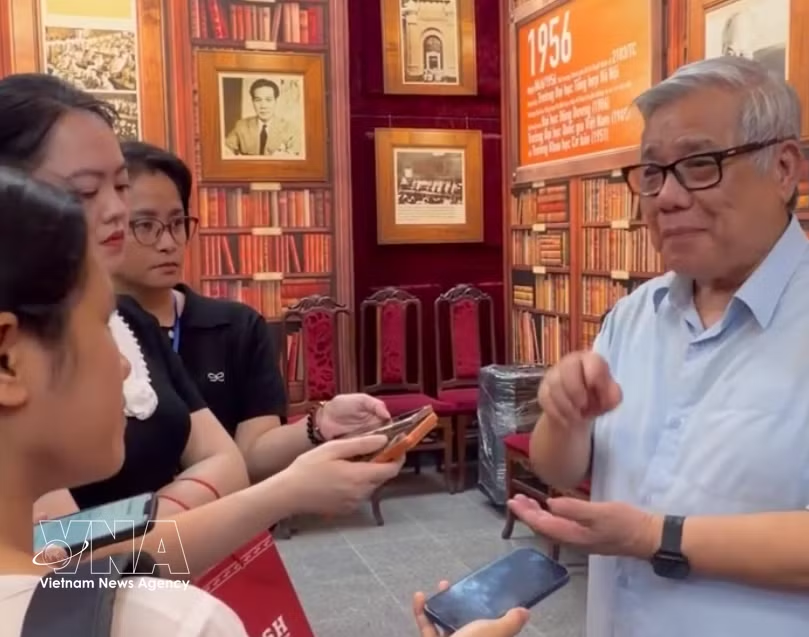
Prof. Doctor of Science Vu Minh Giang, VNU-Hanoi’s former Vice President and former Chairman of its Science and Training Council, speaks to the press, (Photo: VNA)

Prof. Doctor of Science Vu Minh Giang, VNU-Hanoi’s former Vice President and former Chairman of its Science and Training Council, expressed his appreciation for special attention shown by General Secretary and President Lam and senior Party and State leaders toward higher education development in Vietnam.

He pointed back to November 15, 1945 when President Ho Chi Minh himself attended the university’s very first ceremony, even as the newly independent nation faced enormous pressures. Such move made a clear statement that the revolutionary State puts intellectuals and talent first, Giang stressed.

To fulfill the tasks assigned by the top Vietnamese leader, he said VNU-Hanoi must clearly define its strategic direction, resources, and human capital, noting that the emphasis on special mechanisms could unlock a phase of rapid and breakthrough development for the university.

He cited financial reform as a critical example, arguing that salaries for scientists and lecturers need to match what top global universities offer if Vietnam wants to attract and keep world-class talents.

On the leader’s stark warning about the risk of falling behind in the global tech race, Director of VNU-Hanoi’s Science and Innovation Department Prof. Tran Thi Thanh Tu called the caution both timely and invaluable, especially for the intellectual and scientific community tasked with shaping the country’s tech future.

Prof. Dr Nguyen Ngoc Minh, a recipient of the 2016 Ta Quang Buu Award from VNU-Hanoi’s University of Science, also stressed that the university’s scientific community is fully aware of its responsibilities in the current era.

The mission of intellectuals today goes far beyond publishing papers or lecturing. It’s about solving the country’s biggest challenges, sharpening its competitiveness, protecting Vietnam’s cultural and human values, and giving the next generation the tools to navigate the decades ahead, he added./.
VNA

See more

Deputy Prime Minister Ho Quoc Dung speaks at the meeting. (Photo: VNA)

Deputy PM demands full disbursement for sci-tech in 2026

As of May 12, total disbursed capital reached 7.95 trillion VND, equivalent to 14.78% of the Prime Minister’s plan. Of this, central budget disbursement hit 4.06 trillion VND, or 14.8% of the target, while local budget disbursement exceeded 3.88 trillion VND, or 14.75%.

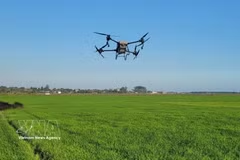
Using drones to spray pesticides in the An Nhut rice fields in Long Dien commune of Ho Chi Minh City. (Photo: VNA)

Solving technology challenge through the “three-party linkage”

According to Pham Duc Nghiem, Deputy Director of the Department of Startups and Technology Enterprises under the Ministry of Science and Technology, the “three party” linkage model involving the State, research institutes/universities and enterprises is becoming essential for developing strategic technologies. Enterprises provide practical problems, universities and research institutes develop technological solutions, while the State creates support mechanisms and policies to accelerate commercialisation.

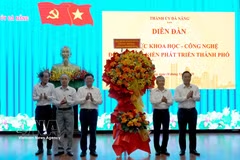
Da Nang city's leaders present flowers to congratulate the Union of Science and Technology Associations in Da Nang on Vietnam Science and Technology Day (May 18). (Photo: VNA)

Human capital key to Da Nang’s digital economy ambitions: experts

Vo Cong Tri, Chairman of the Union of Science and Technology Associations (VUSTA) in Da Nang, described high-quality human resources as a “key driver” in the city’s transformation. Da Nang is already regarded as one of Vietnam’s leading “university cities,” with 19 higher education institutions and a high concentration of students and skilled workers. The city is also home to a growing network of science and technology organisations that are helping to foster an innovation ecosystem.

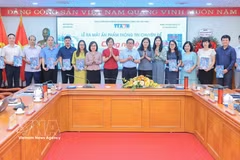
Delegates at the publication launching ceremony. (Photo: VNA)

Vietnam News Agency debuts monthly technology publication

Each 40-page issue is expected to pack 3-5 chapters, delivering a panoramic view of the global sci-tech landscape alongside in-depth analyses of emerging technology trends. The publication aims to explain strategic shifts that will shape the country’s development and examine the sci-tech, innovation and digital transformation policies of other nations.

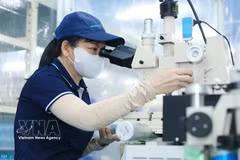
A worker assembles ultra-precision micro-components used in semiconductor chip production. (Photo: VNA)

Vietnam prioritises 70 high technologies for strategic development

Issued under Decision No. 23/2026/QD-TTg dated May 15, 2026, the list covers a wide range of technologies, including artificial intelligence (AI), big data and data analytics, cloud and edge computing, distributed and high-performance computing, Internet of Things (IoT), blockchain, quantum technology, renewable and clean energy, advanced energy storage, AI-powered real-time disaster forecasting and warning systems, and next-generation microbiology technologies.

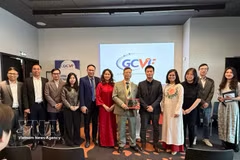
Vietnamese Ambassador to France Trinh Duc Hai (sixth from the right) and the leadership of Global Connect Vietnam France. (Photo: VNA)

Vietnamese association launched in France to foster technology, AI cooperation

In the context of the growing Comprehensive Strategic Partnership between Vietnam and France, Hai said GCVF should position itself as a bridge for knowledge and technology transfer, bringing scientific and technological achievements from France and Europe to support Vietnam’s practical development needs.

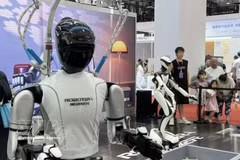
Illustrative image (Photo: VNA)

Korean robotics, AI firms interested in Vietnam

KOTRA said it is teaming up with the Korea Institute for Robot Industry Advancement to run the “K-Robot Pavilion"” at the 23rd Vietnam International Exhibition on Machinery, Equipment, Technology and Industrial Products (VINAMAC EXPO 2026) in Hanoi from May 14-16.

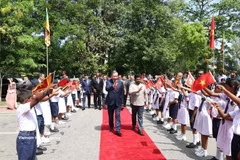
Party General Secretary and State President To Lam (left) and Sri Lankan President Anura Kumara Dissanayake come to lay flowers in tribute to late President Ho Chi Minh at the Colombo Public Library on May 8. (Photo: VNA)

Sri Lanka eyes breakthrough sci-tech cooperation with Vietnam

A Sri Lankan official has expressed confidence that science, technology and digital transformation will become a key driver in shifting bilateral ties from traditional friendship to a partnership grounded in innovation and inclusive economic growth.

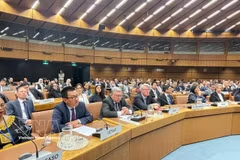
Vietnam promotes cooperation with United Nations on crime prevention

Vietnam promotes cooperation with United Nations on crime prevention

Vietnam highly values the support of the United Nations Office on Drugs and Crime (UNODC) in strengthening national capacity in crime prevention and criminal justice, drug control, and addressing emerging challenges, particularly cybercrime, said Ambassador Vu Le Thai Hoang.

Visitors tour an exhibition showcasing technology and cultural products. (Photo: VNA)

VIPC Summit 2026 highlights Vietnam’s ambitions in strategic technologies

Through the VIPC Summit 2026, Vietnam aims to reaffirm its commitment to building a transparent, competitive and internationally integrated investment environment, while promoting new financial mechanisms and institutions to make science, technology, innovation and digital transformation strategic growth motivation in the coming years.

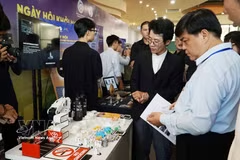
At the “Digital Trust in Finance 2026” forum (Photo: VNA)

Forum discusses digital trust in finance during AI era

Deputy Minister of Public Security Sen. Lieut. Gen Pham The Tung told the forum that Vietnam’s financial and banking industry is racing through a digital overhaul, creating major opportunities as the country aims for double-digit growth in 2026 and beyond.

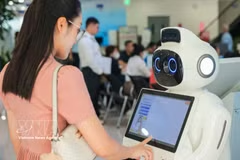
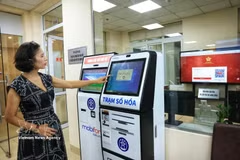
Citizens obtain queue numbers for administrative procedures at the Public Service Center of Hanoi's Hoan Kiem ward (Photo: VNA)

All citizen-government transactions to go fully digital by 2035

Looking ahead to 2035, Vietnam envisions becoming a comprehensive and sustainable digital nation where all transactions between citizens and government agencies are conducted online. National databases, with population data at the core, will be interconnected and efficiently utilised to support smart governance and real-time decision-making.

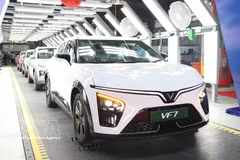
The EV models are manufactured at VinFast's factory in India. (Photo: VNA)

Experts hope for expanded Vietnam-India innovation cooperation

Indian experts voiced confidence that the state visit by Party General Secretary and State President To Lam would create fresh momentum for Vietnam-India cooperation in innovation, digital technology and startups, contributing to the more substantive and effective development of the two countries’ Enhanced Comprehensive Strategic Partnership.

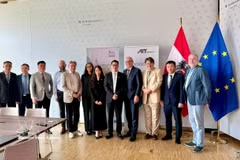
Vietnamese and Australian experts at the meeting (Photo: VNA)

Vietnam, Austria promote cooperation in AI, cybersecurity

The NCA proposed strengthening its strategic partnership with the AIT through several key orientations, including the protection of critical digital infrastructure, data security and trusted digital ecosystems, the application of AI and data analytics in cybersecurity, high-quality human resources training, expert exchanges, and the co-organisation of annual international forums and conferences.