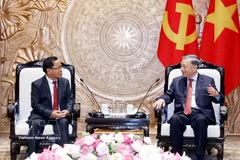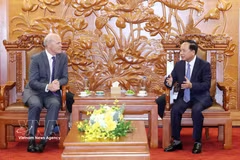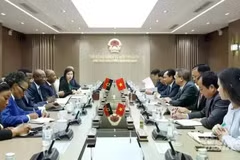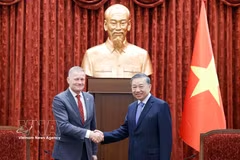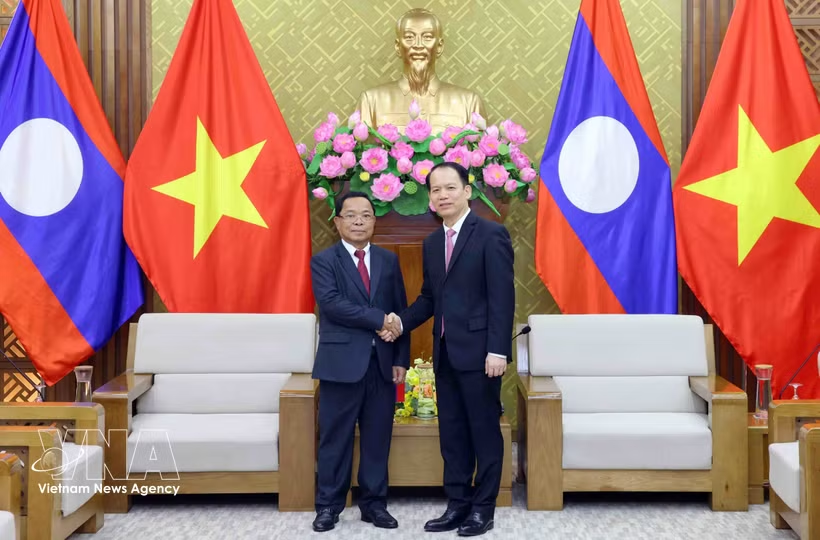
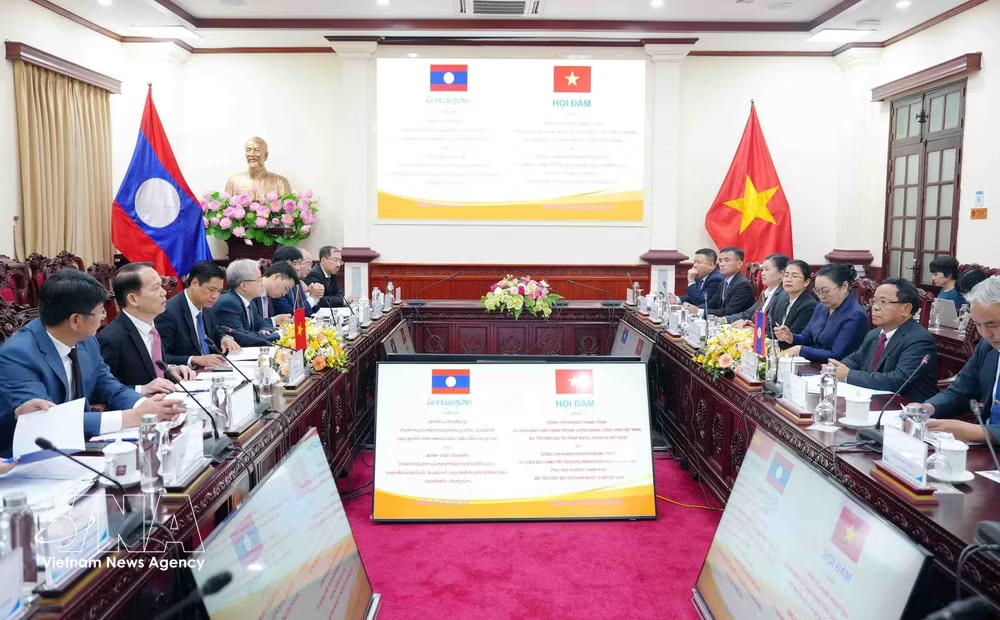
Hanoi (VNA) – Vietnamese Minister of Justice Hoang Thanh Tung held talks with Lao Deputy Prime Minister and Minister of Justice Khamphan Phommathat in Hanoi on June 16, reaffirming a commitment to tighten sectoral links and deliver on high-level agreements between the two Parties and States.
Tung laid out Vietnam’s sweeping institutional and legal improvement agenda, flagging the Politburo’s Resolution 66-NQ/TW on overhauling law-making and enforcement to meet national development requirements in the new era, Conclusion 09-KL/TW on perfecting the legal system structure, Conclusion 17-KL/TW on legislative orientations for the 16th National Assembly term, and Conclusion 18-KL/TW charting the 2026–30 socio-economic roadmap.
He noted the Vietnamese Politburo has set up a central steering committee for institutional perfection and law enforcement reform chaired by Party General Secretary and State President To Lam, with the Justice Ministry’s Party Committee acting as its standing body. Accordingly, the ministry is focusing on legal system upgrades, tougher enforcement, judicial reform, digital transformation, and the use of artificial intelligence (AI) across legal and judicial operations.
On bilateral cooperation, the minister welcomed concrete results and pushed for the effective realisation of the 2026–2030 cooperation pact. He urged deeper exchanges of experience in legal development, enforcement, judicial reform, personnel training, and digital transformation, as well as coordinated steps to fast-track the approval and launch of the Vietnamese Government’s technical assistance project to strengthen the capacity of Lao judicial officials.
Regarding the technical assistance project, Tung said both ministries have worked to anchor it in inter-governmental agreements and pressed the Lao side to expedite clearance procedures for an early launch. He cast it as a potential hallmark of legal and judicial cooperation that will give concrete substance to the “strategic cohesion” dimension in Vietnam – Laos ties.
Turning to legal education and professional training, the host praised partnerships between Vietnamese law schools and Lao agencies that have already trained cohorts of Lao legal professionals. A scholarship programme is now underway to bring Lao judicial officials to the Hanoi Law University (HLU) for Master of Laws degrees. He proposed deeper collaboration among the Lao National Institute of Justice, the HLU, and the Vietnam Judicial Academy to lift the quality of legal and judicial manpower in both countries.
About local-level coordination and the run-up to the 7th expanded justice conference of Vietnam – Laos border provinces, he called the conference a standout feature of bilateral judicial cooperation. He pointed to gains following the sixth edition in civil status and nationality, legal dissemination, legal and judicial assistance, civil judgment enforcement, and personnel training.
The seventh conference, scheduled for June 17 in Hai Phong, will be a vital forum to review results and lock in stronger coordination measures, bolstering justice sector management and ensuring the rights and legitimate interests of those living in border areas, he said.
On multilateral cooperation, Tung highlighted the two ministries’ close work within ASEAN legal and judicial cooperation mechanisms, and other global and regional forums. He proposed that both sides continue with information sharing, consultations, and mutual support at multilateral frameworks.
The minister invited the Lao ministry to an ASEAN Law Forum on using AI in law-making and enforcement in the digital era, which the Vietnamese Ministry of Justice plans to host in August.
Phommathat, for his part, lauded Vietnam’s practical assistance in law-making, training, judicial reform, and local-level cooperation.
He wished for close coordination to deliver the 2026–2030 agreement and confirmed that Laos will work with relevant agencies to complete procedures for an early launch of Vietnam’s technical assistance project.
He also pledged continued cooperation through the border conference mechanism and regional forums, as well as in ensuring the seventh conference’s success and turning its outcomes into tangible results./.